What this card does
In a mafia card game most people are Citizens. You have a hidden card. You have no ability during the night phase. By day you talk, you accuse, and you vote.

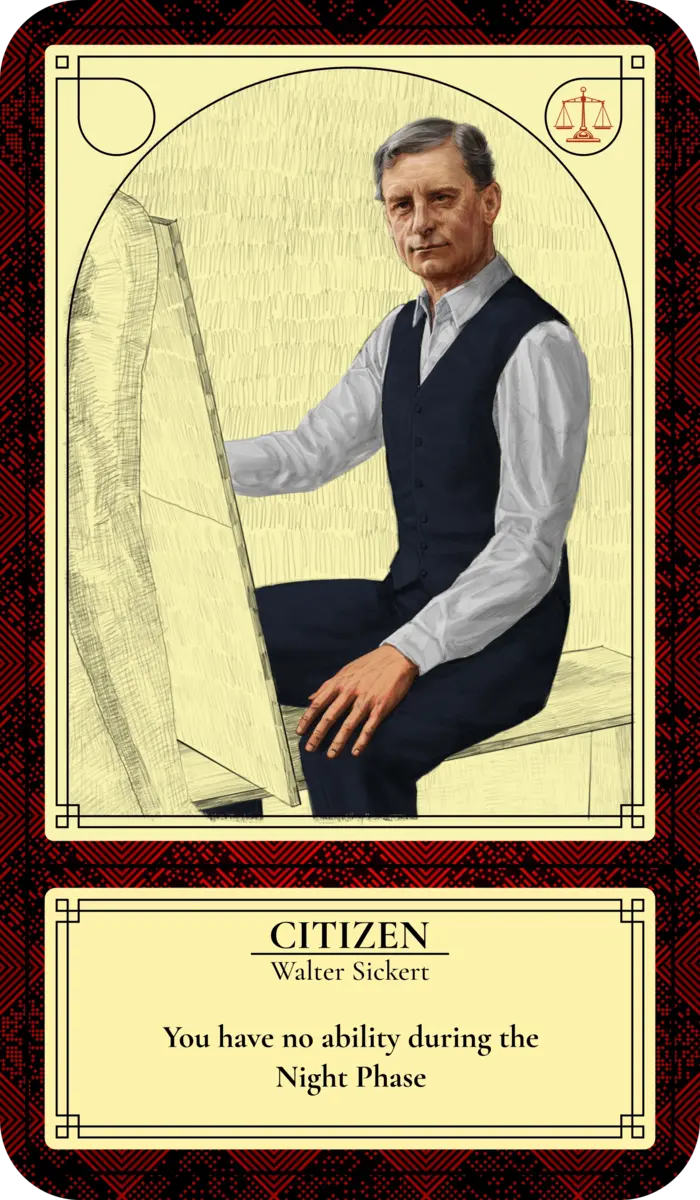
The City Day No night job 9 in the deck
What this card does
In a mafia card game most people are Citizens. You have a hidden card. You have no ability during the night phase. By day you talk, you accuse, and you vote.
How to play
You have no ability during the night phase. Close your eyes. Stay asleep.
Talk, accuse, and vote. That is the whole job.
Look once. Put it away. The card is the only proof.
Tips
The Citizen is one of the mafia roles in the mafia party game.
In the box
Published mixes that seat this card. Pick the list that fits the room, then deal.
When only six friends could make it, you still light the lamp and put the lancet on the table. One knife is plenty in a room this close.
Someone found a seventh chair in the hall and the evening grew a little kinder. Same one knife, one more neighbour to talk to.
The teaching deal. Eight chairs, one lamp, one lancet — and two knives that already know each other.
Still one lamp — but now one door hits back. Call on the wrong house at night and you will wish you had sent a note.
The classic table of nine. Two killers, a cop, a doctor — and the vote does the rest.
For tables that like clues. Read the dead, check a team, and mind the Duelist’s duel.
One lamp, and it can be lied to. The Yard filed him under City, and the Yard is never wrong.
She points first, and somebody’s night simply does not happen. And the man at the door duels his callers.
The Bishop taxes the Assassins’ knife. The Terrorist’s exit does not go through the parish.
One seat raises the recently dead. One seat burns them off the roll. And the lamp may be lying.
The City gets tools, the Mafia gets tricks. You win this one as a table, not as four solo stars.
Gunn and Henry both in chairs, and a slab for everyone else. Two checks a night — while they live.
The client cannot be summoned. The job never happened. And the house still hits back.
Built for rooms that love to argue. Words win this deal — and careless words lose it.
A soldier with two shots, and a room daring him to spend both. The Lawyer would rather nobody stood trial at all.
Minutes are read at the end of the evening — and some names have been made unavailable.
The Oracle dies pointing. The Vigilante has two arguments of his own. The Terrorist needs only one.
Two checks a night. One of them may still be a kindness from Sabini.
The veterans’ deal. Twenty players, three Assassins, and a day that has to keep moving.
Warzone-sized, different firm. Two Assassins, a man the Yard already cleared, and a Bishop taxing the wrong knife.
Write every wake. Call them in the same order. The quiet ones in the dark are not all done with the evening.
Every useful face in a chair. Two more chairs take the last Citizens. After that the box really is empty.
The deck
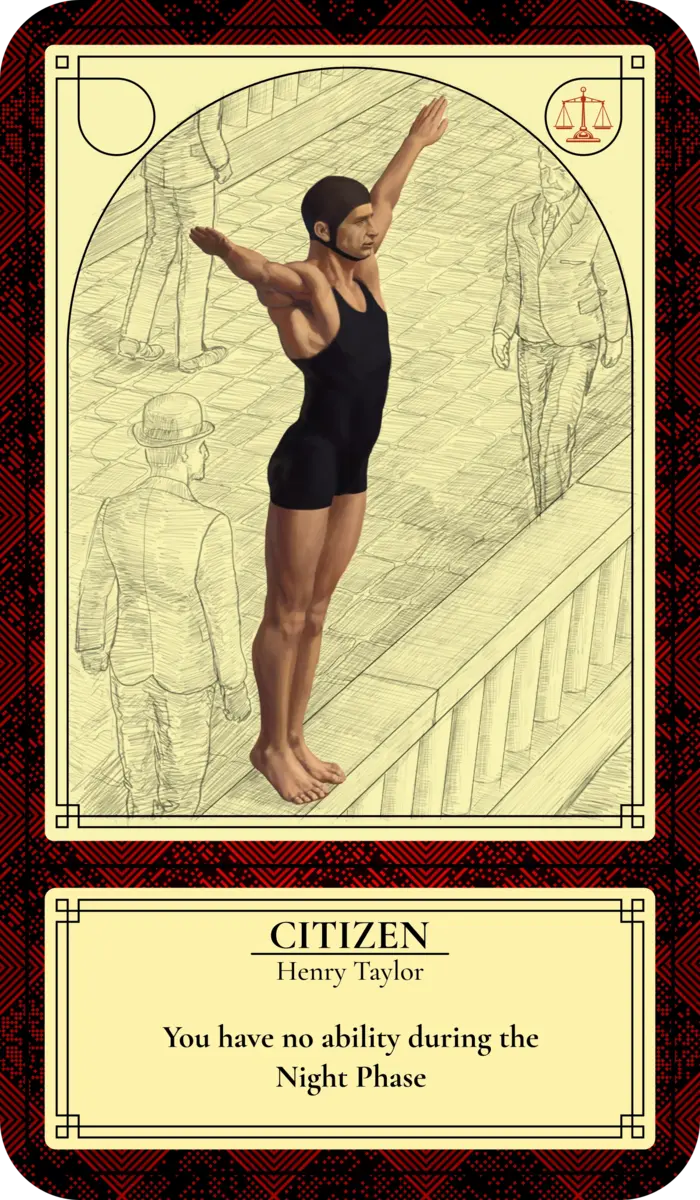
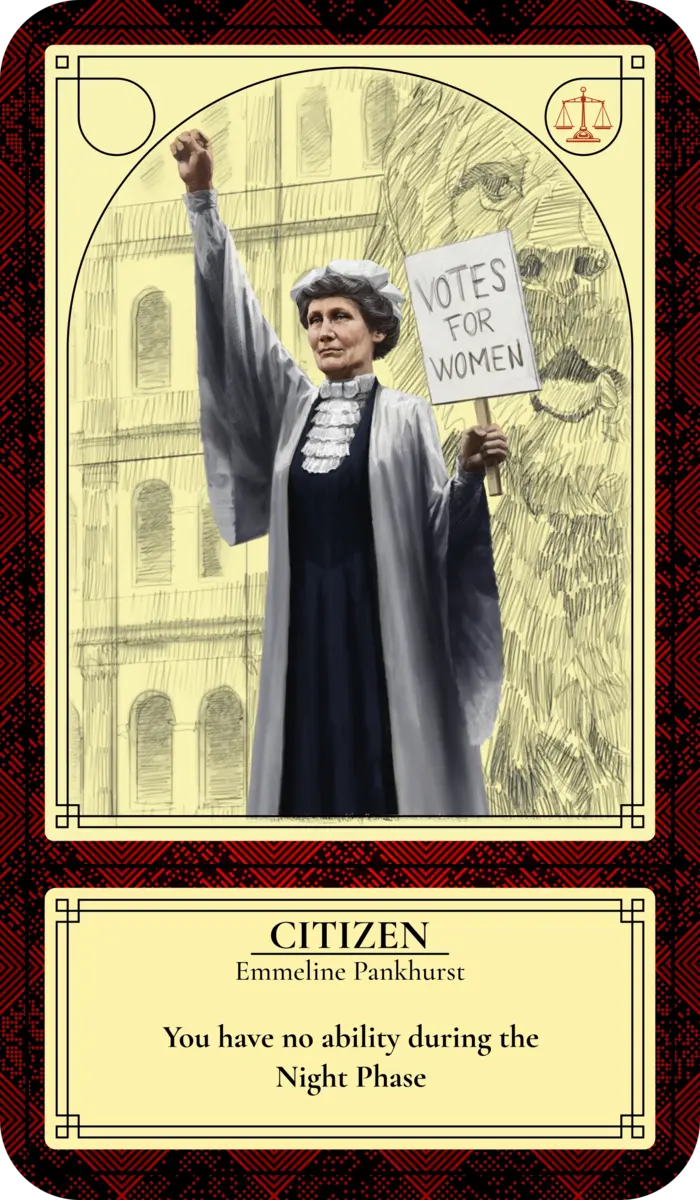
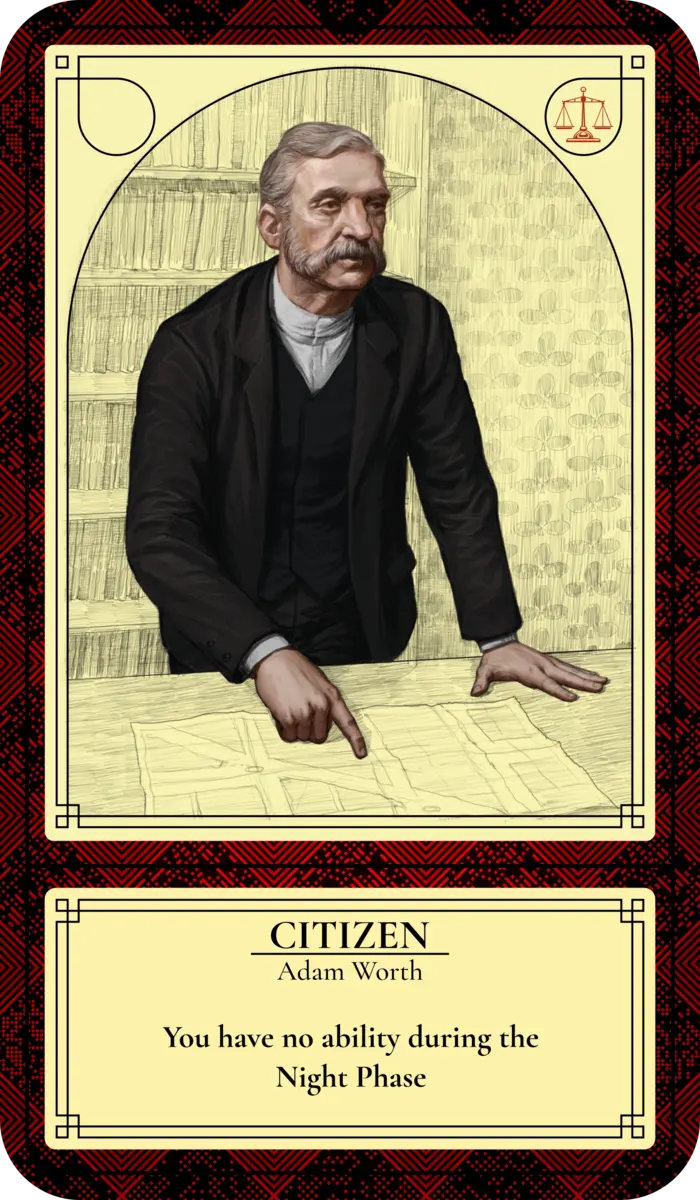
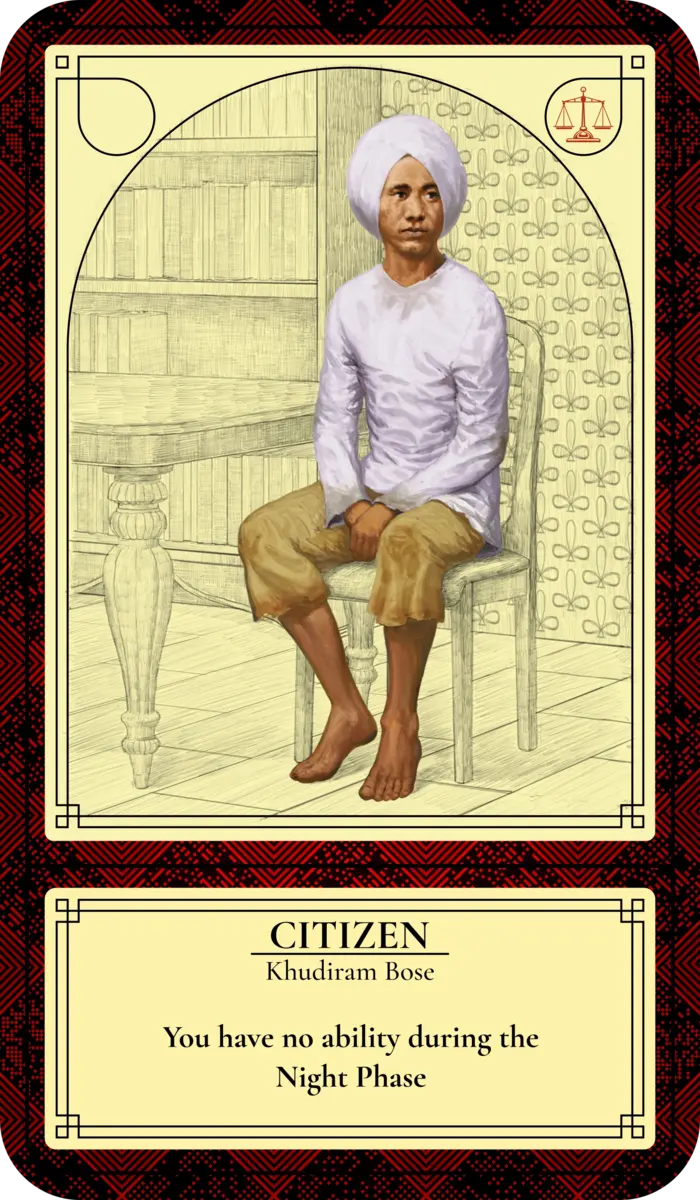
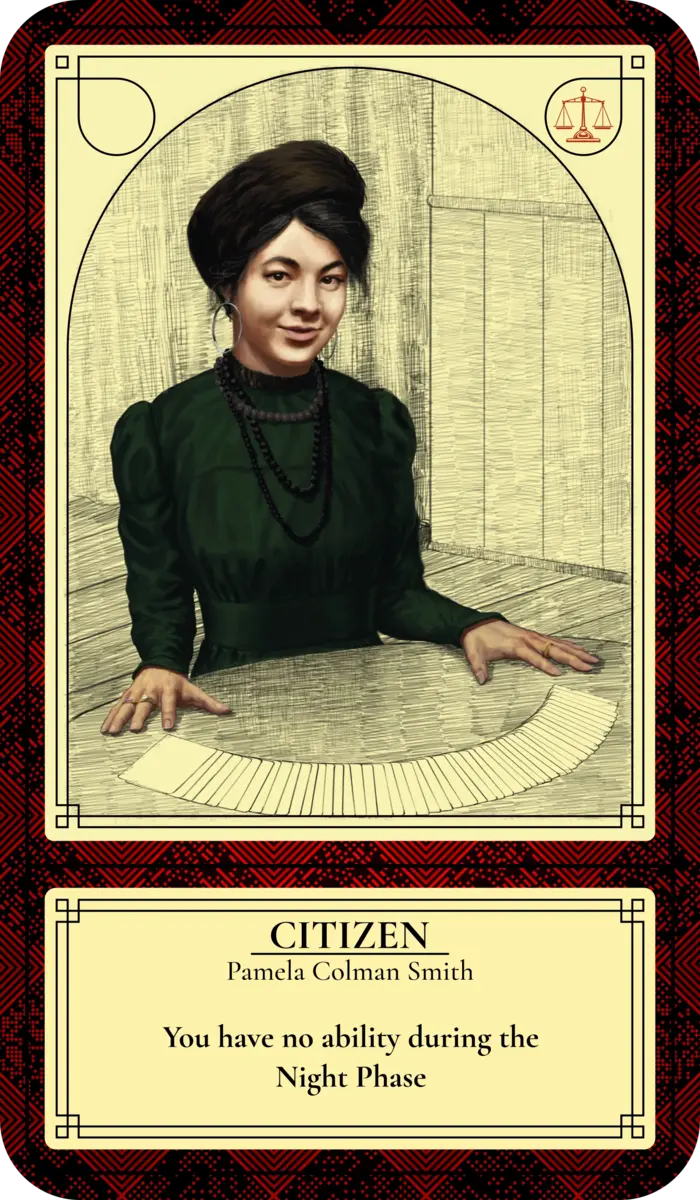
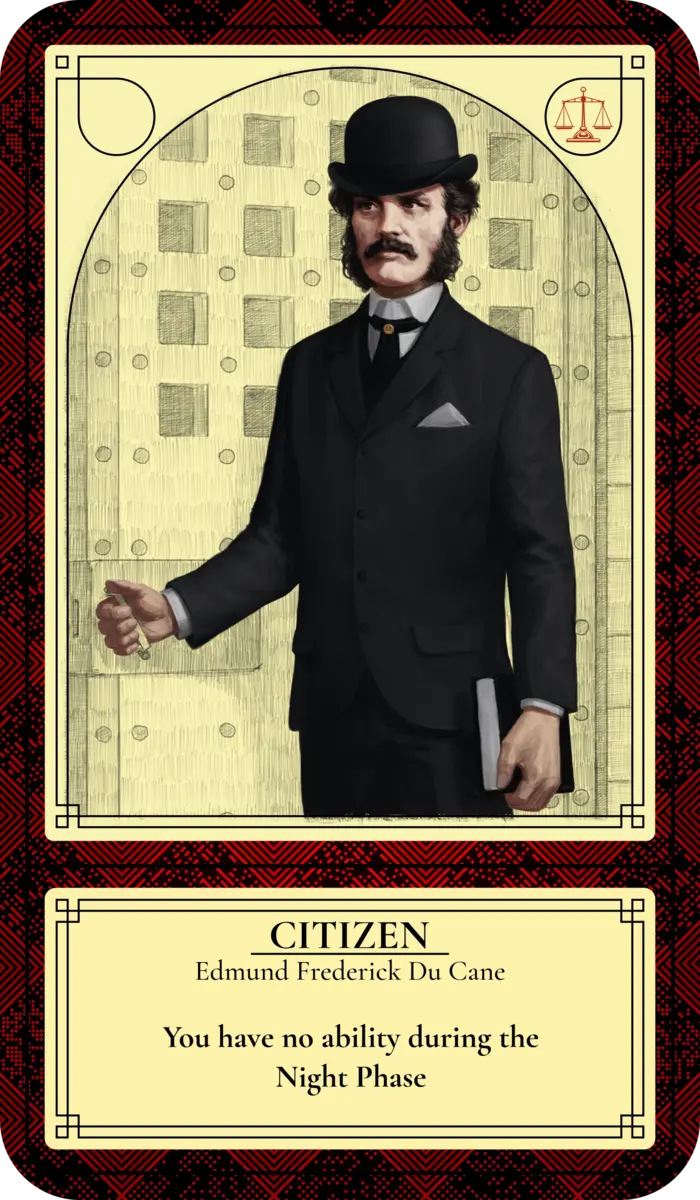
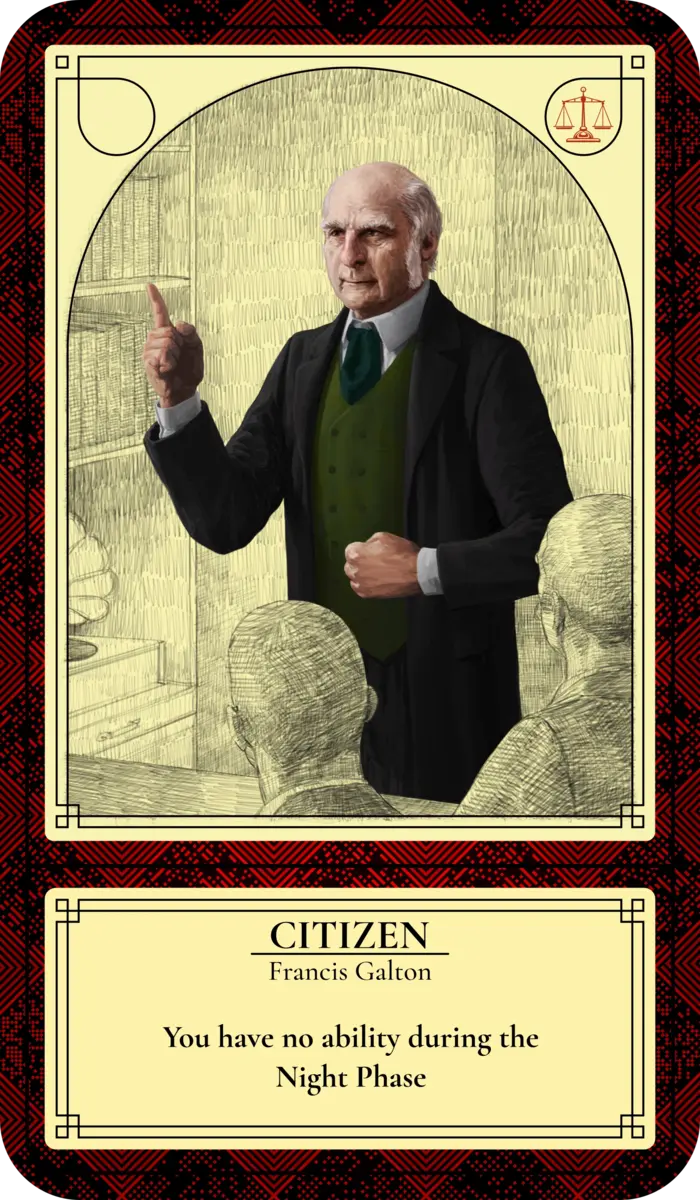
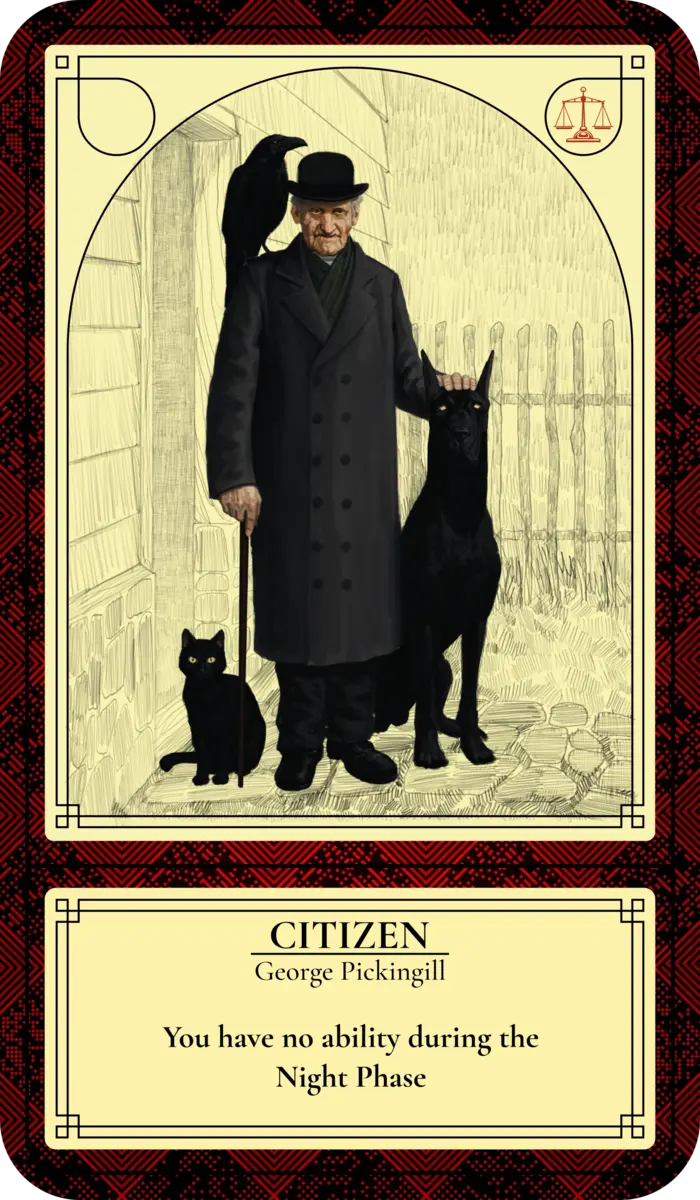
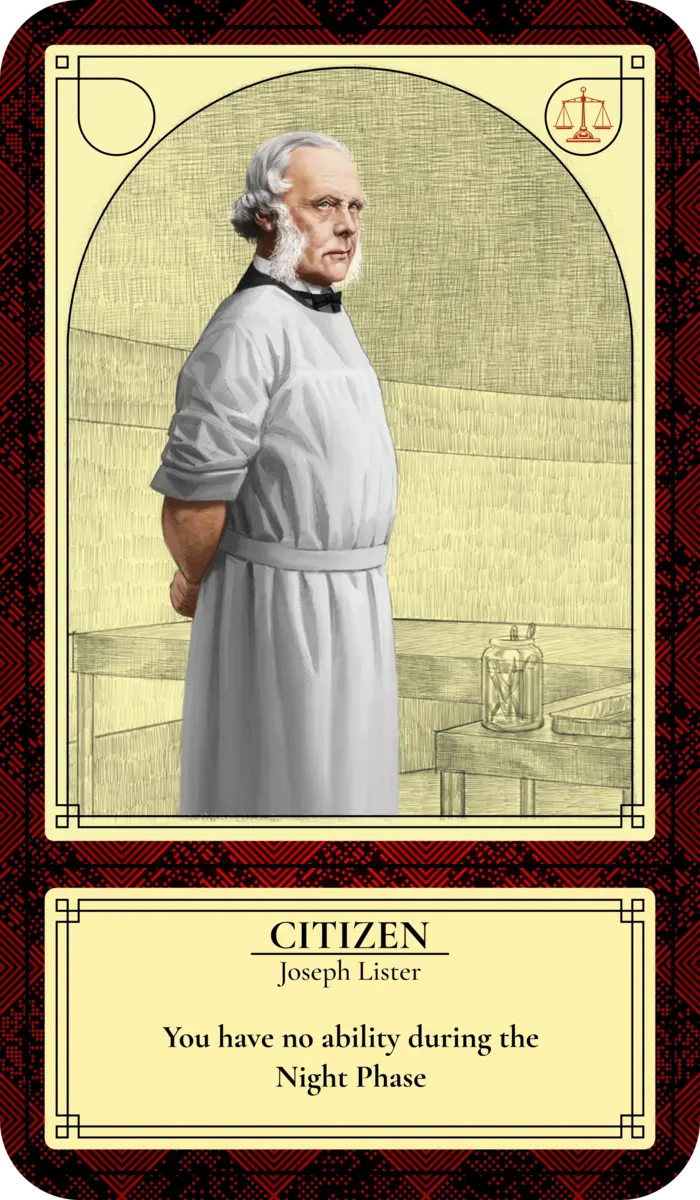
Citizen has 9 printed faces. The job is the same. Only the person on the card changes.
East End lore
A Citizen has nothing to prove their innocence except their word, and Walter Sickert spent his life making that word hard to trust. He painted a dingy bedroom and called it Jack the Ripper's Bedroom. When a woman was murdered in a Camden lodging house, he painted the scene four times over. He went into the music halls and painted the audience instead of the star, faces in the gallery half-lost in gaslight. He was the best painter in England at looking at rooms nobody wanted looked at, and he made himself the most suspicious man in London by painting exactly what he saw. That is the Citizen's burden: every eye on you, and nothing to show them but the truth.
In the lore, Galton sent for him because Sickert was the only man he knew who was at home in two Londons: dining in Belgravia one night and drinking behind Shoreditch the next, a visitor to neither. For three weeks he went from room to room asking whether Darby Sabini had taken the wharves. He came back and said it was true, and his word moved men that a signed statement never had. But he had asked in rooms that belonged to Sabini, and in confirming it he announced it. On the night at the Three Harpies he sat in the corner on a stool with a board on his knee, painting the room.
“I paint what men show when they stop pretending. You'd be surprised who never stops.”
Walter Sickert
Street
Mill hands, clerks, and shopkeepers fill the East End. Most people in a mafia card game look like this — ordinary, and hard to prove.
Meeting
The City lives or dies on ordinary chairs. This seat is the crowd: talk, doubt, and a vote when the talk runs out.
The room
A silent Citizen worries people. A loud one worries them too. The table has to live with both.
Inspired by
1860–1942
He painted a picture of a dingy back bedroom in Mornington Crescent and called it Jack the Ripper's Bedroom. He hung it. He told people his landlady believed the previous lodger had been the man. Then, when a girl called Emily Dimmock was found with her throat cut in a Camden lodging house, he painted the scene four times over and titled the series after the murder. One canvas he called What Shall We Do for the Rent? A hundred years later people are still arguing about what he knew, and every one of those arguments starts with evidence he supplied himself.
He was the best painter in England at looking at rooms nobody wanted looked at. He went into the music halls — the Bedford, Gatti's — and painted the audience instead of the star: the faces in the gallery, lit from below, half-lost in gaslight and mirror. He painted naked women on iron bedsteads in Camden lodgings, unarranged, ungilded, in bad light, at a moment when English painting still expected a nude to be a goddess or nothing. He worked from drawings and memory rather than from the sitter, which meant the model was never really the subject. The room was.
He began as an actor. He toured in Henry Irving's company, walked on with a good face and a good voice, and gave it up to be a painter, which by every practical measure was the worse job. He served as Whistler's assistant, printing and etching. Then Whistler sent him to Paris to deliver a canvas to Degas, and Degas told him to stop painting what was in front of him. He went back to London and spent the rest of his life doing exactly that: staging the world from notes, in the dark, from the wrong angle, in the wrong part of town.
He founded the Camden Town Group, taught, and painted on into old age from newspaper photographs when he could no longer be bothered with life. Elected to the Royal Academy at seventy-four, he resigned a year later over an insult to another artist. He died in Bath in 1942 and left behind the most convincing body of murder-adjacent painting ever produced by a man who was almost certainly guilty of nothing.
Forget the theories and the hundred-year argument. Remember only this: he made himself the most suspicious man in London on purpose, and he did it by painting exactly what he saw.
The City
Same team. Different jobs.
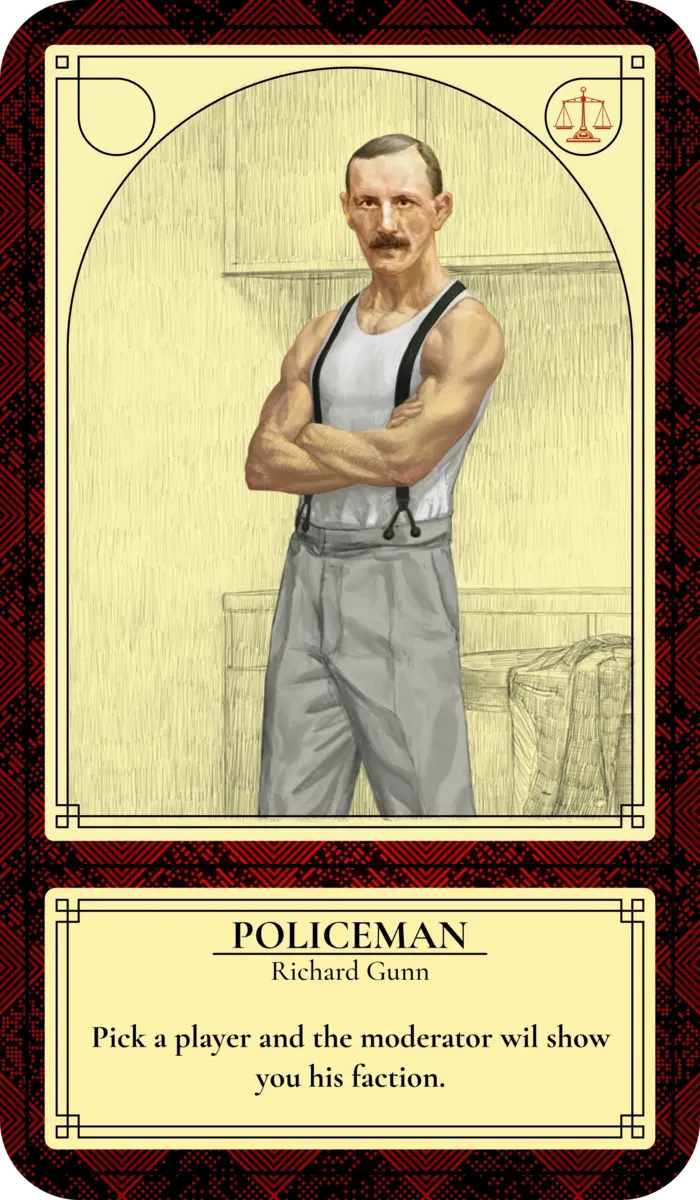
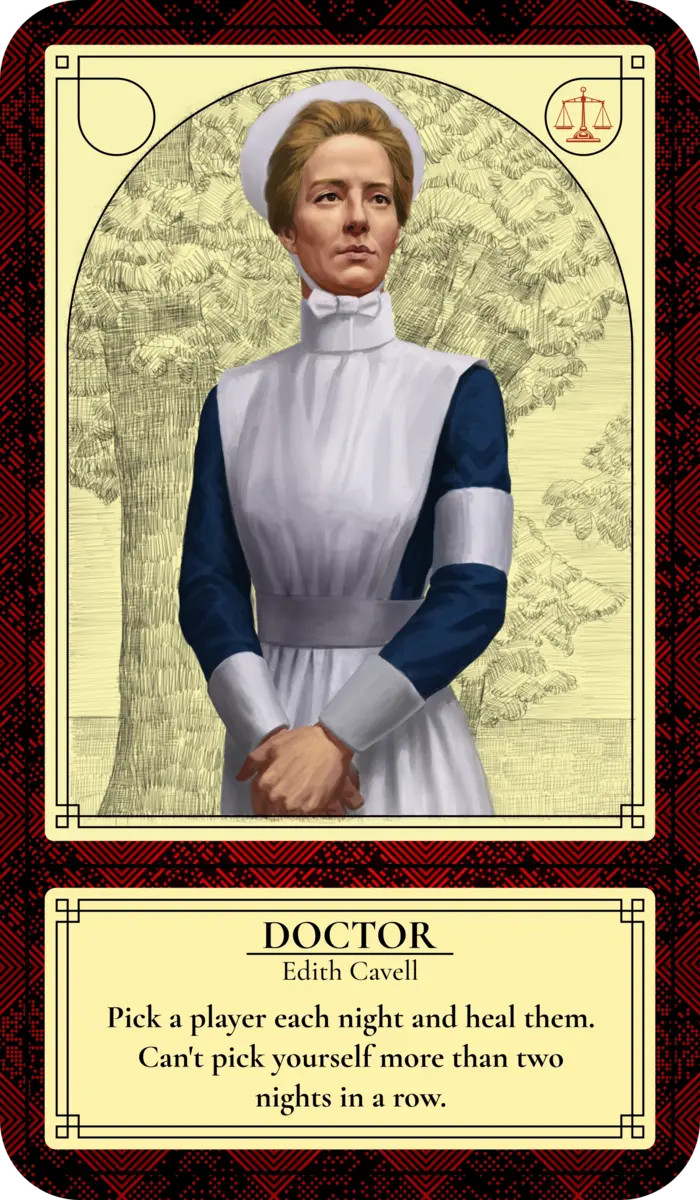
Mafia is easier to play than it looks. Everyone gets a hidden card — most of the table is City, a hidden few are Mafia. At night the killers quietly pick a victim while a doctor tries to guess who needs saving and a cop digs for the truth. By day the survivors argue about what happened, put someone on trial, and vote. The City wins by finding every killer; the Mafia wins by surviving until they can win a vote. The walkthrough takes you through the whole game, from the deal to the last trial.
How to play mafiaYour first game should be The Lamp and the Lancet — eight players and only three night wakes, so nobody gets lost. With a ninth chair the same deal becomes, naturally, The Ninth Chair. All twenty published deals, up to twenty-seven players, are on the setups page.
The teaching deal. Eight chairs, one lamp, one lancet — and two knives that already know each other.
City: 1 Policeman, 1 Doctor, Citizens to fill Mafia: 2 Assassins
The classic table of nine. Two killers, a cop, a doctor — and the vote does the rest.
City: 1 Policeman, 1 Doctor, Citizens to fill Mafia: 2 Assassins