What this card does
In a mafia card game most people are Citizens. You have a hidden card. You have no ability during the night phase. By day you talk, you accuse, and you vote.

The City Day No night job 9 in the deck
What this card does
In a mafia card game most people are Citizens. You have a hidden card. You have no ability during the night phase. By day you talk, you accuse, and you vote.
How to play
You have no ability during the night phase. Close your eyes. Stay asleep.
Talk, accuse, and vote. That is the whole job.
Look once. Put it away. The card is the only proof.
Tips
The Citizen is one of the mafia roles in the mafia party game.
In the box
Published mixes that seat this card. Pick the list that fits the room, then deal.
When only six friends could make it, you still light the lamp and put the lancet on the table. One knife is plenty in a room this close.
Someone found a seventh chair in the hall and the evening grew a little kinder. Same one knife, one more neighbour to talk to.
The teaching deal. Eight chairs, one lamp, one lancet — and two knives that already know each other.
Still one lamp — but now one door hits back. Call on the wrong house at night and you will wish you had sent a note.
The classic table of nine. Two killers, a cop, a doctor — and the vote does the rest.
For tables that like clues. Read the dead, check a team, and mind the Duelist’s duel.
One lamp, and it can be lied to. The Yard filed him under City, and the Yard is never wrong.
She points first, and somebody’s night simply does not happen. And the man at the door duels his callers.
The Bishop taxes the Assassins’ knife. The Terrorist’s exit does not go through the parish.
One seat raises the recently dead. One seat burns them off the roll. And the lamp may be lying.
The City gets tools, the Mafia gets tricks. You win this one as a table, not as four solo stars.
Gunn and Henry both in chairs, and a slab for everyone else. Two checks a night — while they live.
The client cannot be summoned. The job never happened. And the house still hits back.
Built for rooms that love to argue. Words win this deal — and careless words lose it.
A soldier with two shots, and a room daring him to spend both. The Lawyer would rather nobody stood trial at all.
Minutes are read at the end of the evening — and some names have been made unavailable.
The Oracle dies pointing. The Vigilante has two arguments of his own. The Terrorist needs only one.
Two checks a night. One of them may still be a kindness from Sabini.
The veterans’ deal. Twenty players, three Assassins, and a day that has to keep moving.
Warzone-sized, different firm. Two Assassins, a man the Yard already cleared, and a Bishop taxing the wrong knife.
Write every wake. Call them in the same order. The quiet ones in the dark are not all done with the evening.
Every useful face in a chair. Two more chairs take the last Citizens. After that the box really is empty.
The deck
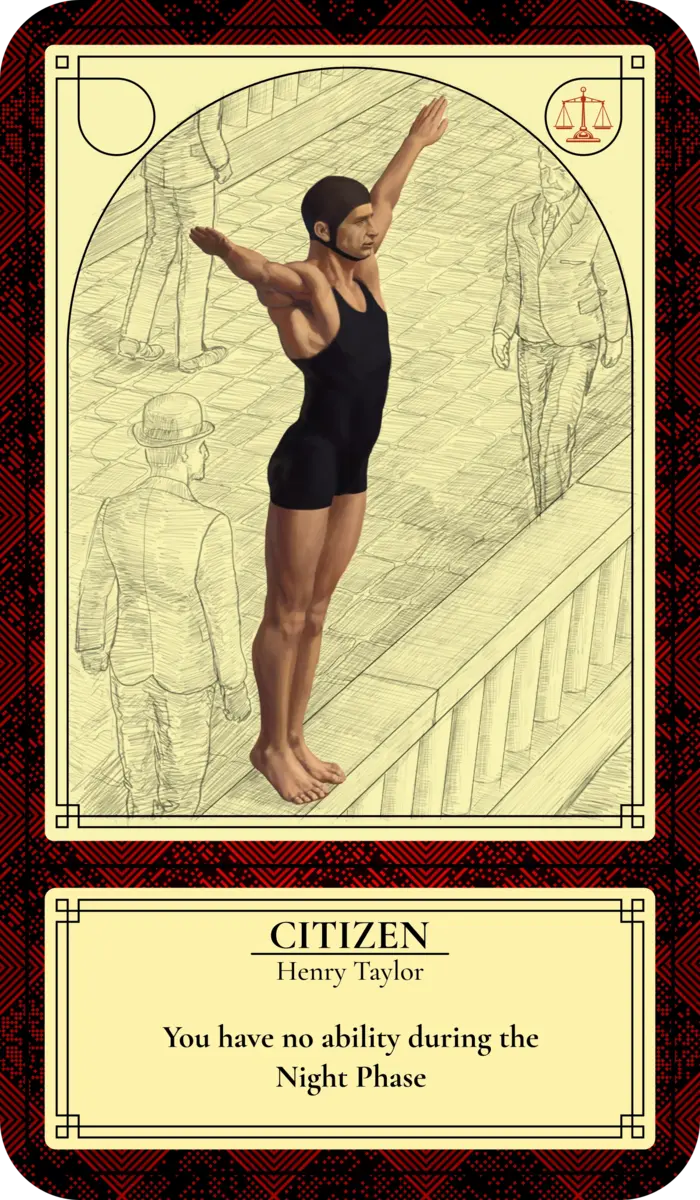
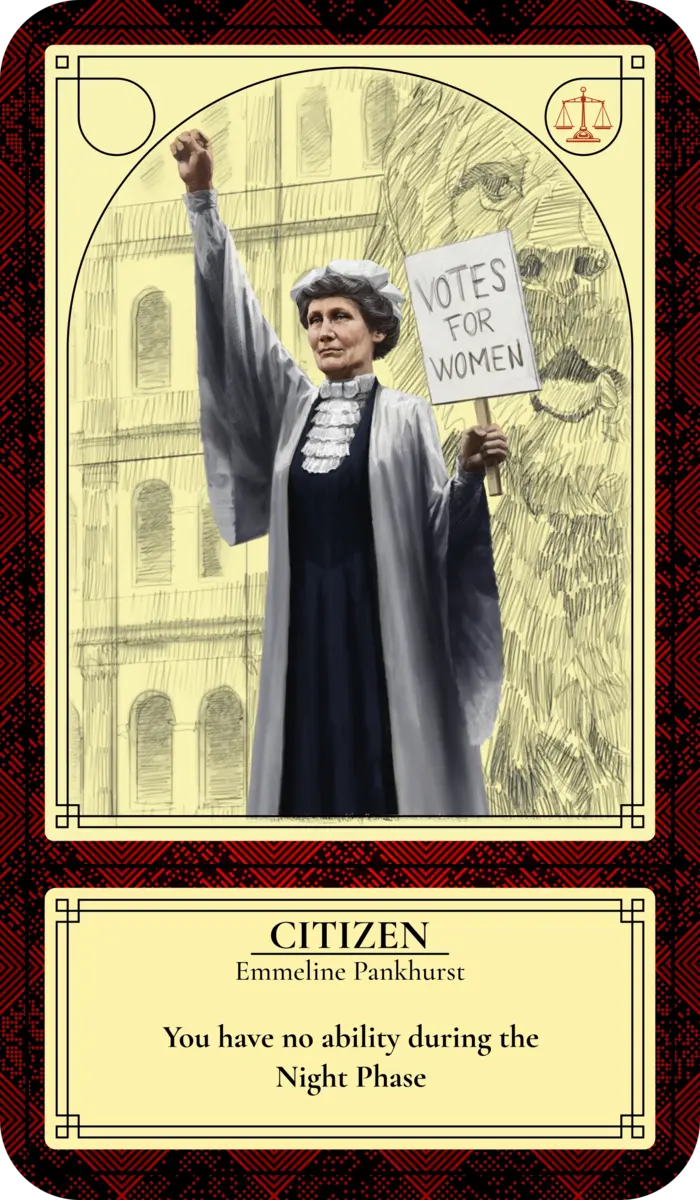
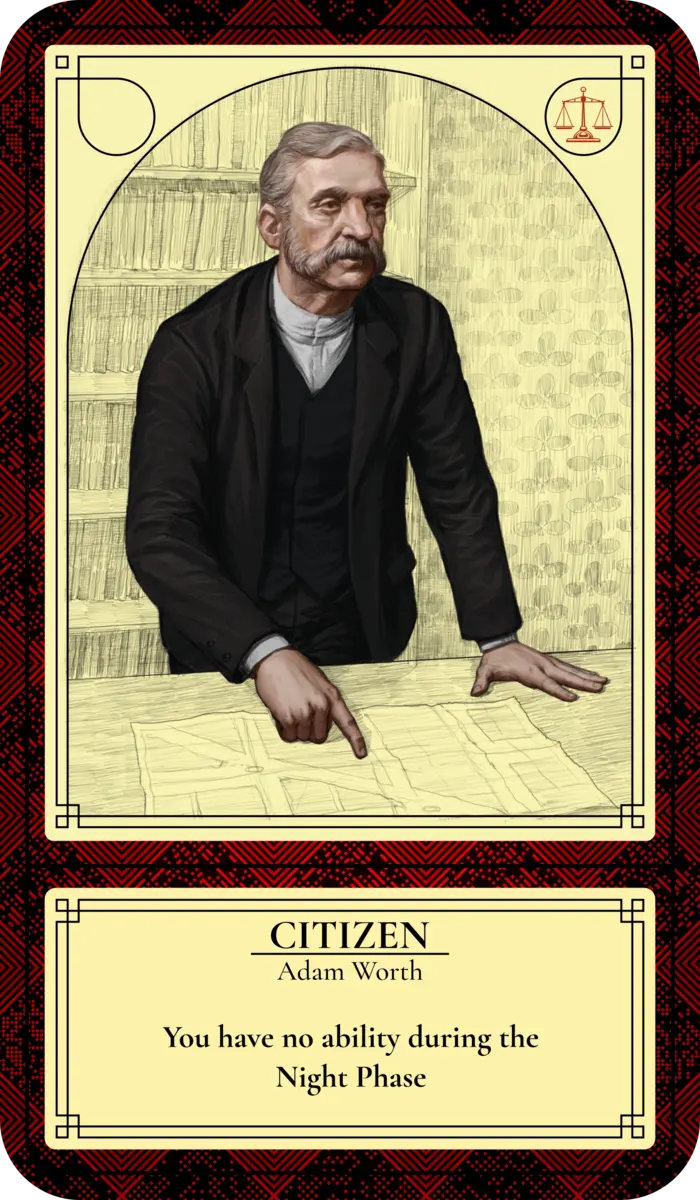
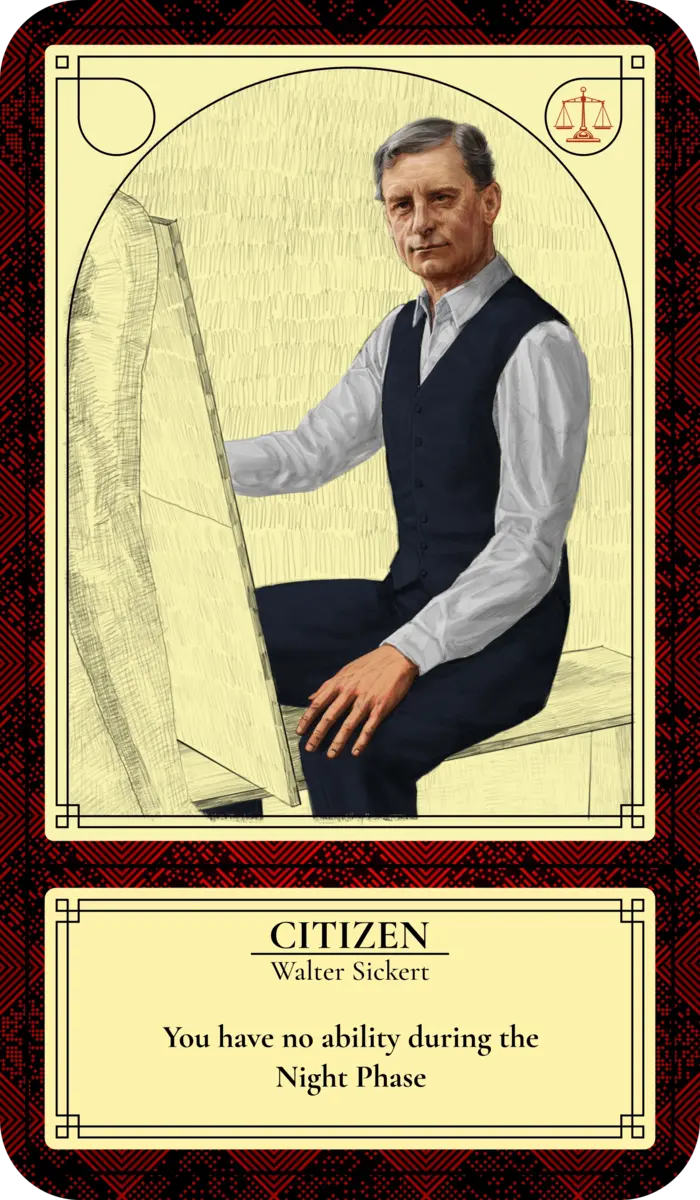
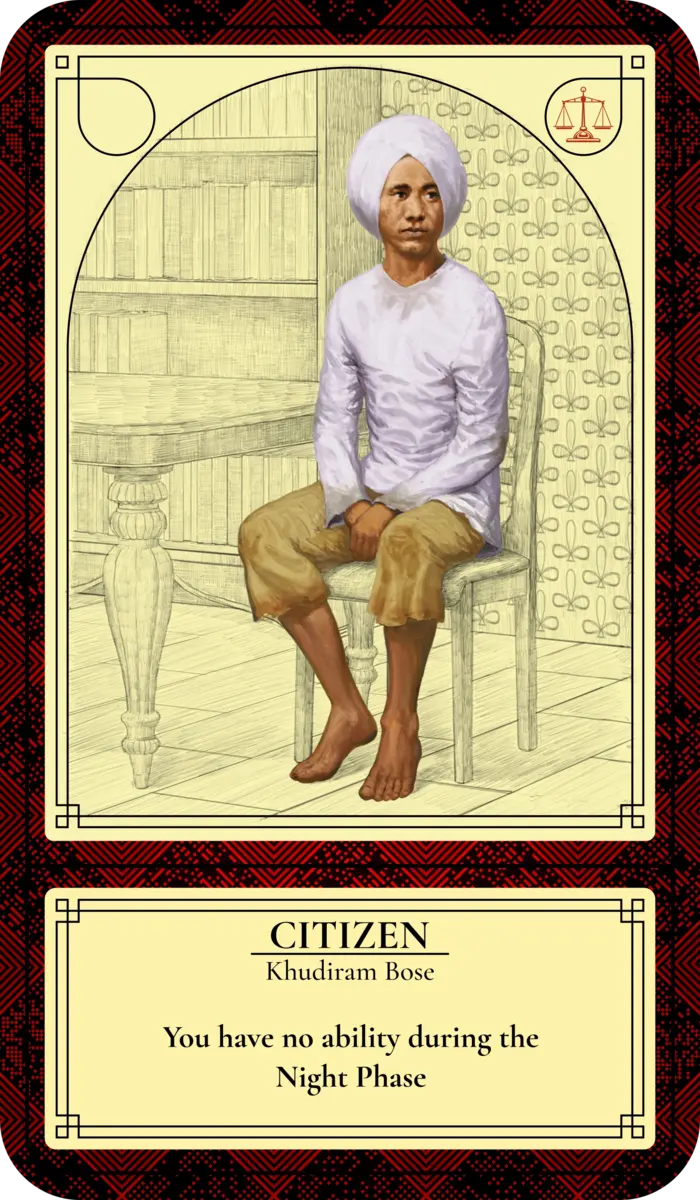
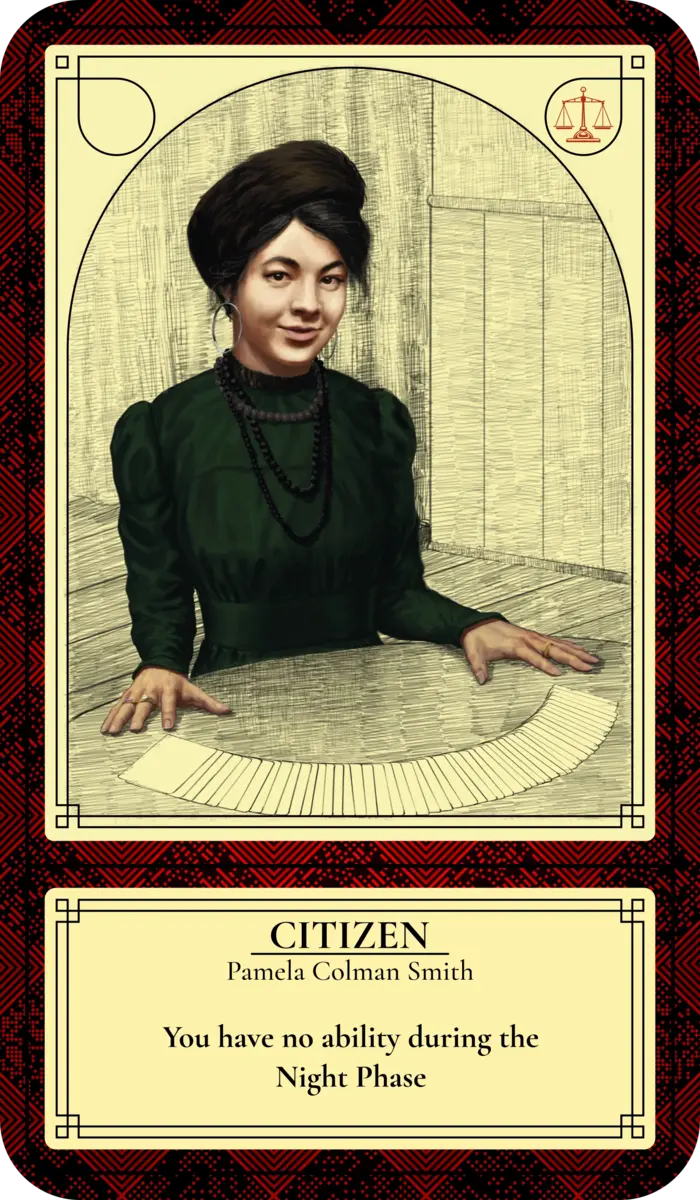
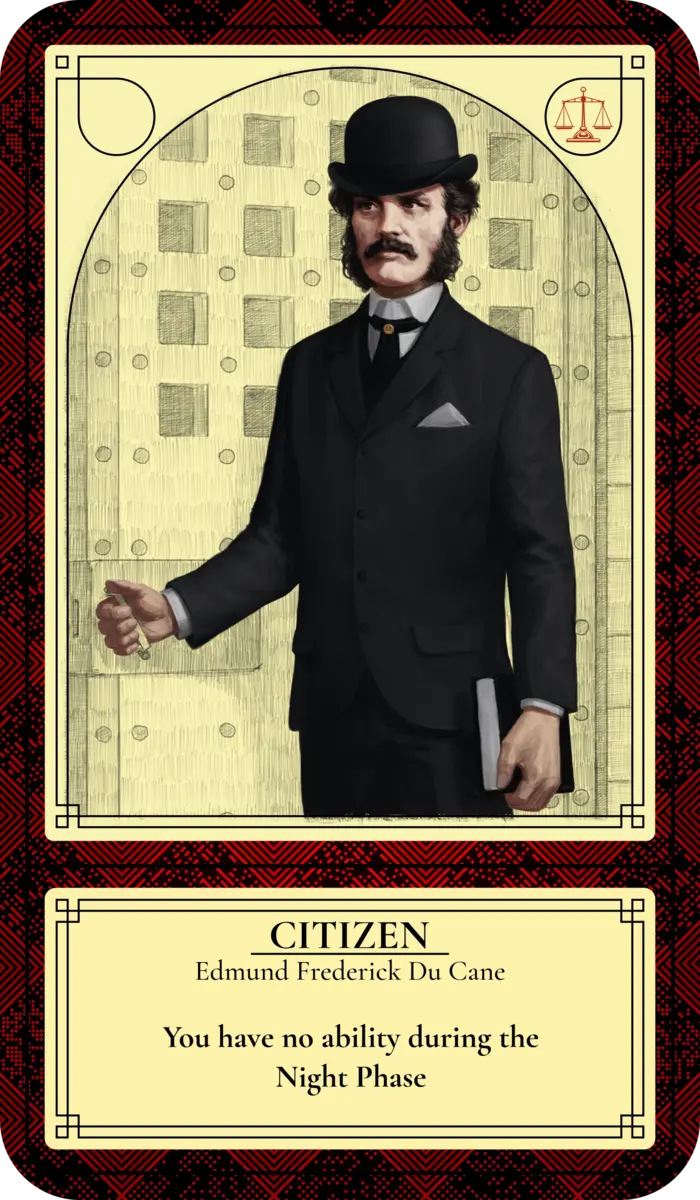
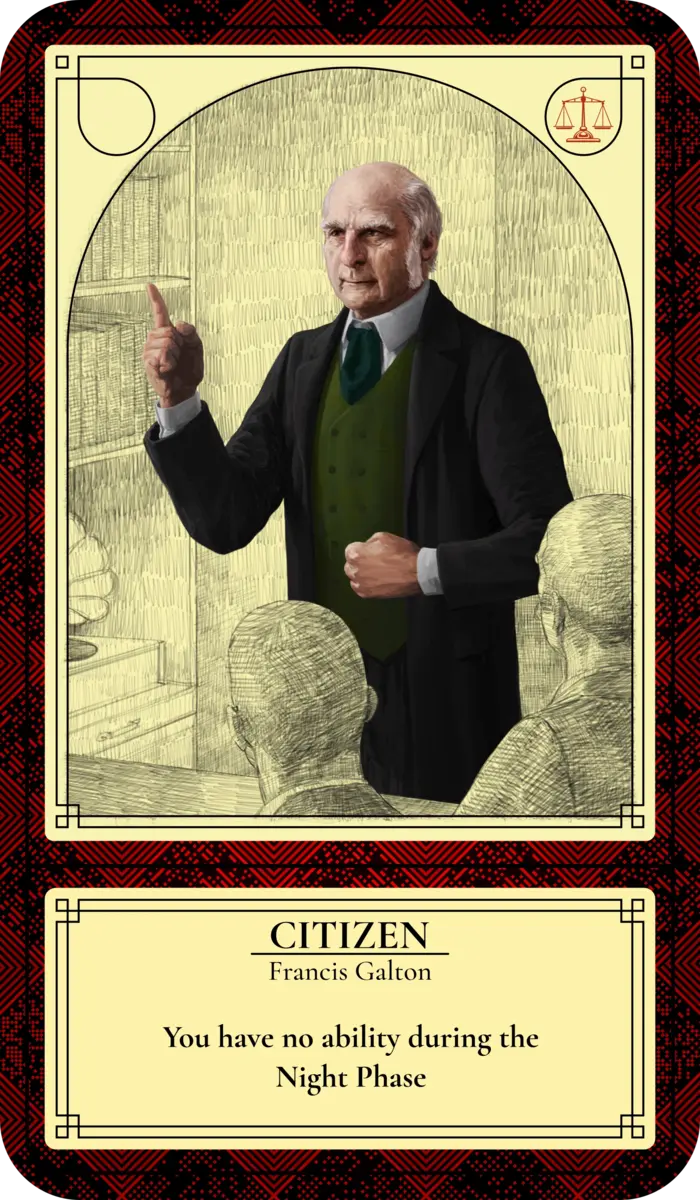
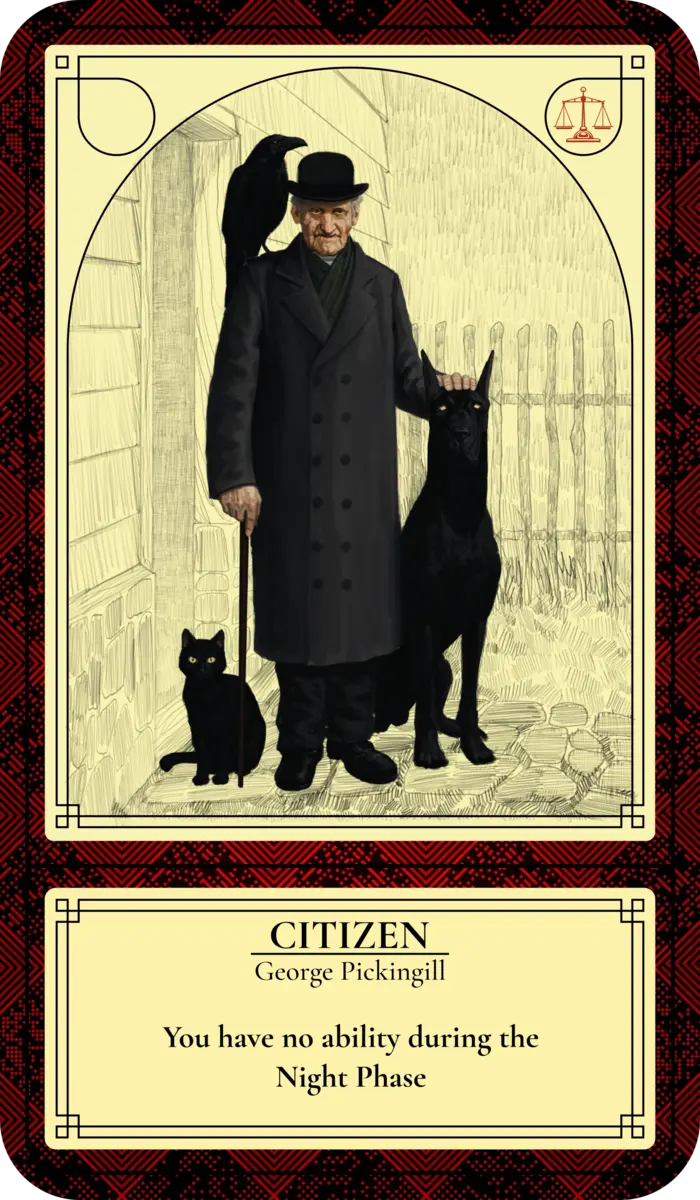
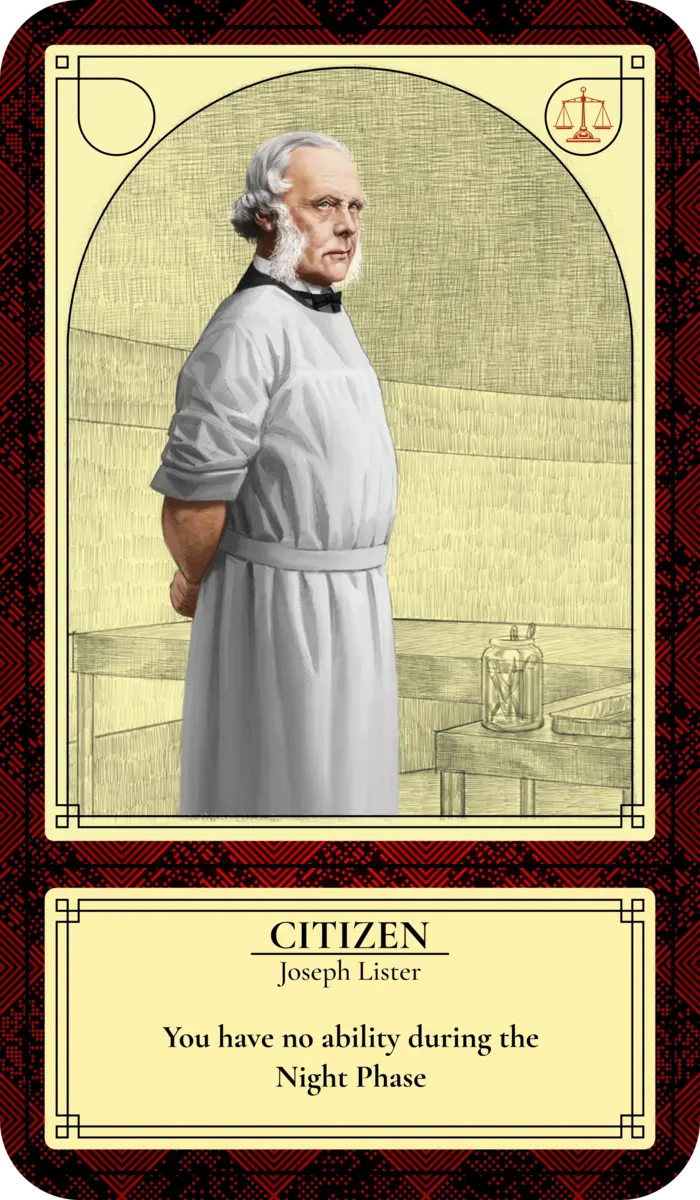
Citizen has 9 printed faces. The job is the same. Only the person on the card changes.
East End lore
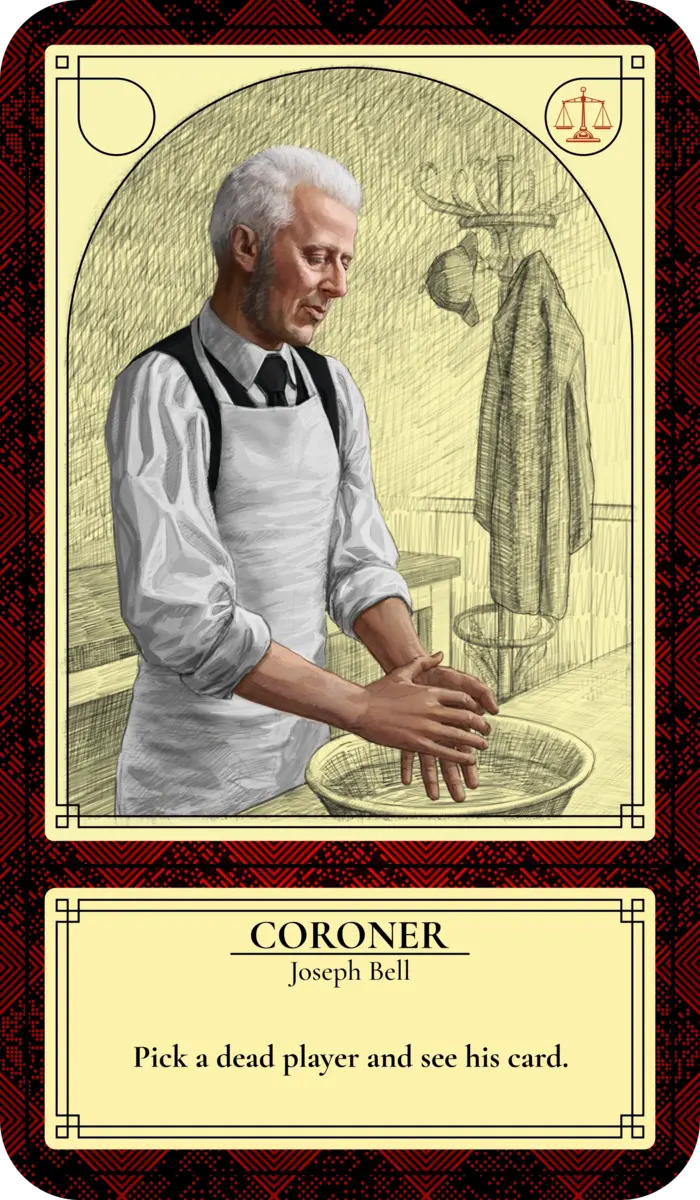
A Citizen gets no secret information at night. Everything they learn, they learn in daylight, by watching. Nobody ever watched better than Joseph Bell. He was the Edinburgh surgeon Arthur Conan Doyle studied under and worked for, and the man Sherlock Holmes was built from. Bell would sit before a lecture theatre, look at a patient he had never met, and tell him his trade, his regiment and where he had lately been stationed. It was not a parlour trick. He believed a doctor who could not read a body before the patient spoke was not doing his job. That is the Citizen at its most dangerous: no ability card, just a pair of eyes and the patience to use them.
In the lore, Galton wanted Bell more than anyone else on his list. Bell told him to come to the ward at four and walk round with him, which was itself an examination. He heard the whole thing out without interrupting, then asked eleven questions, every one about something Galton had mentioned in passing. He never asked whether Galton believed it. He asked how Galton came to be in that police station at that hour. Then he said he would come, and that they had left out the most useful person of all: a nurse. At the Three Harpies he was among the first through the door.
“The hands tell me everything about a man. His were very, very clean.”
Dr. Joseph Bell
Street
Mill hands, clerks, and shopkeepers fill the East End. Most people in a mafia card game look like this — ordinary, and hard to prove.
Meeting
The City lives or dies on ordinary chairs. This seat is the crowd: talk, doubt, and a vote when the talk runs out.
The room
A silent Citizen worries people. A loud one worries them too. The table has to live with both.
Inspired by
1837–1911
Sherlock Holmes was a real man, and he taught surgery in Edinburgh. Arthur Conan Doyle — the writer who invented the world's most famous detective — was his student, worked as his clerk, and said so plainly for the rest of his life: the method, the manner, the trick of reading a stranger at a glance, all of it came from Dr Joseph Bell. Bell was thin, sharp-faced, with a nose like a beak and a high jerky voice, and he walked with a limp. He would sit in front of a lecture theatre of medical students, look at a patient he had never met, and tell the man his trade, his regiment, and where he had recently been stationed.
He was not guessing and he was not performing. The point of the exercise was medicine. A patient's hands tell you his occupation, and his occupation tells you what he has been breathing for twenty years. Tan lines tell you where he has served. A gait tells you which joint has gone. Bell drilled his students on it relentlessly — observe first, then deduce, and never in the other order. He once told a woman she had walked from a particular ferry landing, because of the red clay on her boots, and asked after the child she had left with her sister, because she carried a coat too small for herself. He was Queen Victoria's personal surgeon in Scotland, the first surgeon at the Royal Hospital for Sick Children, and he edited the Edinburgh Medical Journal for over twenty years. The parlour trick was a teaching tool, and the teaching was the work.
The habit came out of the wards, not out of cleverness. Edinburgh in the middle of the nineteenth century was a city where the poor arrived at a hospital unable to explain themselves — illiterate, frightened, sometimes lying about how they had been injured, often unable to name what they did for a living in a way a doctor would understand. There was no laboratory to send anything to. There was no imaging. There was the patient, in the room, and about four minutes. Bell decided that a doctor who could not read a body before the patient opened his mouth was not doing the job.
The police came to him for it. He was consulted by the Edinburgh authorities on criminal cases, and he was asked about the Whitechapel murders in London, though what he sent and what came of it is not reliably recorded. He hated the fame the novels brought him and insisted, publicly and repeatedly, that Doyle had made far more of him than there was. He died in Edinburgh in 1911. Every fictional detective who has since looked at a man's shoes and known his week is descended from a surgeon who did it to save people's lives.
Forget the novels and the man who wrote them. Remember only this: he could tell you what you had been doing before you sat down, and he considered that the bare minimum a competent professional owed a stranger.
The City
Same team. Different jobs.
Mafia is easier to play than it looks. Everyone gets a hidden card — most of the table is City, a hidden few are Mafia. At night the killers quietly pick a victim while a doctor tries to guess who needs saving and a cop digs for the truth. By day the survivors argue about what happened, put someone on trial, and vote. The City wins by finding every killer; the Mafia wins by surviving until they can win a vote. The walkthrough takes you through the whole game, from the deal to the last trial.
How to play mafiaYour first game should be The Lamp and the Lancet — eight players and only three night wakes, so nobody gets lost. With a ninth chair the same deal becomes, naturally, The Ninth Chair. All twenty published deals, up to twenty-seven players, are on the setups page.
The teaching deal. Eight chairs, one lamp, one lancet — and two knives that already know each other.
City: 1 Policeman, 1 Doctor, Citizens to fill Mafia: 2 Assassins
The classic table of nine. Two killers, a cop, a doctor — and the vote does the rest.
City: 1 Policeman, 1 Doctor, Citizens to fill Mafia: 2 Assassins