What a mafia game narrator script is
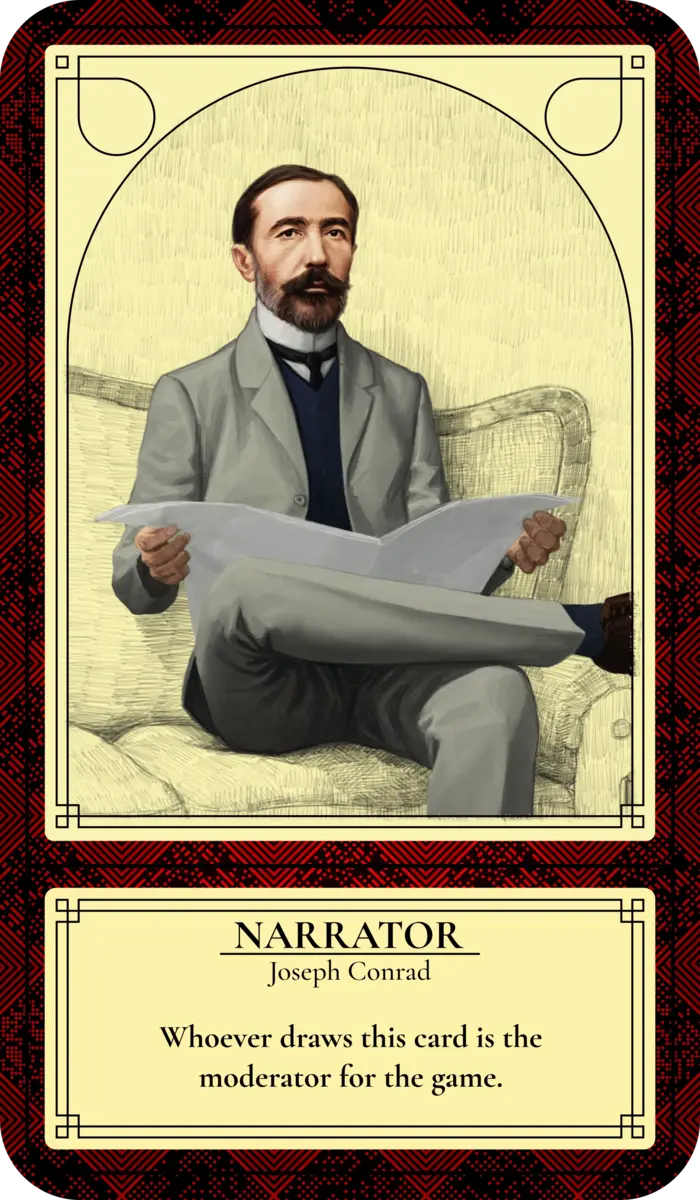
The narrator is the moderator — the one player who does not take a hidden card and does not belong to a team. While everyone else sits with their eyes closed, you call roles in a fixed order. The players holding each card open their eyes, do one silent job, and go back to sleep. In the morning you announce who died. Through the day, you keep the trial honest. Every secret in the game passes through you, and only you.
Most people search for a mafia game narrator script because they have been handed the host job and do not want to invent lines in the dark. Good news: the lines below are short on purpose. “Wake. Point. Sleep.” That plainness is doing real work. If your sentences change from night to night, the table starts reading you instead of each other — and nobody should be able to tell a real wake from an empty one by how pretty you made the words.
This page is the spoken script and nothing else. The night phase page explains the wake order and why it runs that way. The day phase page covers how accusations and trials work. And if you need an ability rather than a line to read, go to the cards themselves on mafia roles.
Before you speak
Your most important work happens before anyone closes their eyes. Write out your night list — only the roles in the deal you actually shuffled, in wake order — and keep that same list for the whole game, ticking each name as you call it. A host reading from paper never forgets a wake. A host working from memory eventually does, and unpicking that mistake in the dark is much harder than writing a list.
- Sit where you can see every face and every pointing hand.
- Lights low enough that a peek is obvious, bright enough that you can read your paper.
- Phones down. Hats and hair off faces if people keep “resting their eyes” with a gap.
- A private pad for kills, saves, checks, blocks, and who cannot be trialled tomorrow.
- The published setup you actually dealt — do not add extra names to the script “just in case.”
Two habits to fix in your head now. You may fake a call — a “dummy wake” — so the room cannot hear a hole where a role used to be. You may never skip a name out loud just because that player is dead. The living learn far more from what you stop saying than from what you say, and they should never learn the roster from your silences.
Opening the game
Say this
Look at your card once. Hide it. Do not show it. You may say anything for the rest of the game. The card is the only proof.
Oldest player first, then left. Say your name, and say whether you claim City or Mafia. You do not have to tell the truth. You do not have to name a role.
When that round is done: everyone, close your eyes. Heads down. No talking until I say open.
Remember: there is no trial before the first night. Opening statements are introductions, not a vote — nobody goes home during them. When the round of claims is done, you run night one with exactly the same script you will use every night after it.
Basic night script
This is the teaching script, built for the teaching deals — The Lamp and the Lancet at eight players, or The Ninth Chair at nine: two Assassins, one Policeman, one Doctor, and Citizens for everyone else. Only three roles wake, so a first-time host can run it without breaking a sweat. Learn it until it feels automatic — then start adding names from a larger setup.
Teaching deal — read aloud
Everyone, close your eyes.
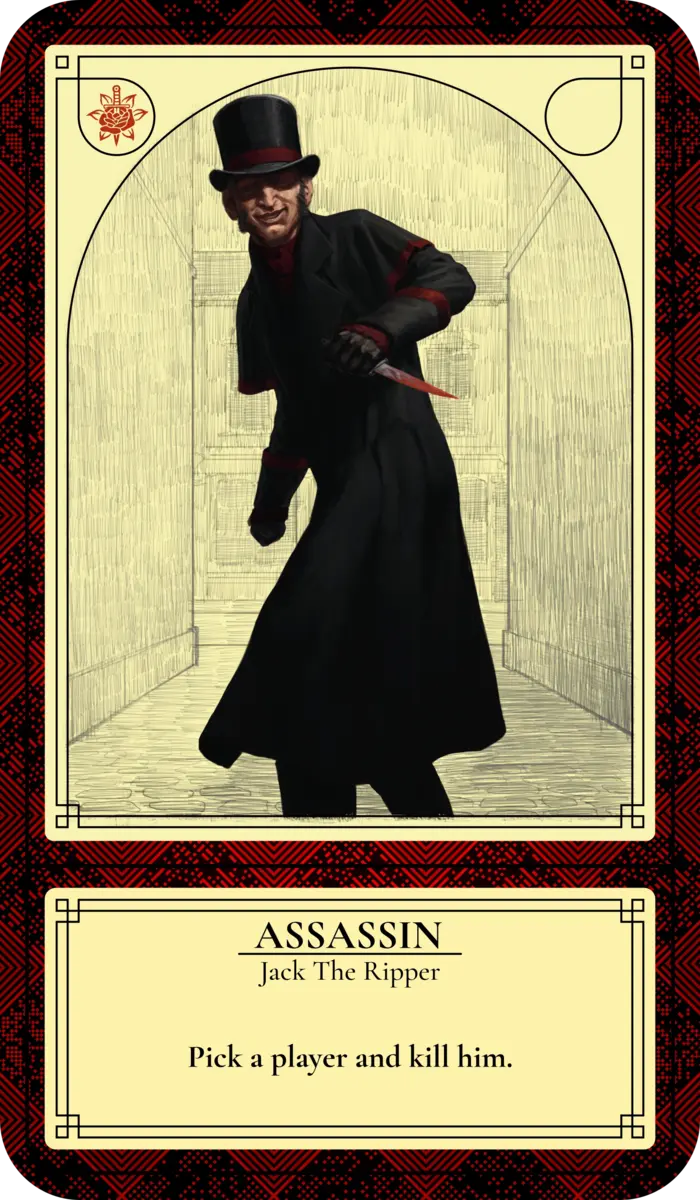
Assassins, wake up. Agree on one living player. Point. Sleep.
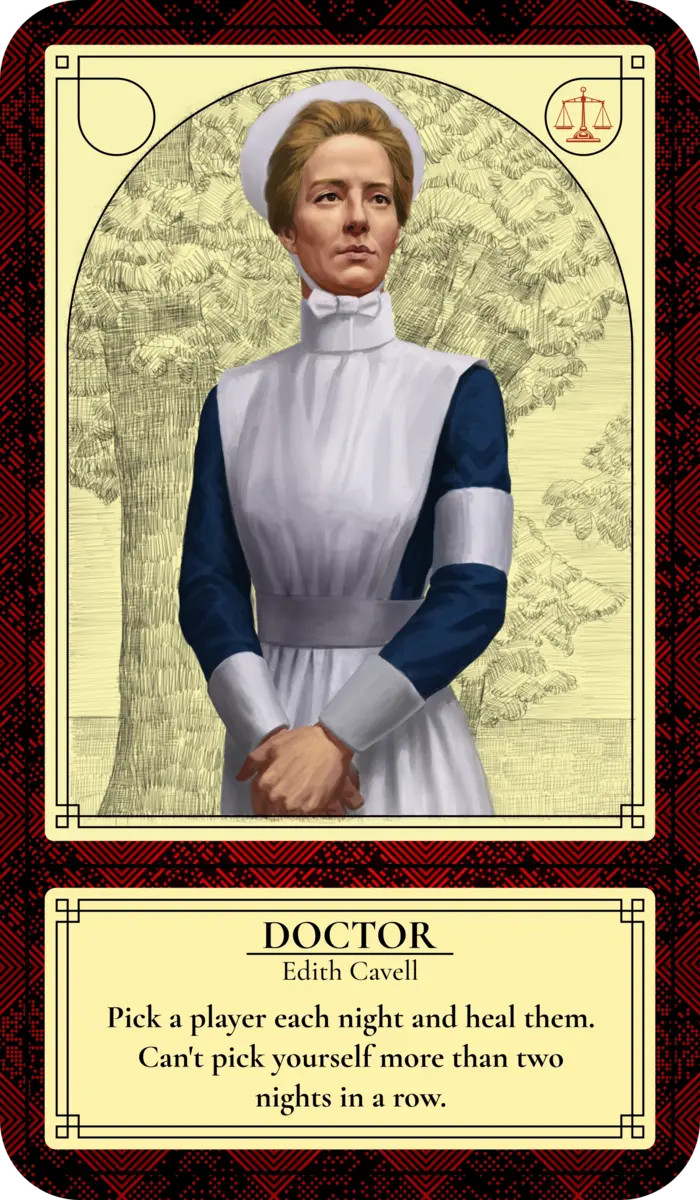
Doctor, wake up. Point at one living player. Sleep.
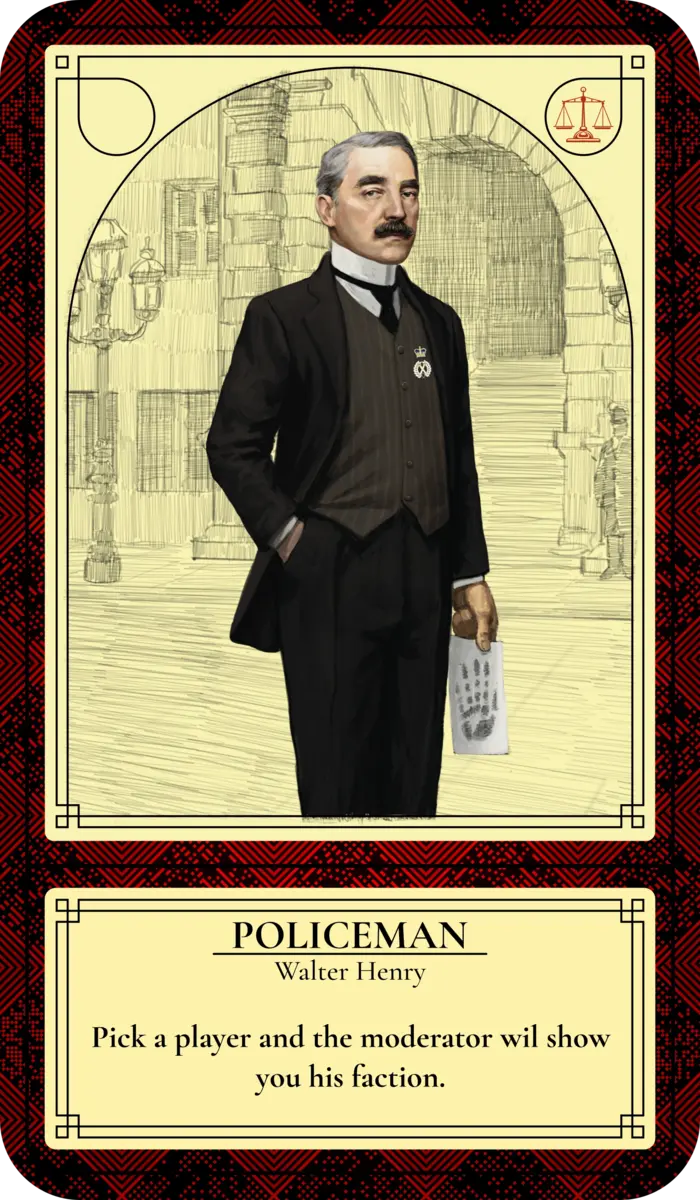
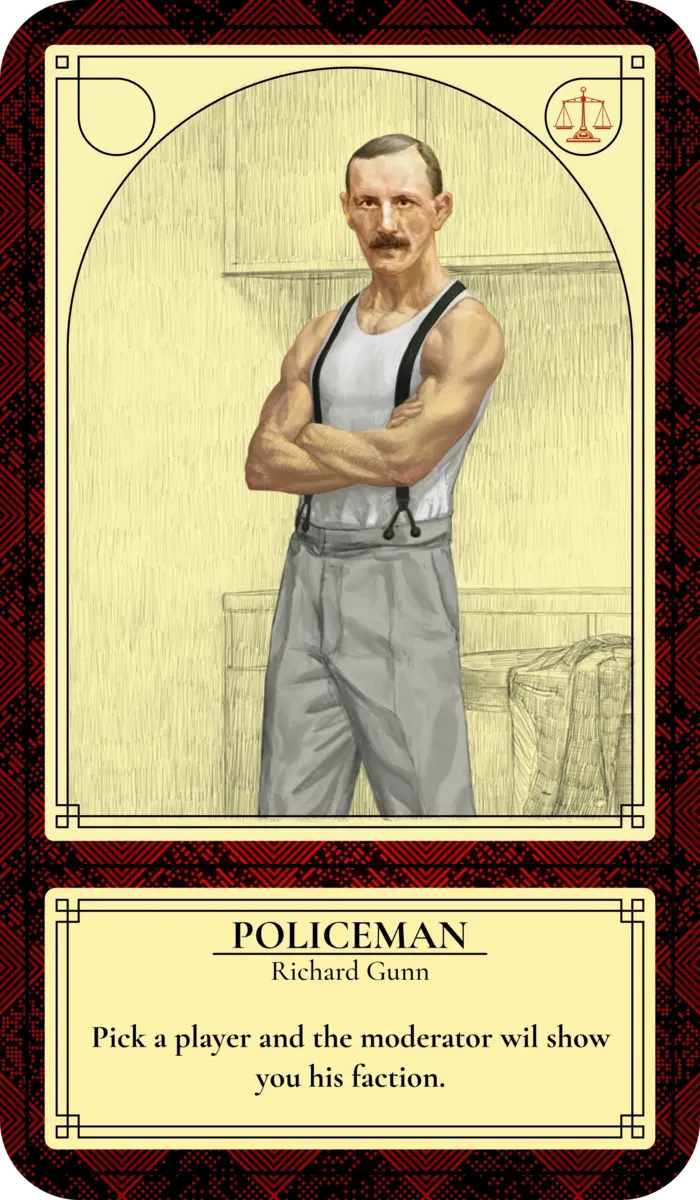
Policeman, wake up. Point at one living player.
Show City or Mafia — a team, not a role name. Then:
Sleep.
Everyone, open your eyes.
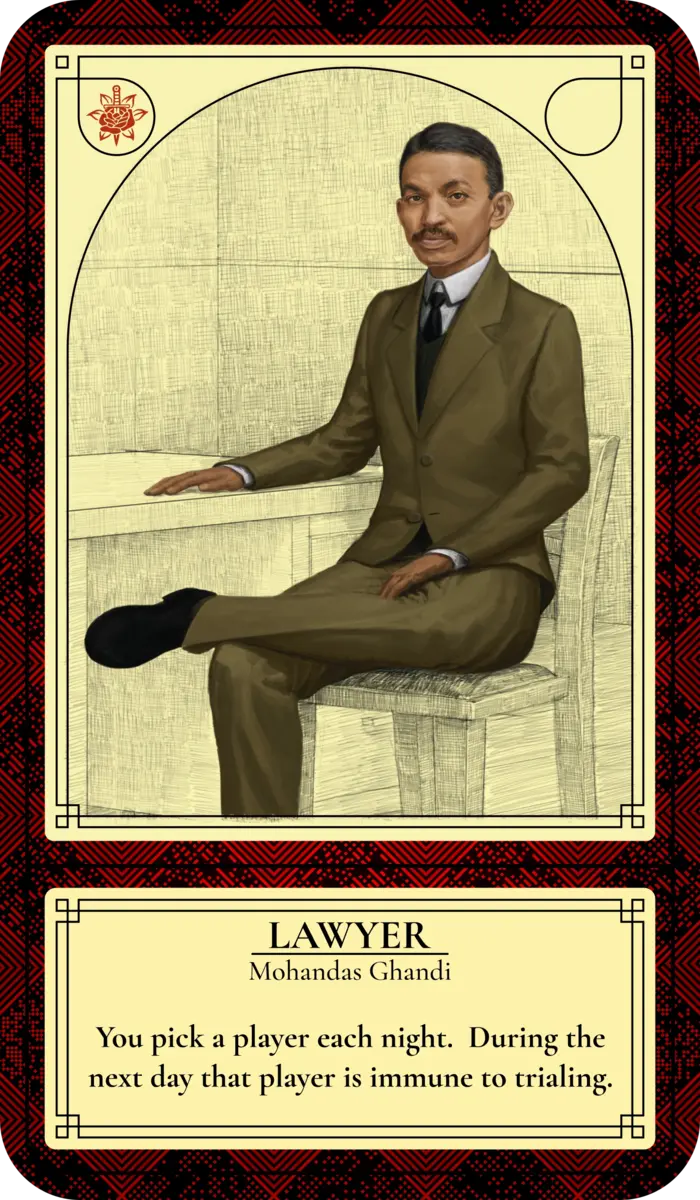
Many tables add one Lawyer to their first game to give the Mafia a second trick. If you did, insert the call right after the Policeman: “Lawyer, wake up. Point. Sleep.” The player the Lawyer picked cannot be put on trial the next day — though the table may still talk about them as much as it likes.
Full night script
The full script has the same spine every time: block first, then the hunt, then the save, then the check, then the Lawyer, then the other night cards, and finally the jobs that pick among the dead. The killers always finish before the Doctor, so a save can land on the right night. The Mistress goes first whenever she is in the deal, because a cancelled ability has to be cancelled before it fires. Cross out any name that was not in your shuffle, and never invent a line for a card whose ability is not published.
Larger deal — read aloud
Everyone, close your eyes.
Mistress, wake up. Point. Sleep.
Assassins, wake up. Agree. Point. Sleep.
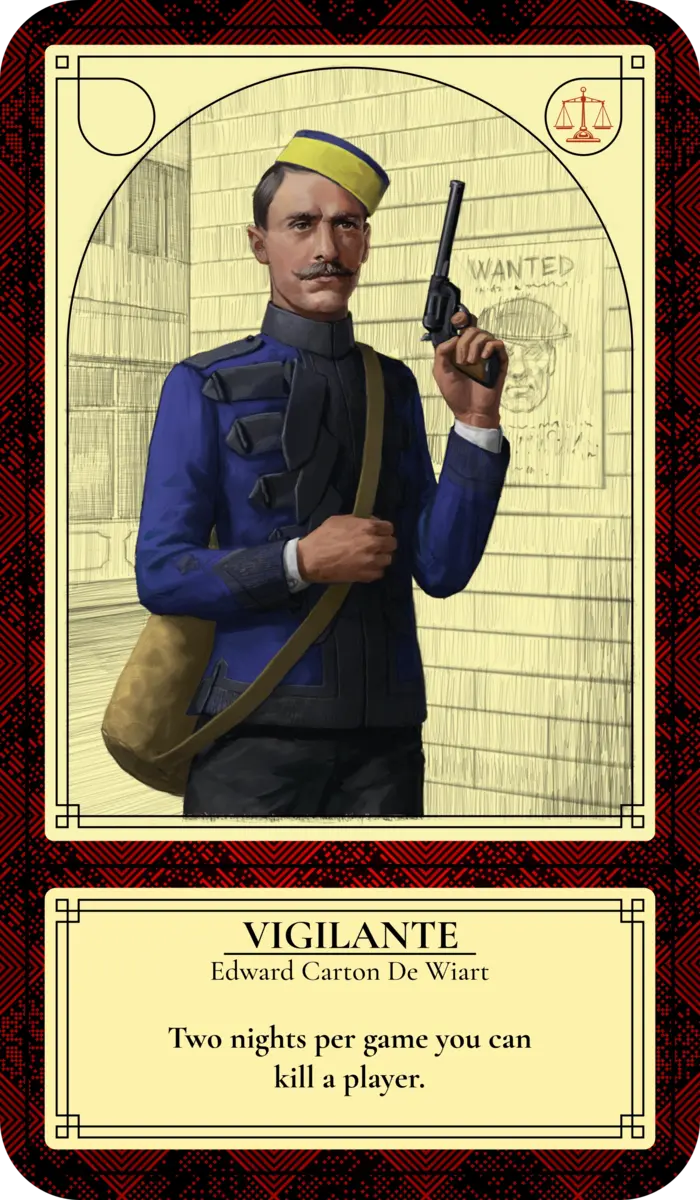
Vigilante, wake up. You may point, or sleep without pointing. Sleep.
Terrorist, wake up. You may point, or sleep without pointing. Sleep.
Doctor, wake up. Point. Sleep.
Policeman, wake up. Point.
Show a team. Then:
Sleep.
Lawyer, wake up. Point. Sleep.
Enforcer, wake up. Point, then show speak or vote. Sleep.
Oracle, wake up. Point. Sleep.
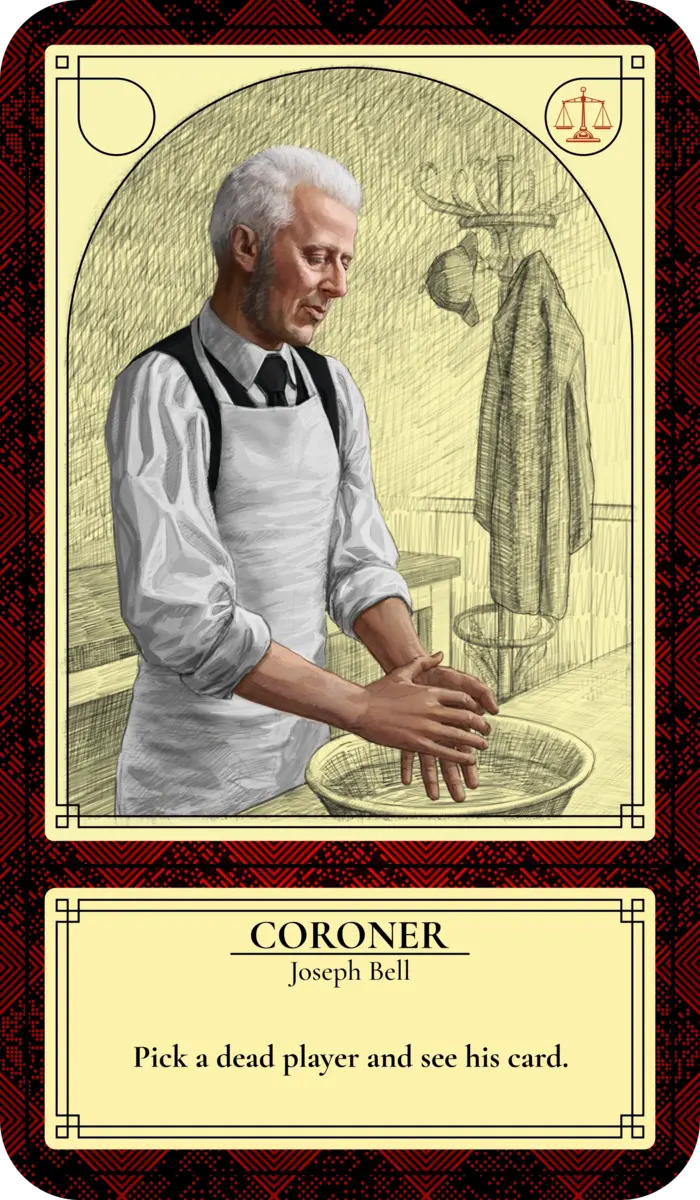
Coroner, wake up. If someone is already dead, point at a dead player. Sleep.
Ritualist, wake up. You may point at a player who died in the last two nights, or sleep. Sleep.
Arsonist, wake up. Point at a dead player. Sleep.
Everyone, open your eyes.
One discipline holds the whole script together: pause the same length on every name, including names nobody holds. And if two jobs hit the same person in one night, do not stop — finish the dark first, then resolve the clash at dawn with the rules. A debate with everyone's eyes still shut leaks information no one can take back.
How to call a role
-
01
Name the role
Say the printed name — never the player, never the team. “Doctor, wake up.” If two people hold the same role, they wake together and share the one visit the card allows.
-
02
They act in silence
Everything happens by point, tap, or nod. You may ask a yes-or-no question of the role that is awake, but nobody else makes a sound. If the player hesitates, let them hesitate — do not fill the silence with a joke, because the sleeping table can hear you.
-
03
You show, if the card needs it
Some cards get an answer — the Policeman's check, the Coroner's look at a dead card. A check sees a team, never a role. Hold up a card, a finger, or a slip of paper so only that player can see it. Then send them back down.
-
04
Sleep
Close every wake with the same verb: “Sleep.” Count to three in your head so every beat lasts the same, then move to the next name on your paper.
One more habit worth breaking. Classic party mafia often says “Mafia, open your eyes,” and that works fine when the killers are the only night team. It stops working the moment extra cards enter the deal — waking the whole dark side would wake the Lawyer, the Mistress, and others who are supposed to act alone, and each would learn things their card never promised them. So call Assassins for the hunt, and call every other night job by its own name.
What to say for each night role
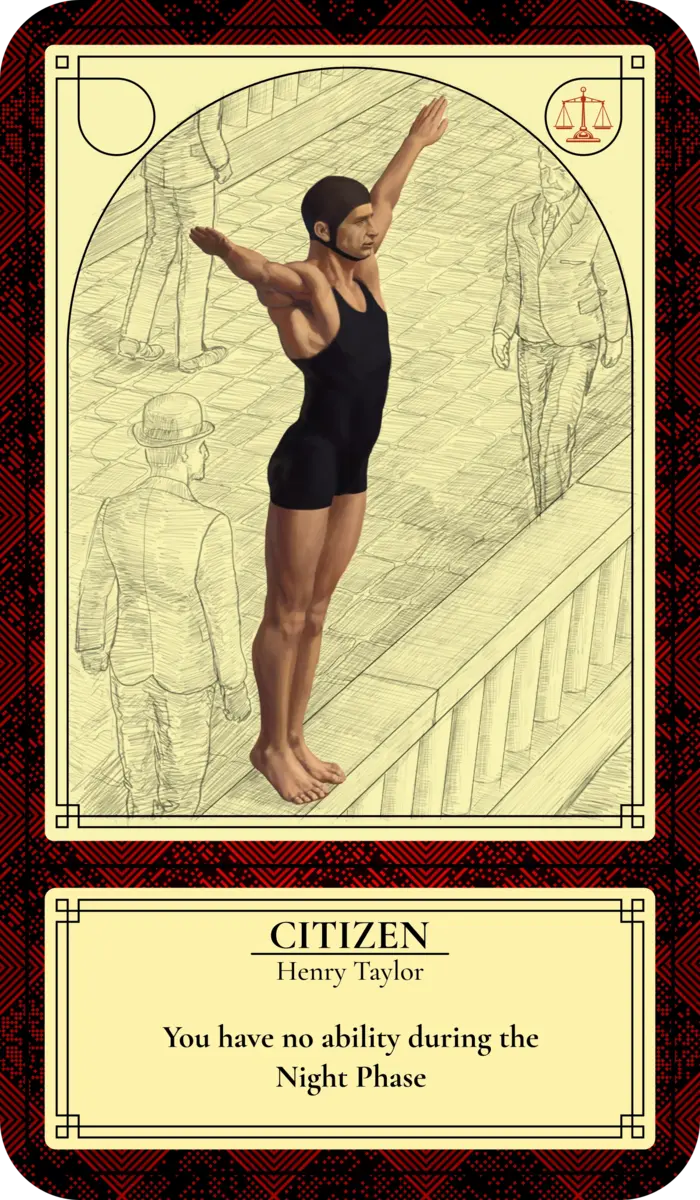
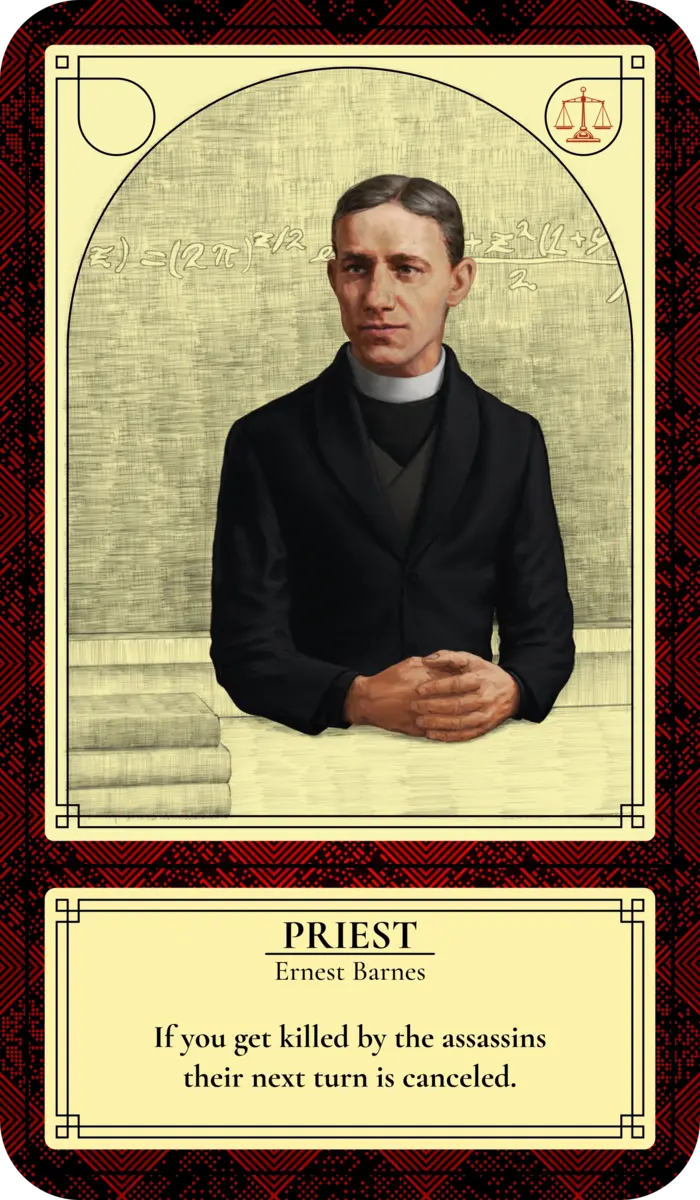
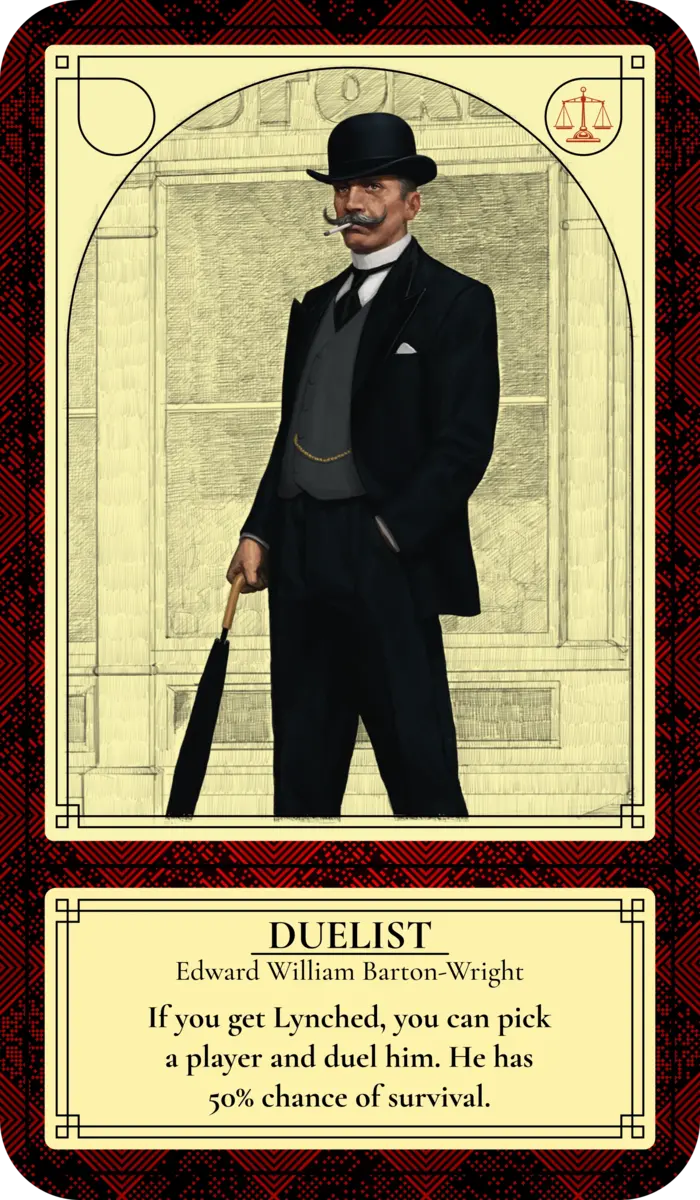
The table below covers every night wake in the deck. Skip any row that is not in your deal. The passive cards — Citizen, Priest, Duelist — have no wake at all, so never call them at night; their abilities take care of themselves. The Narrator does not wake either, for the simple reason that they are already looking.
| When | Role | Say | You do |
|---|---|---|---|
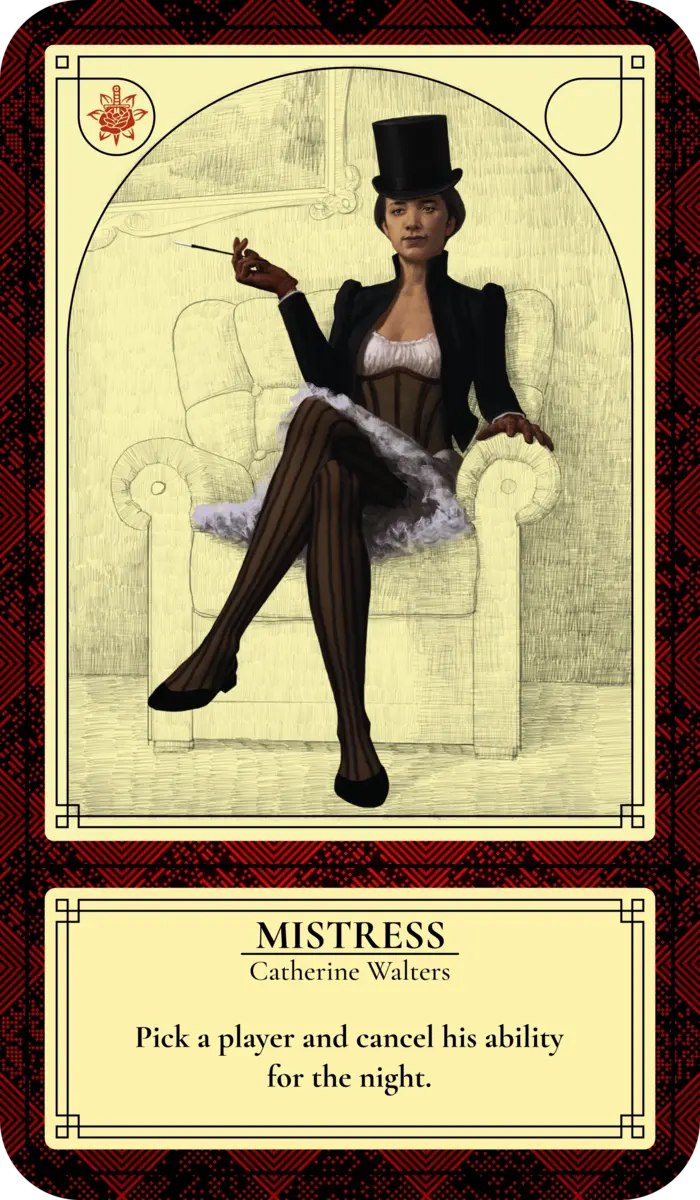
| First | Mistress | “Mistress, wake up. Point. Sleep.” | That player’s night job does not happen. |
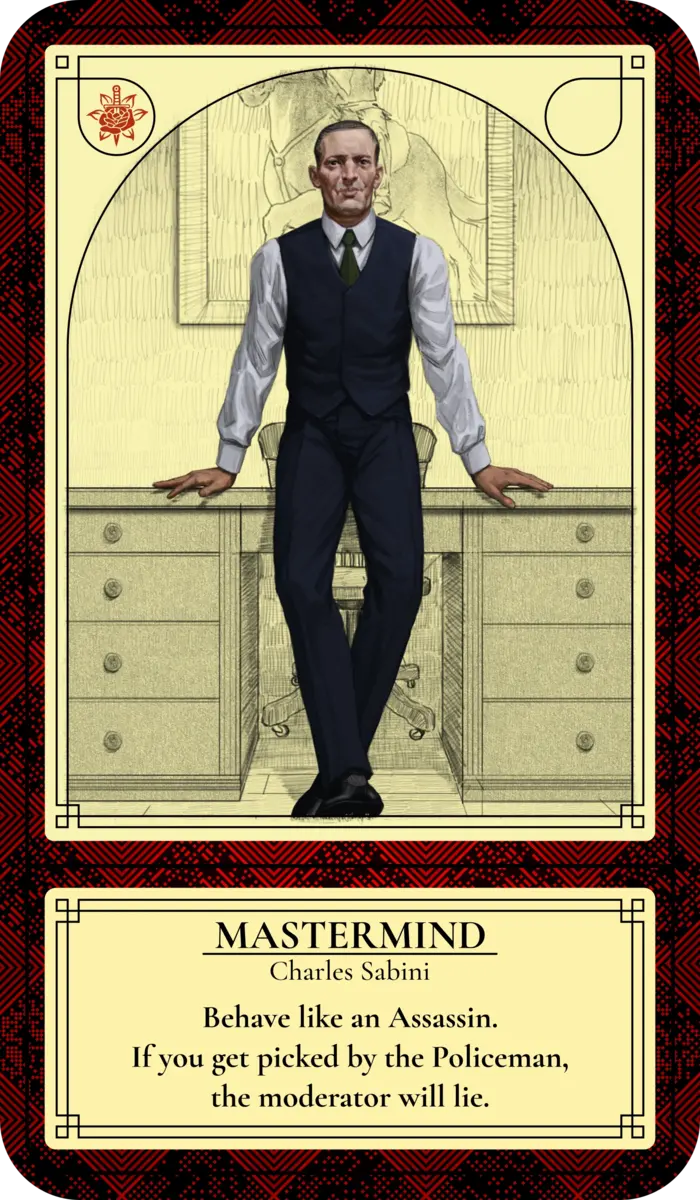
| Hunt | Assassins | “Assassins, wake up. Agree. Point. Sleep.” | One victim. The Mastermind hunts with them when that card is seated. |
| Hunt | Vigilante | “Vigilante, wake up. You may point, or sleep.” | Twice per game, pick a player and kill them. Track uses on your pad. |
| Hunt | Terrorist | “Terrorist, wake up. You may point, or sleep.” | Once per game, pick a player; you both die. |
| Save | Doctor | “Doctor, wake up. Point. Sleep.” | One living player. They cannot pick themselves two nights in a row. Do not say whether the save hit. |
| Check | Policeman | “Policeman, wake up. Point.” | Pick a player. Show their faction. The Mastermind makes this check lie. Never say the role name. |
| After cop | Lawyer | “Lawyer, wake up. Point. Sleep.” | That player cannot be put on trial tomorrow. Write the name. You may still let people talk about them in the day. |
| After lawyer | Enforcer | “Enforcer, wake up. Point, then speak or vote.” | Next day that player cannot speak, or cannot vote, as shown. Remind the table in the day without saying who visited. |
| After lawyer | Oracle | “Oracle, wake up. Point. Sleep.” | Remember the last mark. If the Oracle dies, dawn may reveal that last player as the card requires. |
| After a death | Coroner | “Coroner, wake up. Point at a dead player.” | Show that dead card in private. Night one often has nobody to pick. Still run the beat. |
| After a death | Ritualist | “Ritualist, wake up. You may point, or sleep.” | They may revive a player who died within the last two nights. Night one often has nobody to pick. |
| After a death | Arsonist | “Arsonist, wake up. Point at a dead player. Sleep.” | Each night, pick a dead player and burn them; they cannot vote at the Final Witness. |
Dummy wakes, dead roles, and empty names
The dark leaks information through absences, and this is where hosts get caught. Here is how to handle every awkward case without teaching the table anything.
Role not in the deal. Do not call it, ever. Your written list is the deal you shuffled, not the whole box, and calling a card nobody could hold only wastes the night.
Role in the deal, nobody alive holding it. Still say the name. Pause. Pretend to watch a point. Say “Sleep.” Make it exactly the same length as a real wake — this is the dummy wake, and it exists so the living cannot work out which roles have died by listening to your rhythm.
You forgot a wake. Do not open the day. Go back and replay the missed names, and fake a few extra calls around them so the table cannot tell which one was the real hole. Then finish the list as normal.
Someone is blocked. Still wake them if they would normally wake. They simply have no job tonight — if the Mistress or another block cancelled them, send them back down without accepting a point. Do not announce the block; discovering it is part of their game.
A once-per-game card has already fired. Still call the name. The player sleeps without pointing. Same pause as every other night. The Vigilante's spent bullets and the Terrorist's used vest are secrets too.
Dawn script
Say this
Everyone, open your eyes.
If someone died: Last night, [name] died. They cannot speak. They do not show their card. They may watch.
If nobody died: Last night, nobody died.
If a card forces a reveal, say only what that card requires. Then: The floor is open. Anyone living may speak. Anyone living may accuse.
The rule at dawn is names, not roles — unless a card specifically forces a reveal, like the Oracle's death. A quiet night is still news, so never skip the announcement. And never explain why a save hit or a kill missed; the table's whole morning argument depends on not knowing.
Keep the dead in your script, too. When the expansion roles of The Final Witness are in the deal, dead players still close their eyes at night with everyone else, and on the last day of lynching they cast one collective vote toward that final lynching. As host, that means you do not wave the dead off to the sofa — they stay in the circle until the game truly ends.
Day and trial script
The day is the other half of a mafia game narrator script, and it asks less talking of you, not more. You are not a third team and you are not the entertainment. You count hands, you stop a speech that has already made its point, and you protect every secret the night sealed. The table provides the drama; you provide the structure.
Say this
Talk. When you have a name, we count.
A trial opens when half the living players plus one stand against one name. I am counting heads, not noise.
If the Lawyer marked someone last night: You may talk about [name]. You may not put them on trial today.
If the Enforcer stripped a right: [Name] cannot speak today. Or: [Name] cannot vote today. I will not say why.
Trial is open on [name]. Accusers first, short. Then [name] gets the last word.
Live or die. Hands up for death. [Name] does not vote. I will count.
If yes: [Name] is out. Silent. Card stays hidden.
If no: [Name] stays. The day continues.
A few edges worth knowing before they happen. The accused never votes on their own fate. Two names can stand trial at once only if both accused agree to it — the sentence then covers both of them, and the day ends when that trial ends. And a successful vote on a Duelist is not a simple death: night falls, and he duels one of the players who voted against him. Resolve the card as printed instead of assuming he is gone. Exact vote counts live on the day rules; the full walkthrough is the day phase.
Checking for a winner
Say this
Before we close our eyes: I am counting the living.
If City has won: The killers are gone. City wins.
If Mafia has won: Mafia can win the next vote. Mafia wins.
If night would hand Mafia that vote: We do not go to night. We vote again today.
If nobody has won: Everyone, close your eyes.
Run this count in your head before every night, because games end quietly more often than they end loudly. City wins when the killer roles are gone — voting out a Lawyer or a Mistress is progress, but it is not the win while an Assassin still breathes. Mafia wins when they can match or beat the remaining City on a vote: two against two, or one against one, exactly as the printed win line says. Dead players do not count for either side. When one team has won, say so out loud, and then stop — the game does not need an encore.
If something goes wrong
Every host makes a mistake eventually. What separates a good night from a ruined one is what you do in the ten seconds after. The short answers:
- Peeking. Stop the night. Take a private report from whoever saw it. Restart the game, or sit that person out — but never announce the role they saw, because that would double the damage.
- Someone talks in the dark. Send that role back down, fake a few extra beats so the moment is buried, and do not repeat what they said. Ever.
- You showed a check to the room. Treat it like a card everyone has seen, because it is. The game may need a restart, and it is better to admit that than to limp on.
- Two lethal effects, one body. Finish the night first. At dawn, resolve it with the visit rules and the FAQ. The Doctor stops most kills on the night they happen — but a Duelist duel is not a night kill, and the Doctor cannot stop it.
- A dead player saw a mistake. They wait for day and tell you quietly, to the side. The dead do not coach the living during a live night, even when they are right.
- You are simply lost. Protect the secrets first and worry about elegance later. A slow night that stays sealed beats a clever night that teaches the room your wake list.
The longer error notes are on the rules page.
Mafia game narrator script FAQ
Quick answers to the questions hosts actually ask mid-game. If a clash involves a specific card, the printed mechanic is on that card's page.
What is a mafia game narrator script?
It is everything the host says out loud during a game of mafia: close your eyes, wake a role, point, sleep, open your eyes, name who died, then run the day and the trial. This page is that script for The Final Witness, written so you can read it straight off the table.
What does the narrator say at night in mafia?
As little as possible. “Everyone, close your eyes.” Then each role in turn: “Wake up. Point. Sleep.” Then “Everyone, open your eyes.” In the basic deal you only call Assassins, Doctor, and Policeman. Whatever happens, do not explain why a save hit — the morning argument depends on nobody knowing.
Should I say “Mafia, wake up”?
Only when the killers are the only night team, as in a very small party game. In this deck, extra cards act at night on their own, and waking the whole dark side at once would show them each other. Call Assassins for the hunt, and call every other night job by its own name.
What if nobody has that role, or they are already dead?
Two different cases. If the role was never in the deal, never call it. If it was in the deal but nobody living holds it, still say the name, pause as if watching a point, and say sleep — the same length as a real wake, so the table cannot hear the hole.
Do I announce the dead player’s role at dawn?
No. Say the name and nothing else. The card stays hidden unless a specific card forces a reveal. Dead players do not speak, do not vote, and do not get a dramatic unmasking — that mystery is half the game.
Is the first night different?
Not in this deck. After opening statements you run a full night, kills included. There is no trial before night one. Some other mafia variants skip the first kill; this one does not. Use the same script every night, starting with the first.
What if I forget a role in the dark?
Do not open the day. Go back and replay the missed wakes, and fake a few extra names around them so nobody can tell which call was the real hole. Then finish your list as if nothing happened.
Can dead players open their eyes?
They may watch, and many enjoy it — knowing the whole truth while the living argue is its own reward. But they do not speak, do not coach, and do not show their card. If they spot you missing a wake, they wait for day and tell you quietly, to the side.
Who pays attention to the Lawyer line?
You do — nobody else can. After the Lawyer’s wake, write down the name. The next day, people may talk about that player freely, but you do not open a trial on them. And if the Mafia would win by going to night, the table still has to vote out someone who can be trialled.