Close eyes
Night begins the moment the host says so. Every living player puts their head down — no phones, no peeking, no "resting" with one eye open. The host is the only person in the room allowed to look. Dead players may watch the night unfold if they like, and it is one of the quiet pleasures of the game, but they do not speak and they do not coach.
Note one difference when the expansion roles of The Final Witness are in the deal: the dead close their eyes at night too, same as the living. They are not out of the game either — on the last day of lynching, the dead cast one collective vote toward that final lynching, which is where the deck gets its name.
Before the very first close of eyes, the host writes out the night order and keeps that same list for the whole game. This matters more than it sounds: a stable, boring script is what stops information leaking. A good host can fake a call so the table cannot hear which roles are gone, but the reverse is forbidden — never skip a name out loud in a way that teaches the room what is left in the deal.
How a wake works
Every wake follows the same tiny ritual. The host calls a role by name. The players holding that card open their eyes and do exactly one thing — point at a player, or look at what the host shows them. Then they close their eyes again. No words, no whispers, no charades. The rest of the room should hear a creaking chair at most, never the shape of a plan.
When nobody holding a card is still alive, the host runs the beat anyway — the same pause, a pretend point, the same "sleep." That dummy wake is what keeps the living from working out who has died just by listening to the rhythm of the dark. Then it is on to the next name on the list.
The night order
The order is not decoration — it is what makes the abilities work. The Mistress goes first when she is in the deal, because a block has to land before the visits it is meant to stop. The jobs that pick among the dead — Coroner, Ritualist, Arsonist — go last, once the living night is already settled. Everything else falls in between, on the same spine every time. Write the list once, and call it the same way every single night.
-
01
Mistress
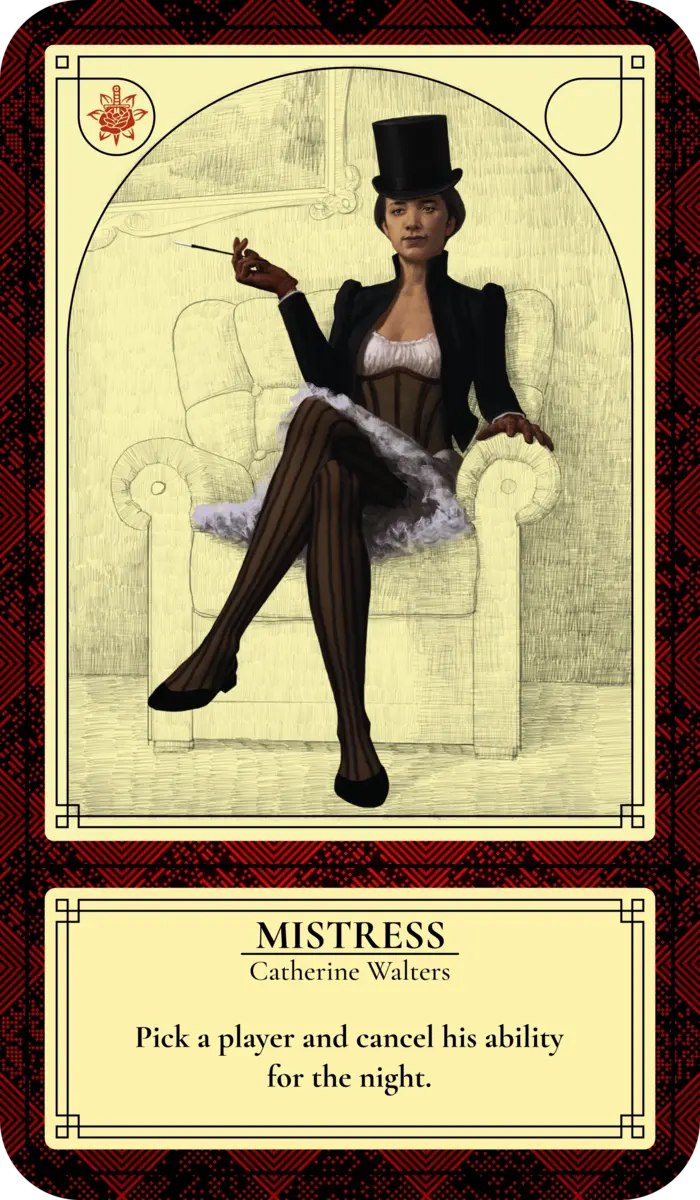
She wakes first and points at one living player, and that player's night ability simply does not happen. The block lands before the killers, the save, and the check — which is the whole point of her going first. If she is not in the deal, skip the call and open with the hunt.
-
02
Killers
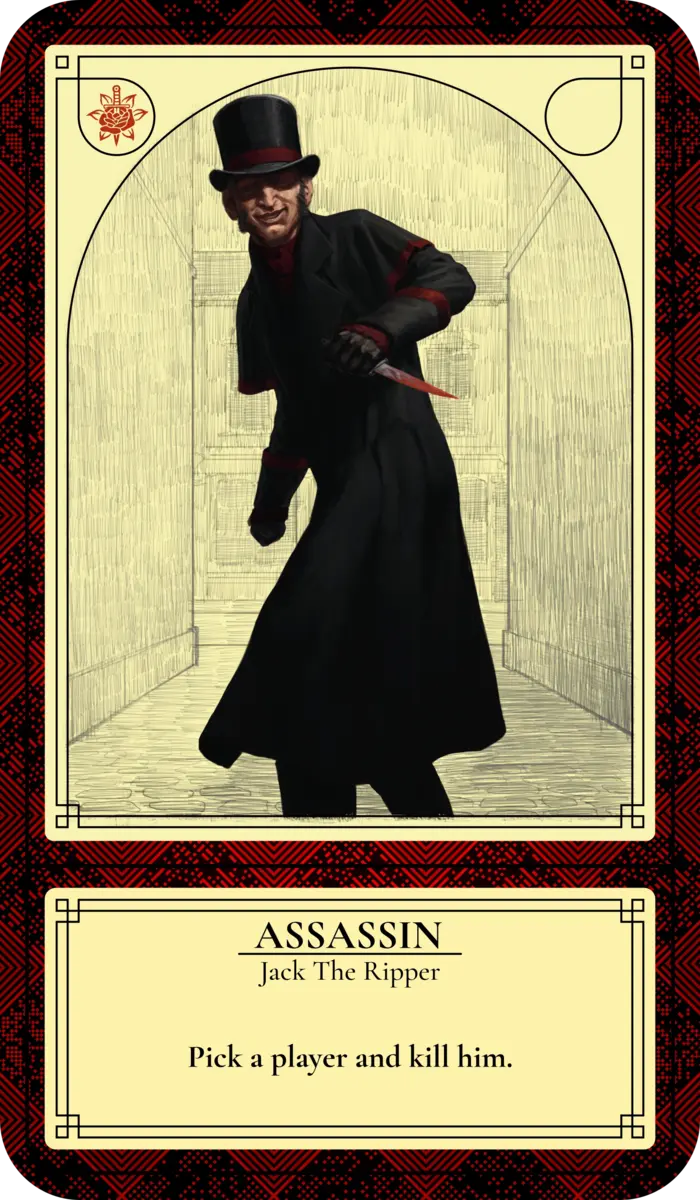
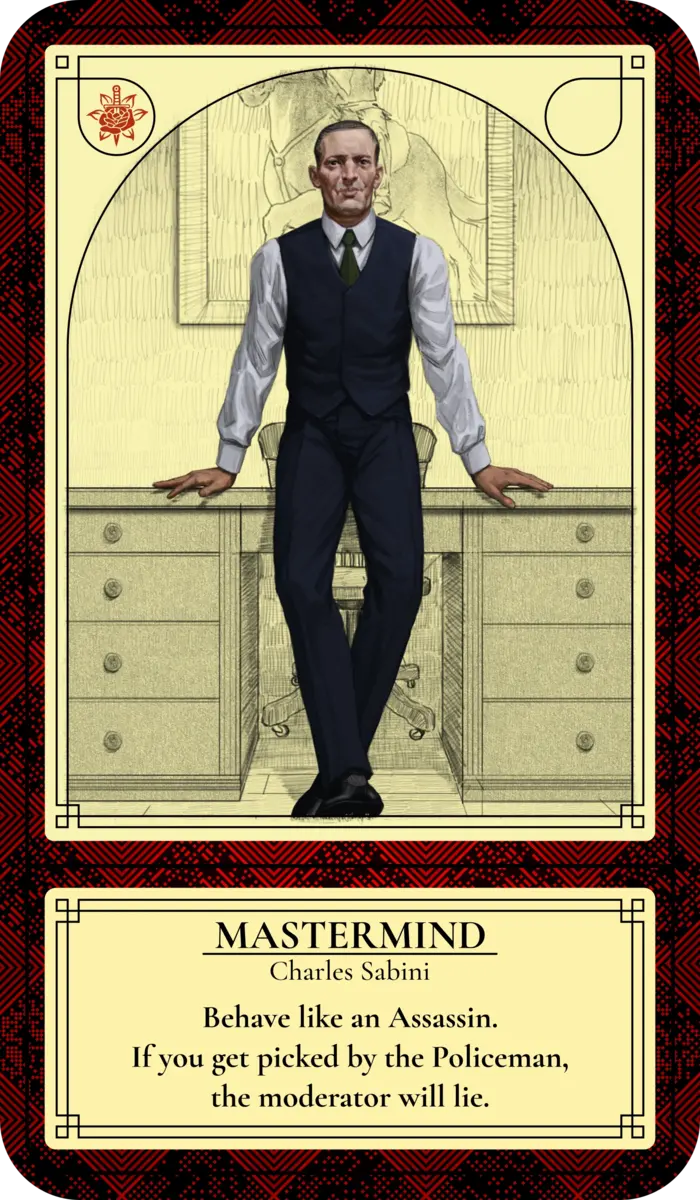
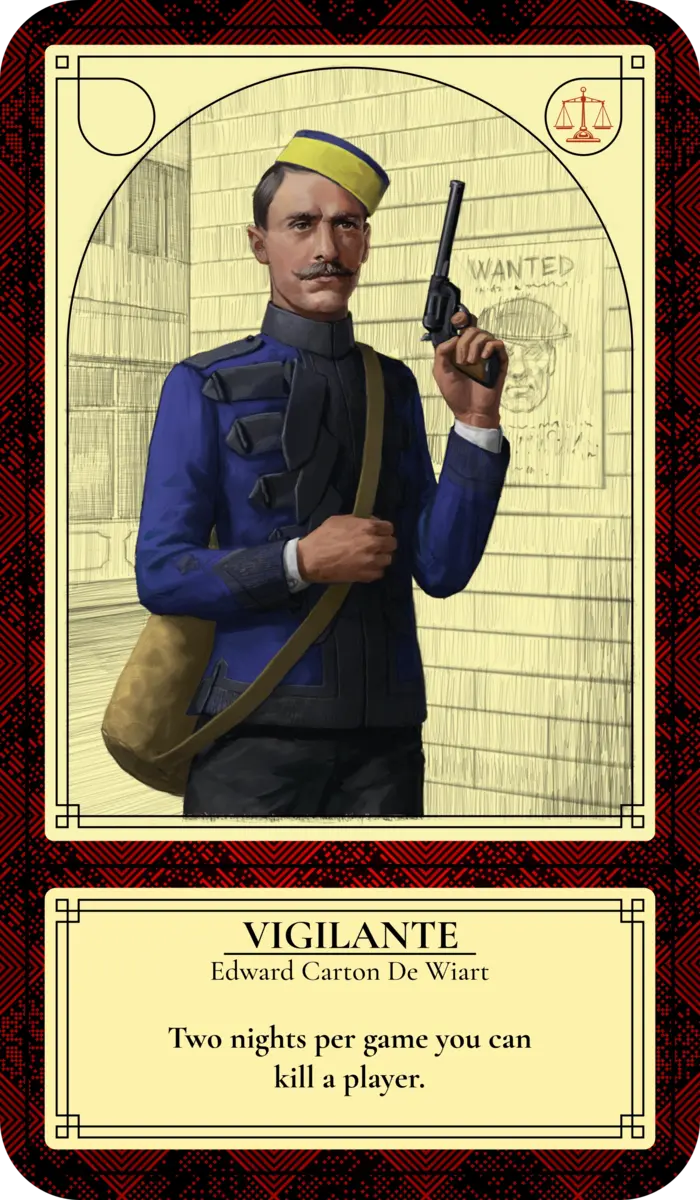
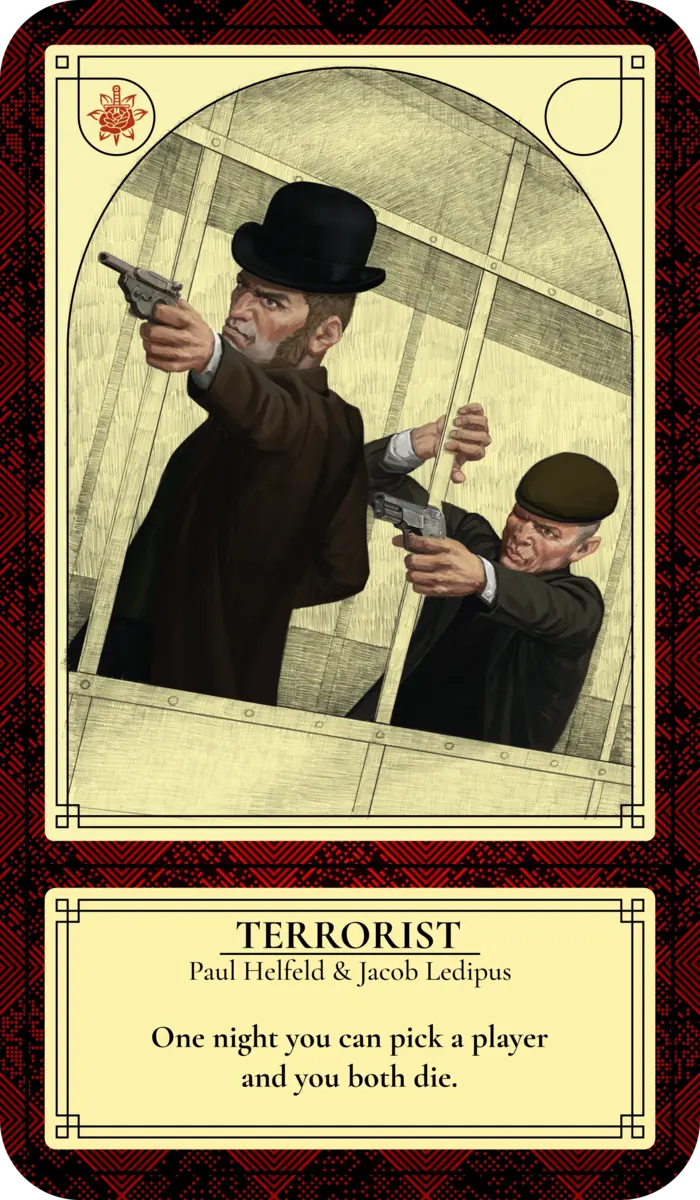
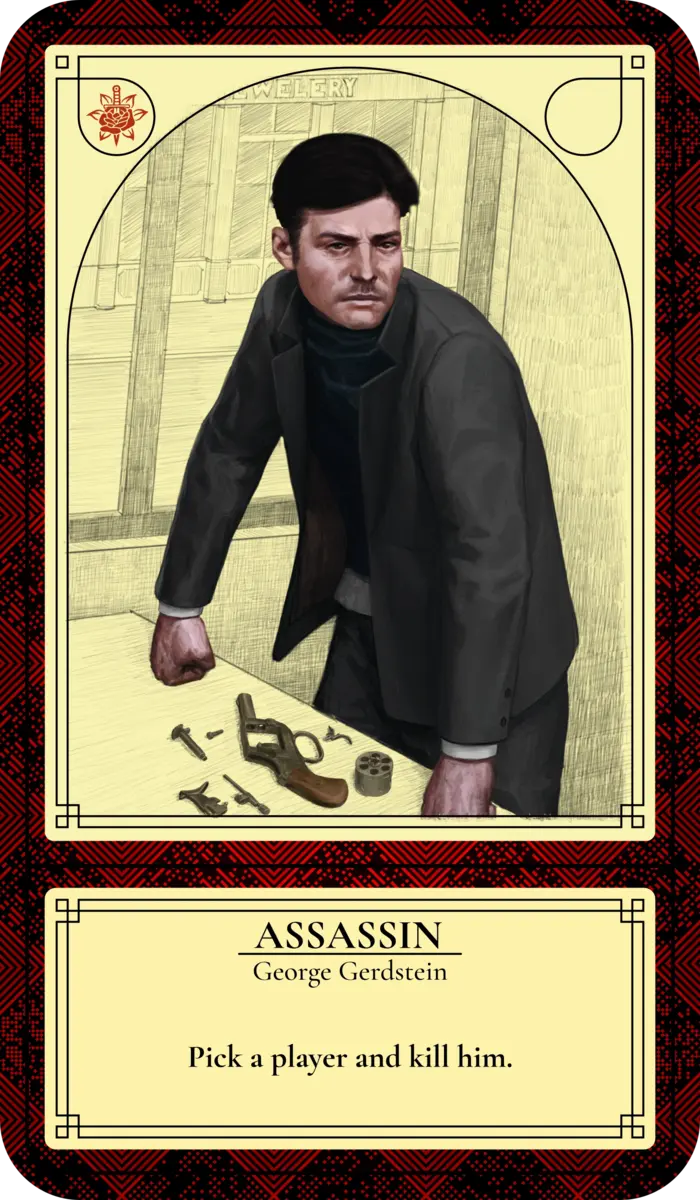
Next comes the hunt. In the basic deal that is the Assassins: they wake together, agree on one victim in silence, and point. The Mastermind hunts alongside them when that card is seated. In larger deals, the Vigilante and the Terrorist wake in this band too — each on their own beat, since they hunt alone. One night means one pass down the list; never reopen a killer's wake after the Doctor has gone.
-
03
Doctor
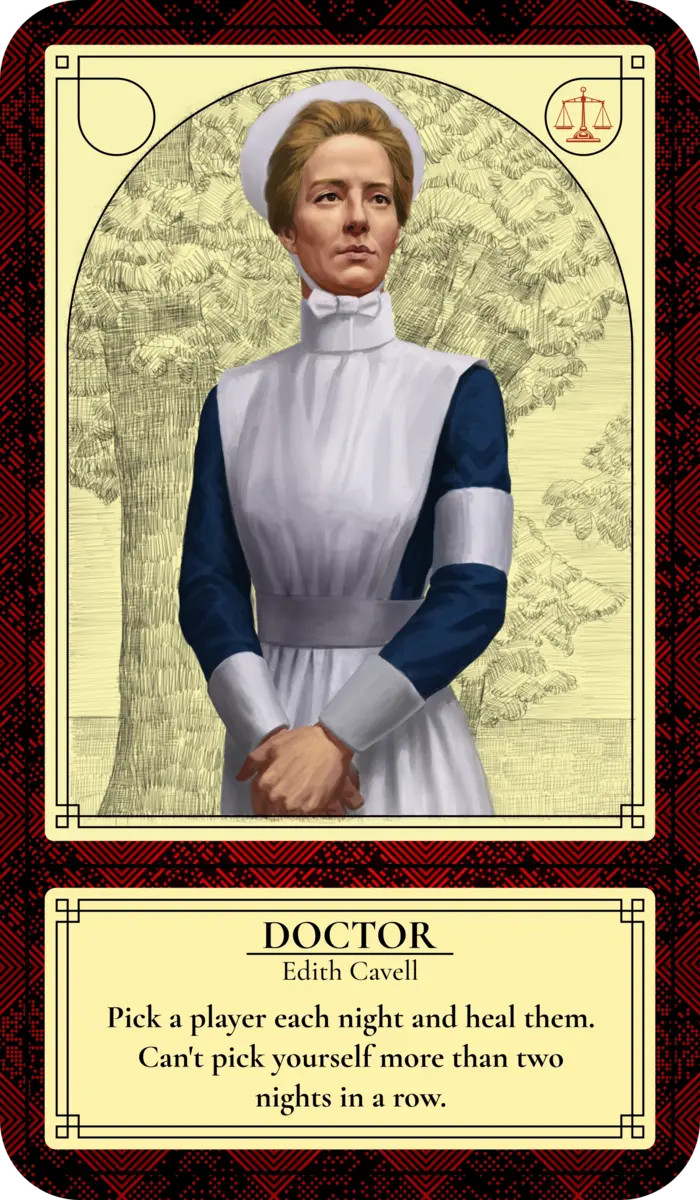
The Doctor wakes after the hunt is finished, picks one player, and heals them. If she guessed right, tonight's kill fails — and nobody finds out why. She cannot pick herself two nights in a row. The host resolves the save before eyes open and never announces who was healed; dawn only names the dead.
-
04
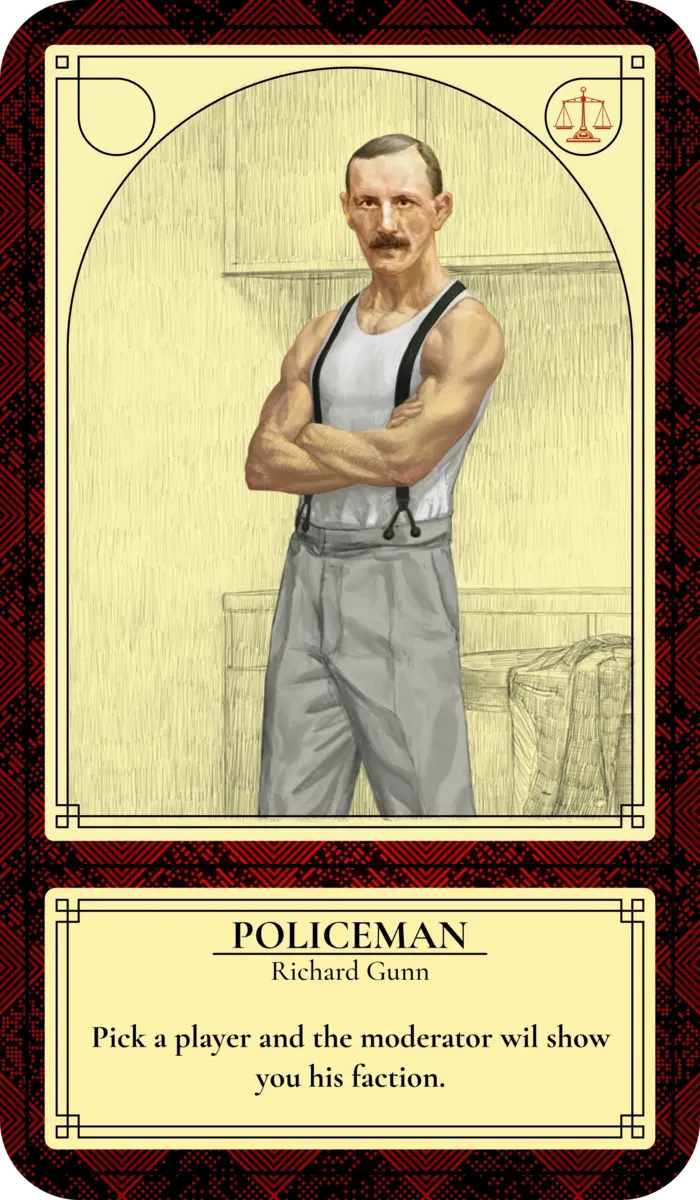
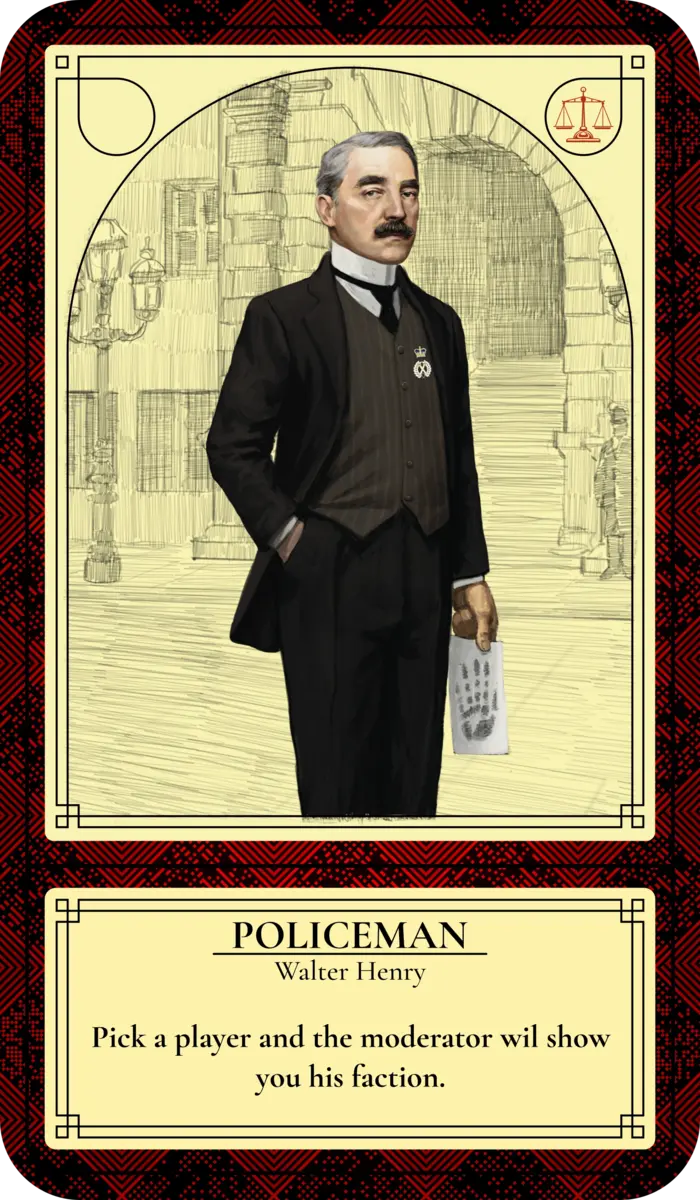
Policeman
The cop wakes next and picks a player. The host shows him that player's faction — City or Mafia, a team and never a role name. One warning for the whole table: when the Mastermind is in the game, this check lies. The Policeman has no way of knowing which nights he was fooled.
-
05
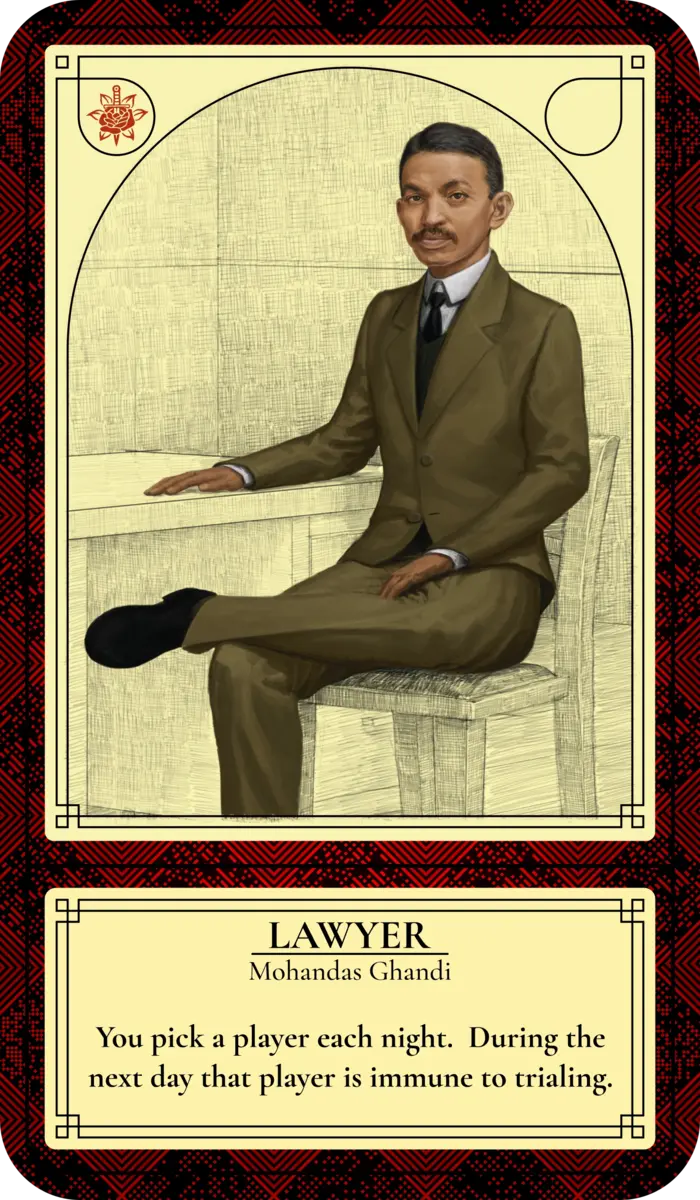
Lawyer
A Mafia card. He wakes after the cop and points at one living player — his client for the day. That player cannot be put on trial tomorrow, no matter how loud the accusations get. The table may still talk about them all it likes; it just cannot open the trial.
-
06
Other night cards
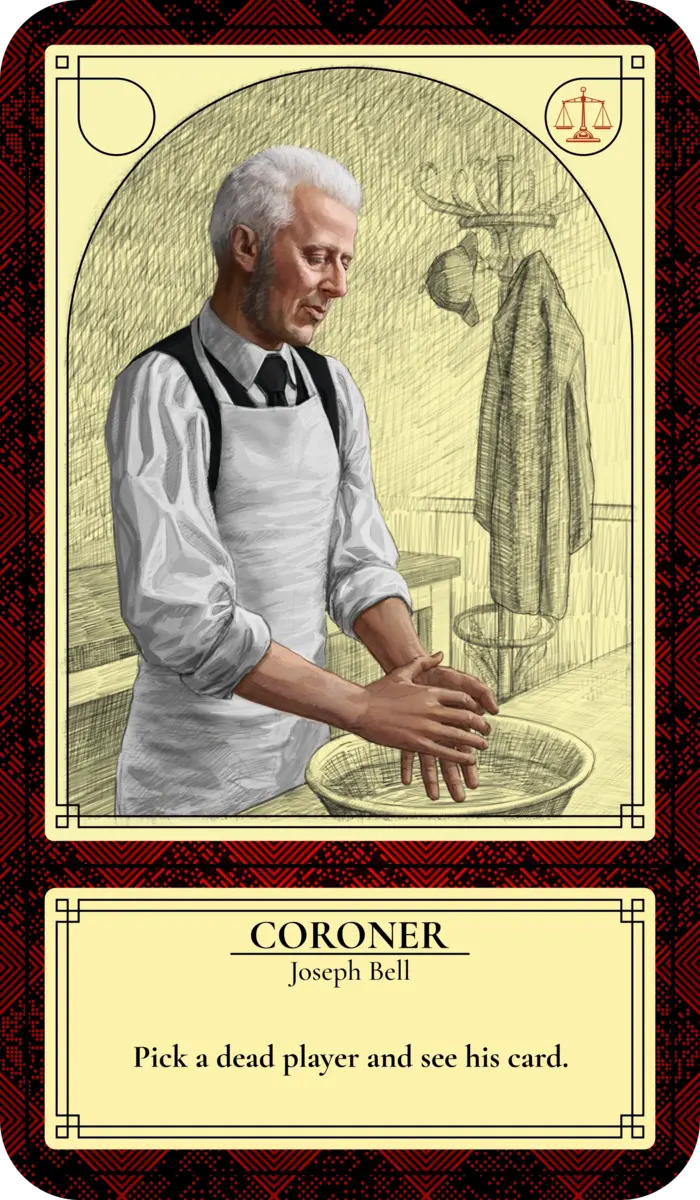
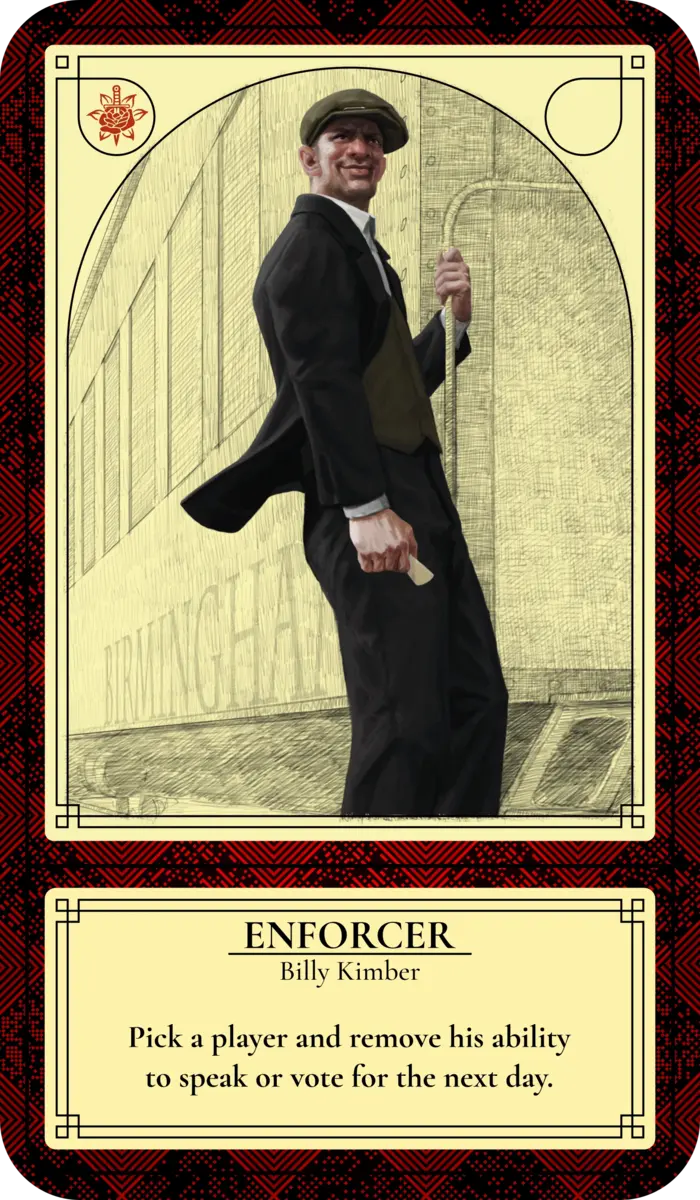
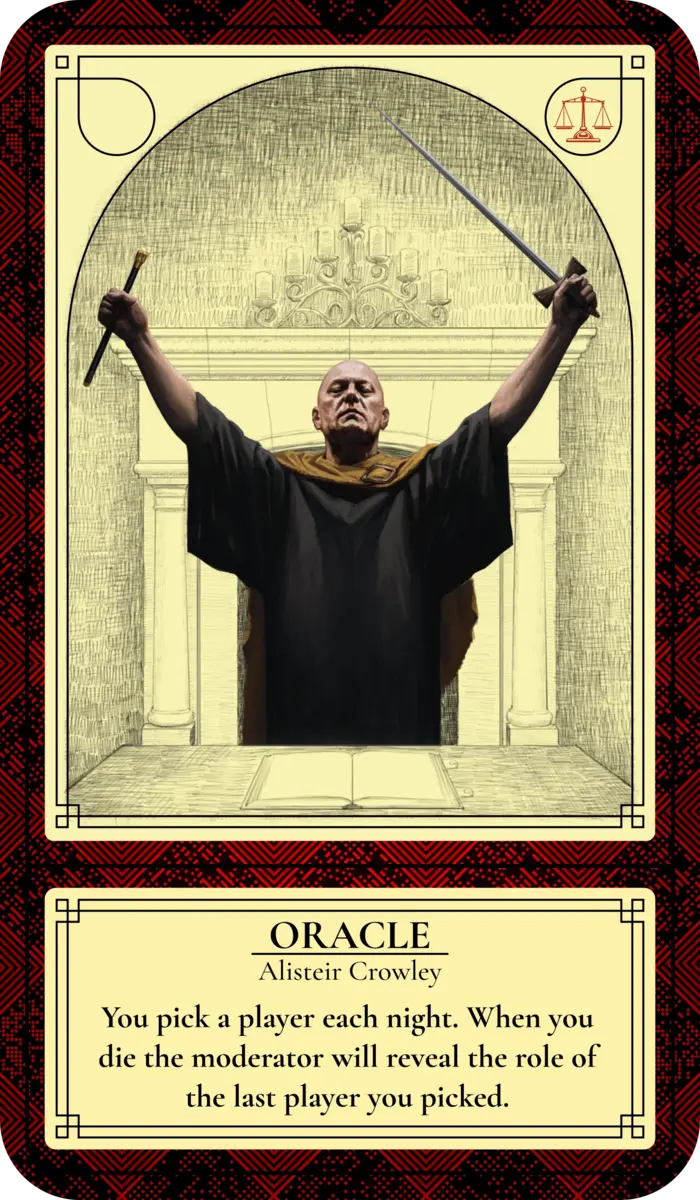
If the deal includes them, the Enforcer — who strips a player of their speech or their vote for tomorrow — and the Oracle slot in after the Lawyer. Then come the cards that pick among the dead: the Coroner, who examines a dead player's card, the Ritualist, who can bring someone back, and the Arsonist, who burns a body. The Duelist and the Priest have no wake at all — their abilities trigger on their own, so never call them at night. Keep the order boring and identical, every night.
Teaching deal
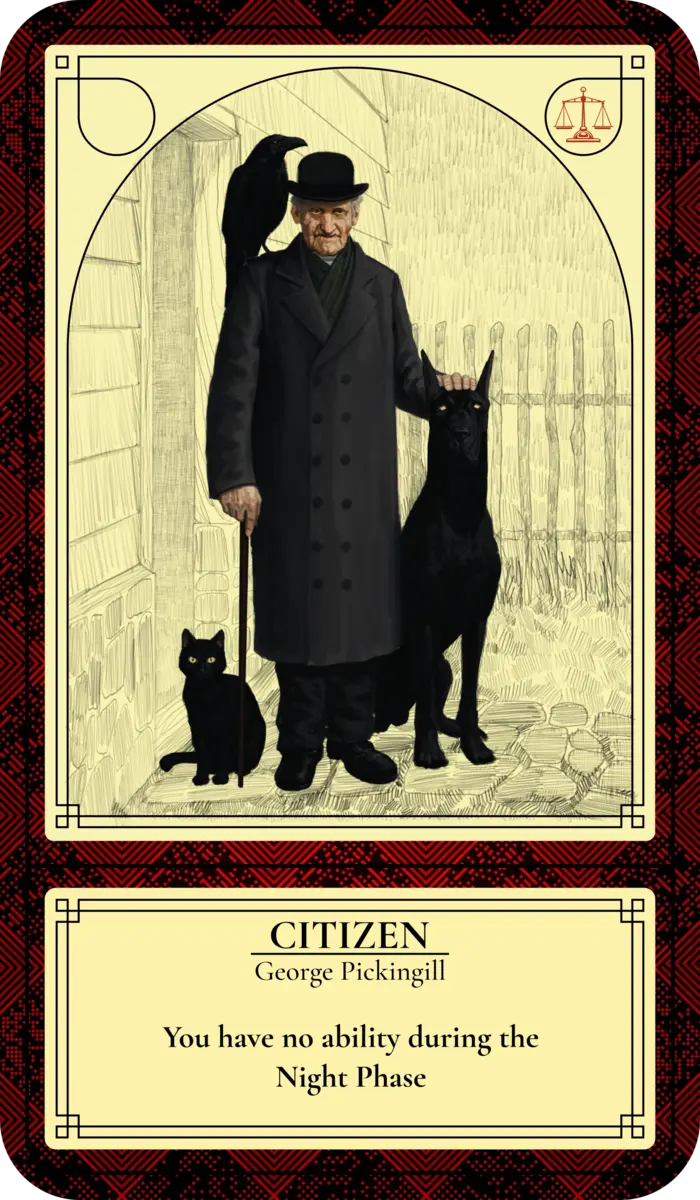
The teaching game keeps the night deliberately short. Eight or nine living players: two Assassins, a Policeman, a Doctor, and Citizens to fill the rest of the chairs. Only three wakes, in this order:
- Eyes closed
- Assassins point at a victim
- Doctor points at a save
- Policeman points at a check
- Eyes open
No Mistress, no Lawyer unless you deliberately added the card. A full night takes under two minutes once the table knows the drill. Run it until it feels easy, then open a setup that puts more names on the list.
Larger deals
Bigger setups do not change the shape of the night — they just add beats to the same spine: block, hunt, save, check, lawyer, extras, then the jobs that pick among the dead. There is always exactly one pass, and the killers are always finished before the Doctor wakes. When two effects land on the same body in one night, the host finishes the dark first and resolves the clash at dawn using the mafia game rules — never as a debate while people still have their eyes shut.
What to say
Host
“Everyone, close your eyes.”
“Mistress, wake up. Point. Sleep.”
“Assassins, wake up. Agree. Point. Sleep.”
“Doctor, wake up. Point. Sleep.”
“Policeman, wake up. Point.” — show a faction, then — “Sleep.”
“Lawyer, wake up. Point. Sleep.”
Call every other name on your written list the same way.
“Everyone, open your eyes.”
Keep the verbs identical every time: point, sleep. If the words change from wake to wake, the table starts reading the host instead of each other — and nobody should be able to tell a real wake from a dummy by the poetry of the call. The full spoken list, from the opening to dummy wakes, dawn, and the trial, is the mafia game narrator script.
Open eyes
The night ends the way it began — with the host's voice. Everyone opens their eyes, and the host names who died, if anyone. Names only, never roles. The dead go silent and keep their cards face down. A quiet night is still news, and the announcement happens either way. Then the day is open: talk, nominate, trial.