What are games like Werewolf?
Every game like Werewolf gives a group the same job: a majority with incomplete information has to find — or survive — a smaller side that knows more than it does. The costume changes constantly. It can be wolves, criminals, spies, a bomber in the next room, or a murderer at a crime scene. The feeling underneath never does. You listen. You watch who keeps pushing a name. And in the end you have to decide with the room, because a perfect fact never arrives.
Werewolf itself is a village reskin of Mafia, which surprises people who met the wolves first. The engine is identical: villagers close their eyes, wolves pick someone, a seer may take a look. In the morning a name is argued over and voted out. The Werewolves of Millers Hollow put that folk game in a box, and Ultimate Werewolf stretched the role list to book length. If you have played either, you already know the machine this whole page is built around.
A game can still feel like Werewolf without a moon or a graveyard. The Resistance never votes anyone out of the evening. Two Rooms and a Boom splits an entire house in half. Werewords keeps the village but hangs everything on a secret word. What all of them keep is the important part — the distrust, the talking, and a decision the group has to make together with someone lying inside it.
The hidden-team family as a whole is on social deduction games — including Avalon, Secret Hitler, Among Us, and Blood on the Clocktower. Table games about reading people, including titles with no traitor, are on psychology games. This page stays on games like Werewolf: closest cousins, not the whole shelf.
How games like Werewolf play
Almost every game in this family swings between two kinds of time, and once you see the pattern you will spot it everywhere.
Private time. Eyes closed, a mission card played face down, a silent point at a tile, a huddle in the room next door. The informed side acts while the majority sees nothing. Then something is announced to everyone: someone died, a quest failed, a body was found, a hostage swapped rooms.
Public time. Now everyone talks. People offer alibis. People accuse. And then the group has to commit to something — a vote, a team, a guess. In classic Werewolf that vote can send someone to the sofa for the rest of the night. In Mafia: The Final Witness the dead stay in the circle: they still listen, and they vote at the last lynching. In Spyfall it is a guess at who was fishing for information. In The Resistance it is a team being trusted with a mission. Different stakes, same demand: name a traitor with incomplete information.
The trick that makes it all work is asymmetry. The informed minority knows its own members; the majority does not. So every one of these games plants a small leak — a seer, a policeman, a forensic scientist, a lucky question — that gives the majority just enough truth to have a chance, and gives the minority someone specific to hunt.
If you want night and day as a published Mafia deck runs them, read how to play mafia. If you want the definition of that game first, read what is mafia game.
Where games like Werewolf come from
The family is older than the wolves. Parlour games like wink murder set the pattern first — a killer hidden in the room, a table trying to name them. Then, in 1986, a psychology student named Dimitry Davidoff built Mafia at Moscow State University as an actual experiment. He wanted to watch two questions collide: how does a majority catch a lying minority, and how does that minority survive the day?
American tables recast the town as a village and the criminals as wolves. That version stuck as Werewolf. In 2001, Philippe des Pallières and Hervé Marly published The Werewolves of Millers Hollow — Les Loups-Garous de Thiercelieux — and the boxed village spread through Europe. Ultimate Werewolf later gave the same night a much longer role list. One Night Ultimate Werewolf compressed it to a single night and an app. That short version, along with Avalon, Secret Hitler, Among Us, and Blood on the Clocktower, is ranked on the social deduction games page so this list can stay on cousins that page does not lead with.
Television followed. The Traitors is the same engine with better lighting. Mafia: The Final Witness goes the other way — back to the 1986 table: City versus Mafia, printed faces, a moderator, a night that can kill, and a day of talk and votes.
The 7 best games like Werewolf
These games like Werewolf are ranked for a room that wants hidden sides and a naming — not for a room that only wants word games. Table score is that ranking, out of ten. Community is the public BoardGameGeek average, rounded to one decimal. Mafia sits at number one because Werewolf is that game in a village coat, and because this site publishes Mafia as a deck. The other six keep the distrust without copying the social deduction seven.
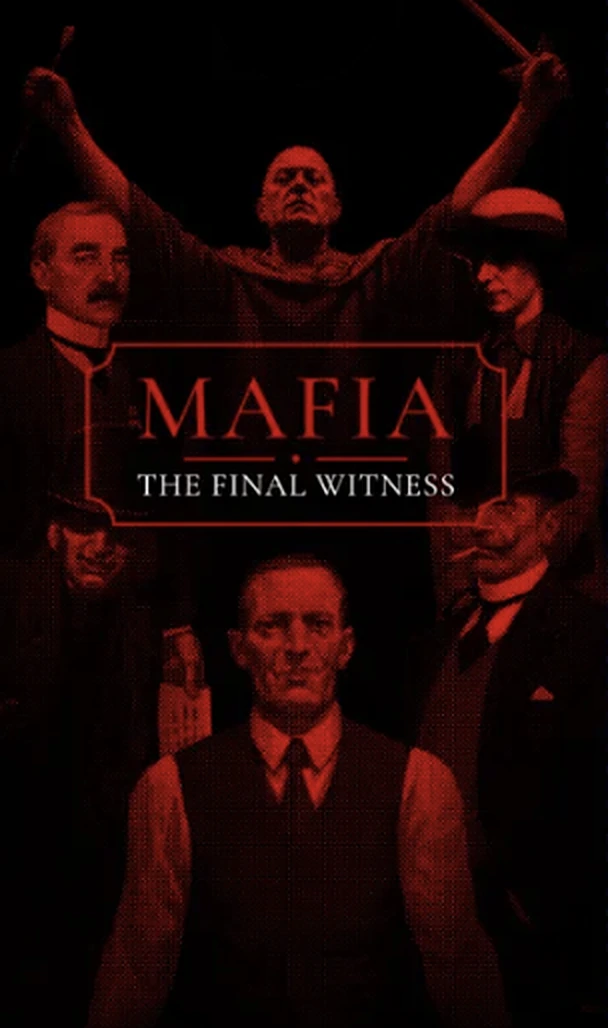
Mafia: The Final Witness
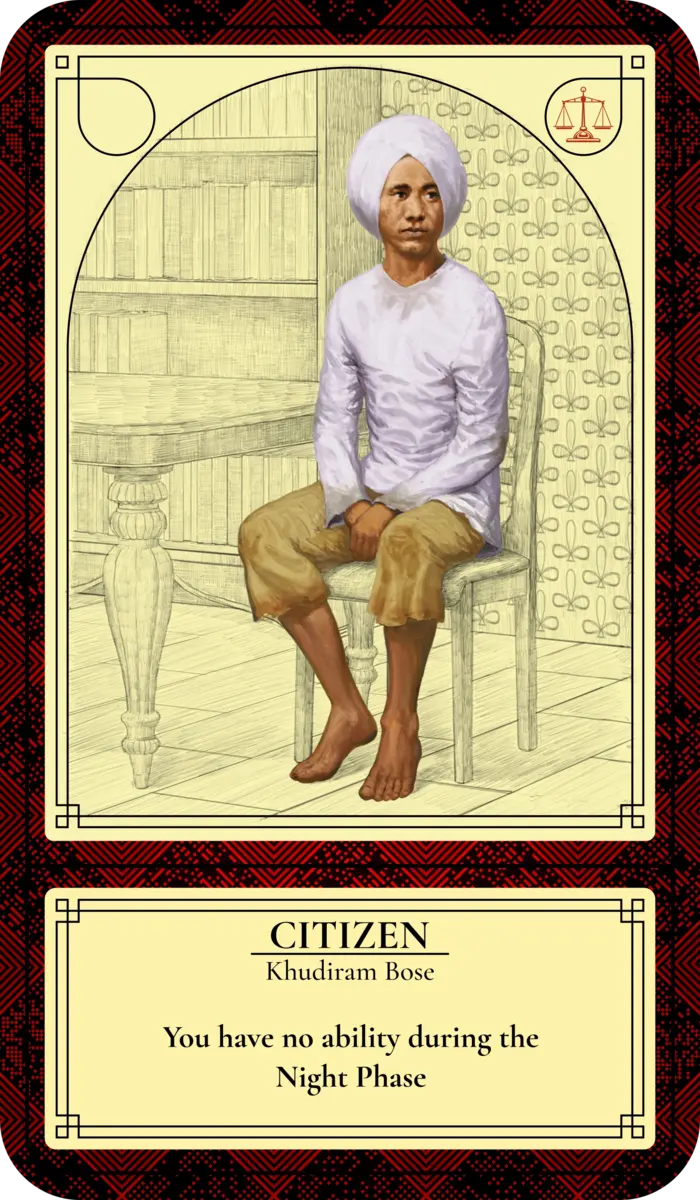
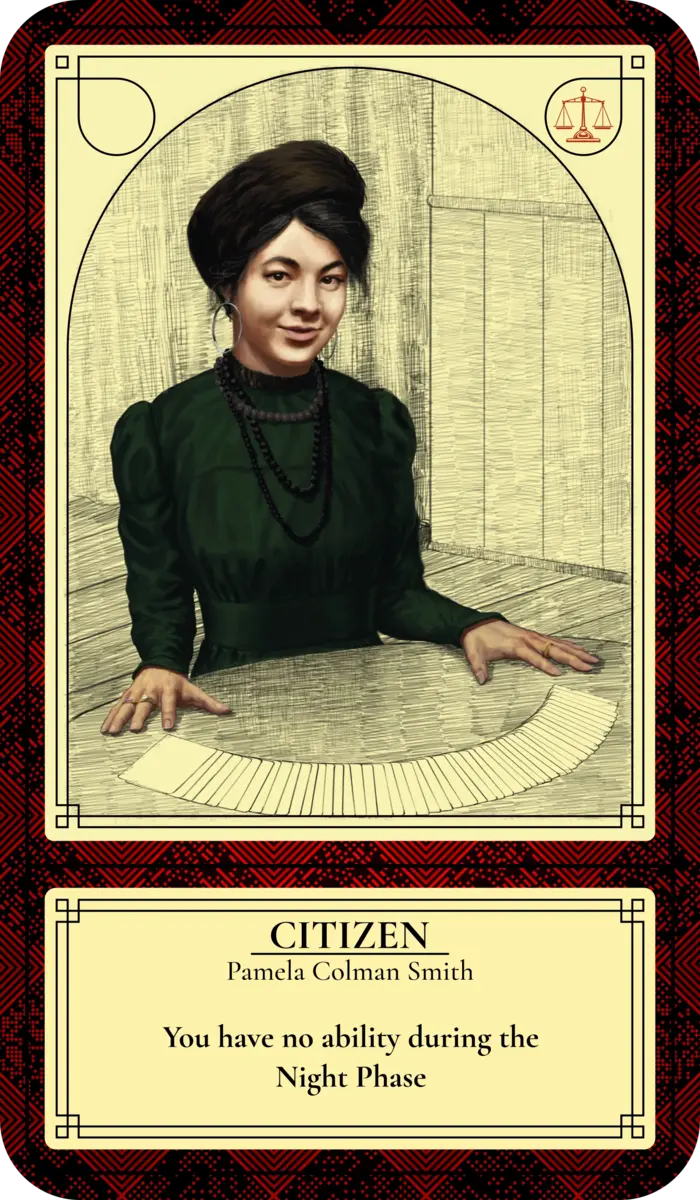
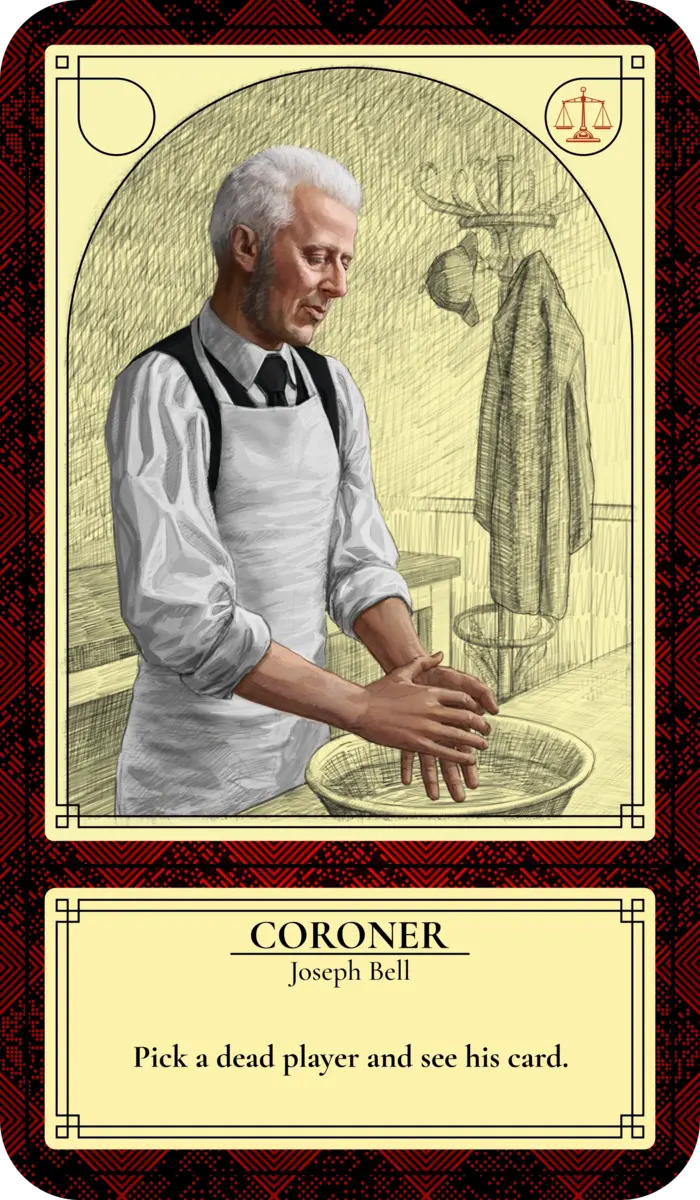
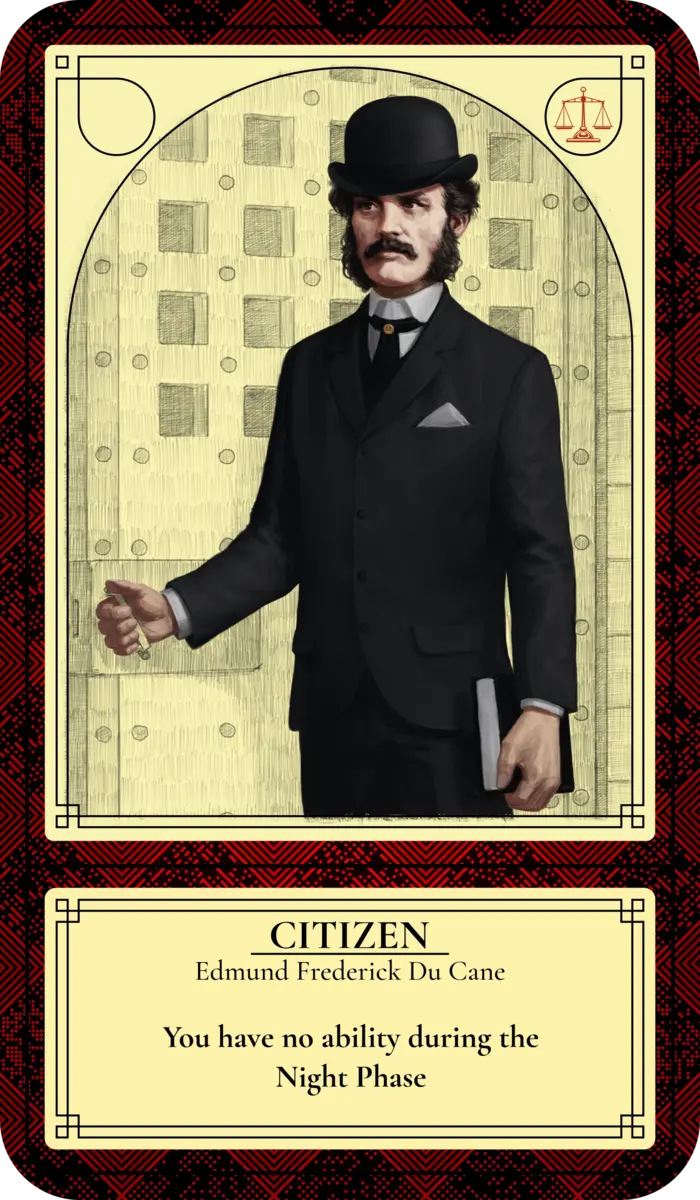
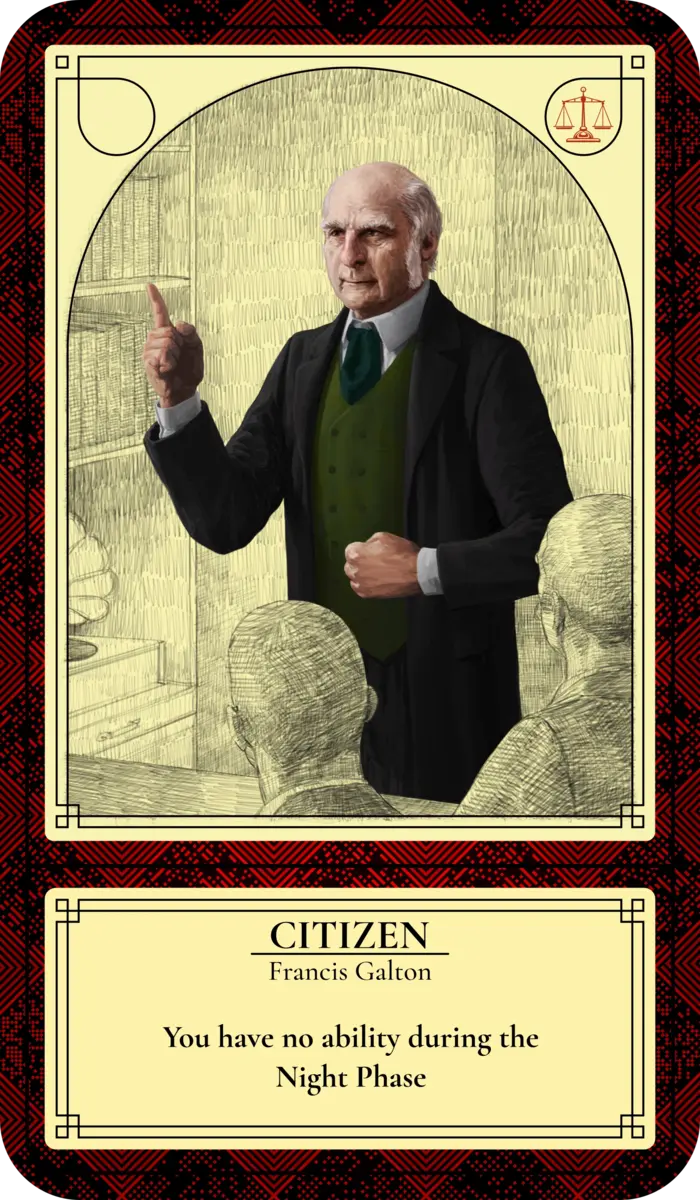
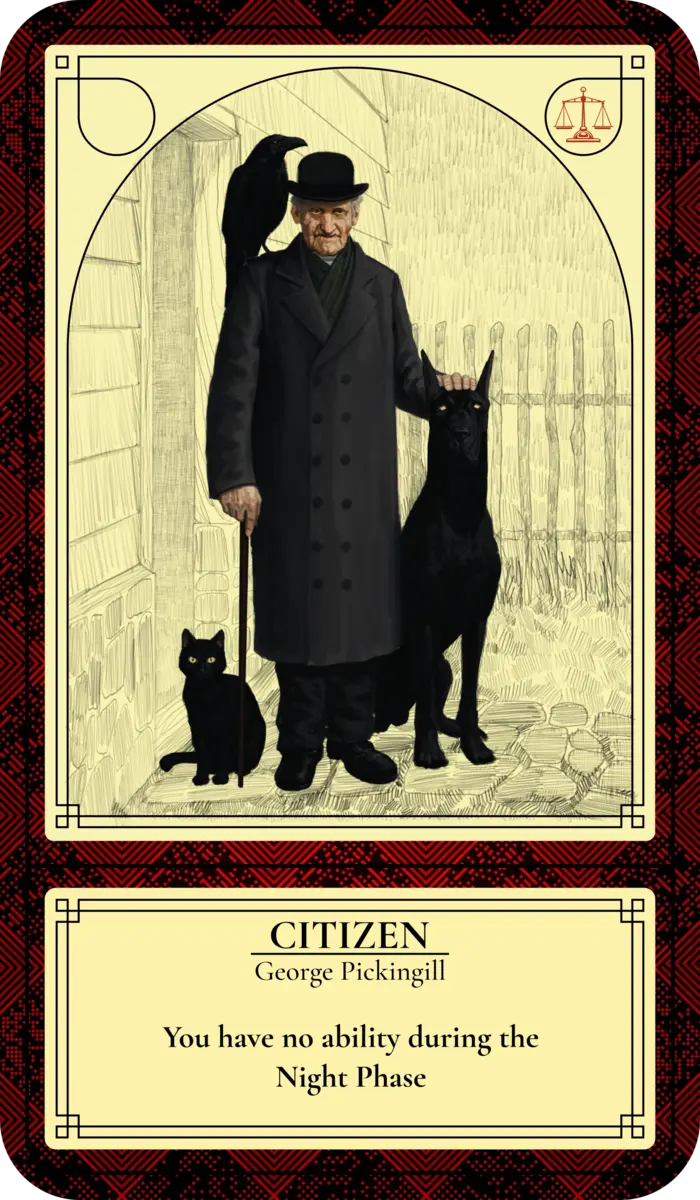
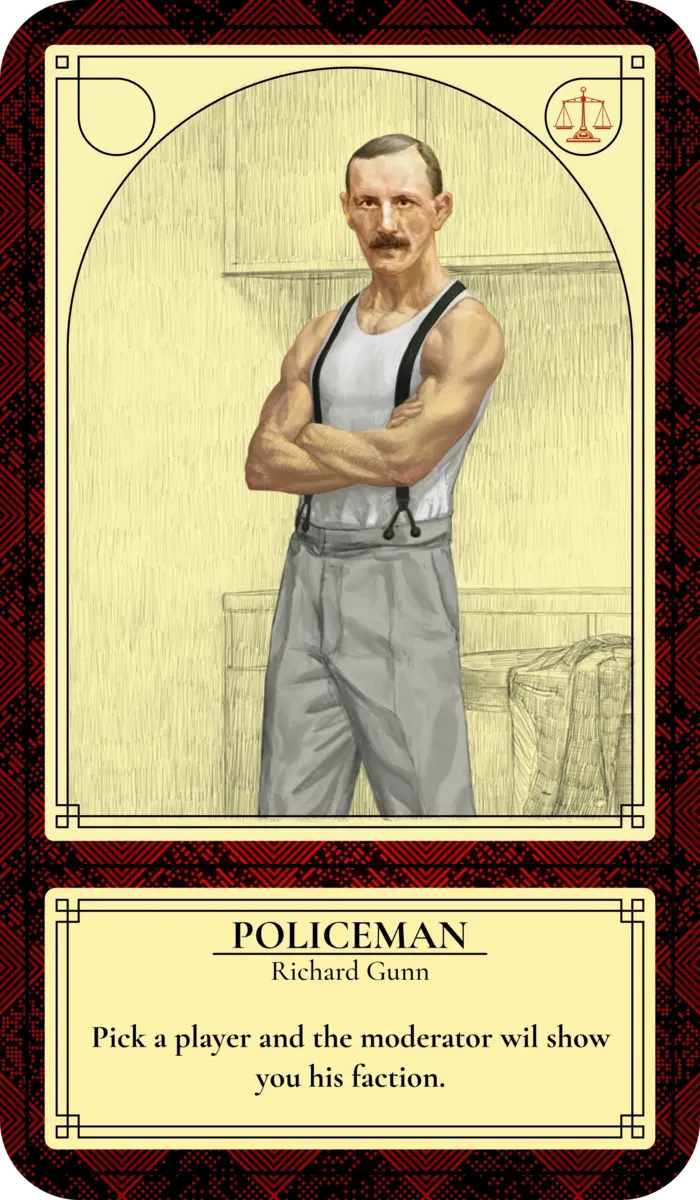
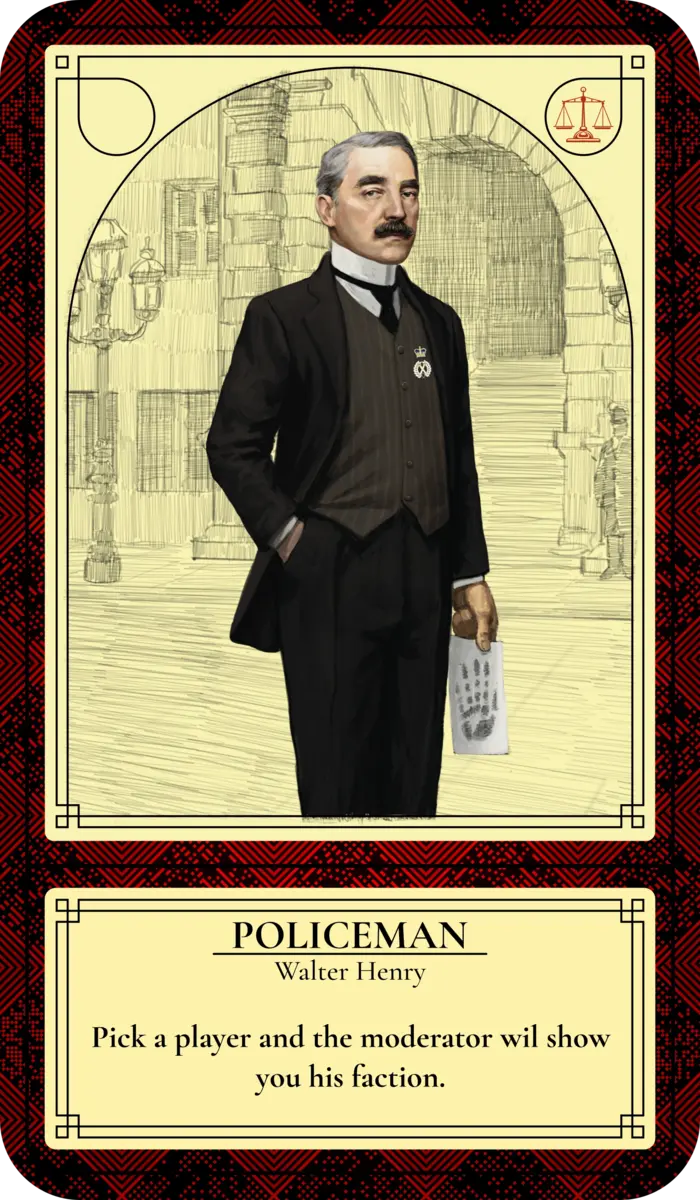
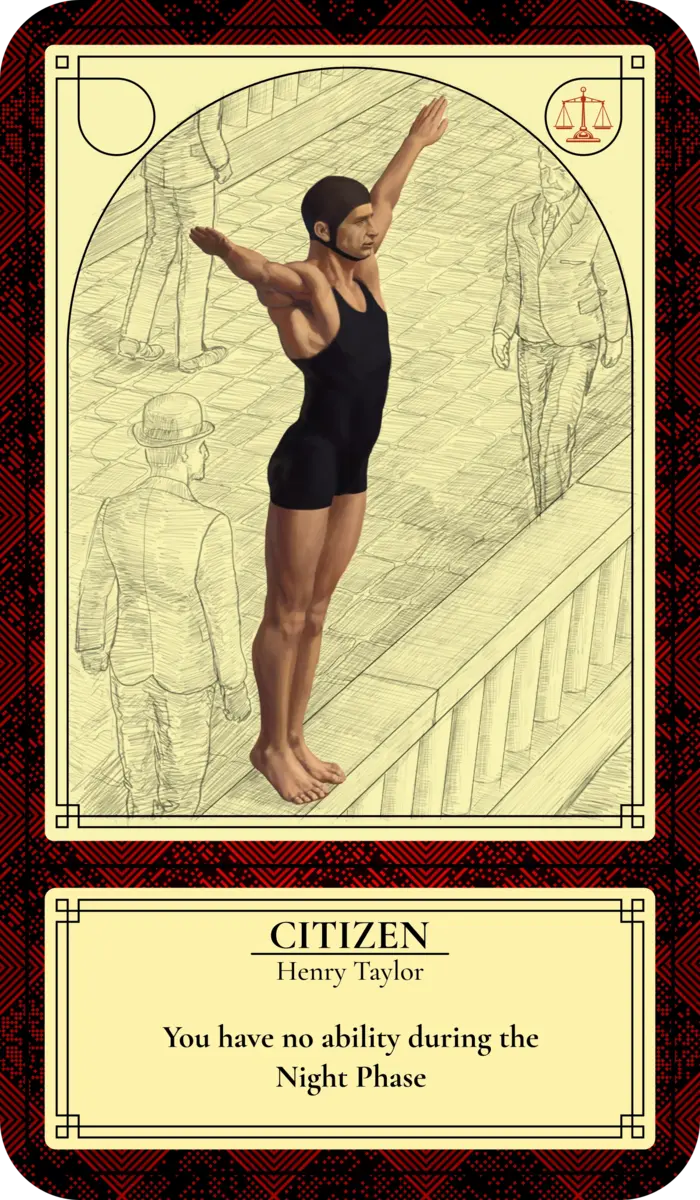
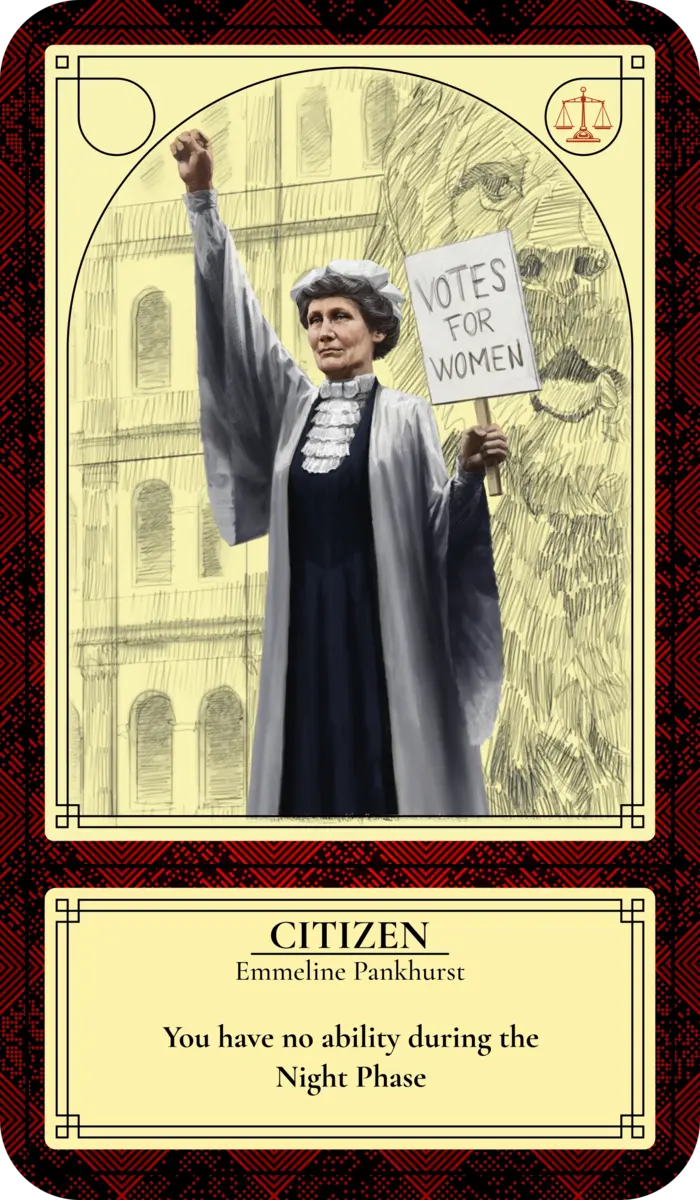
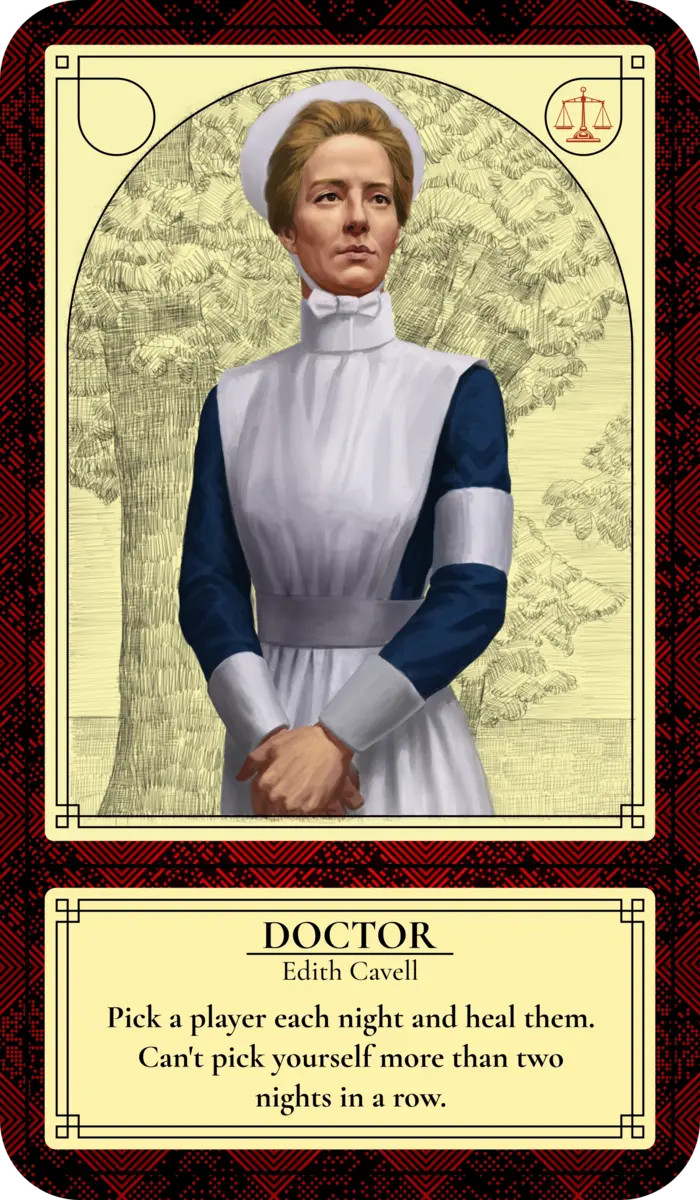
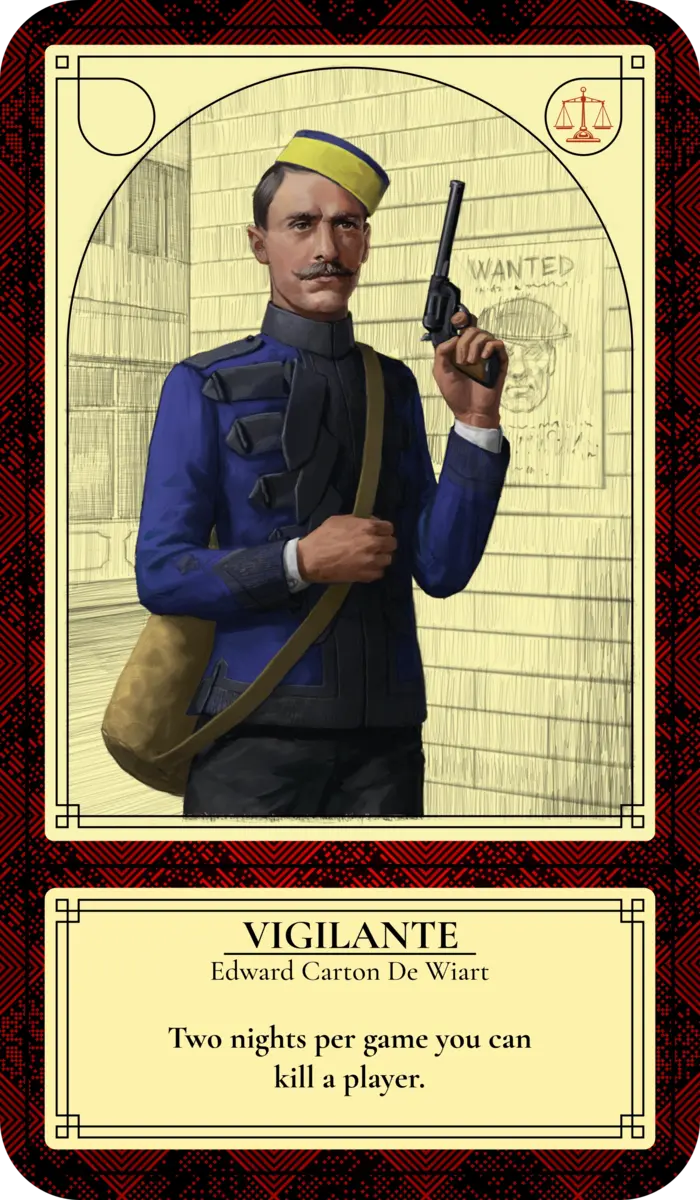
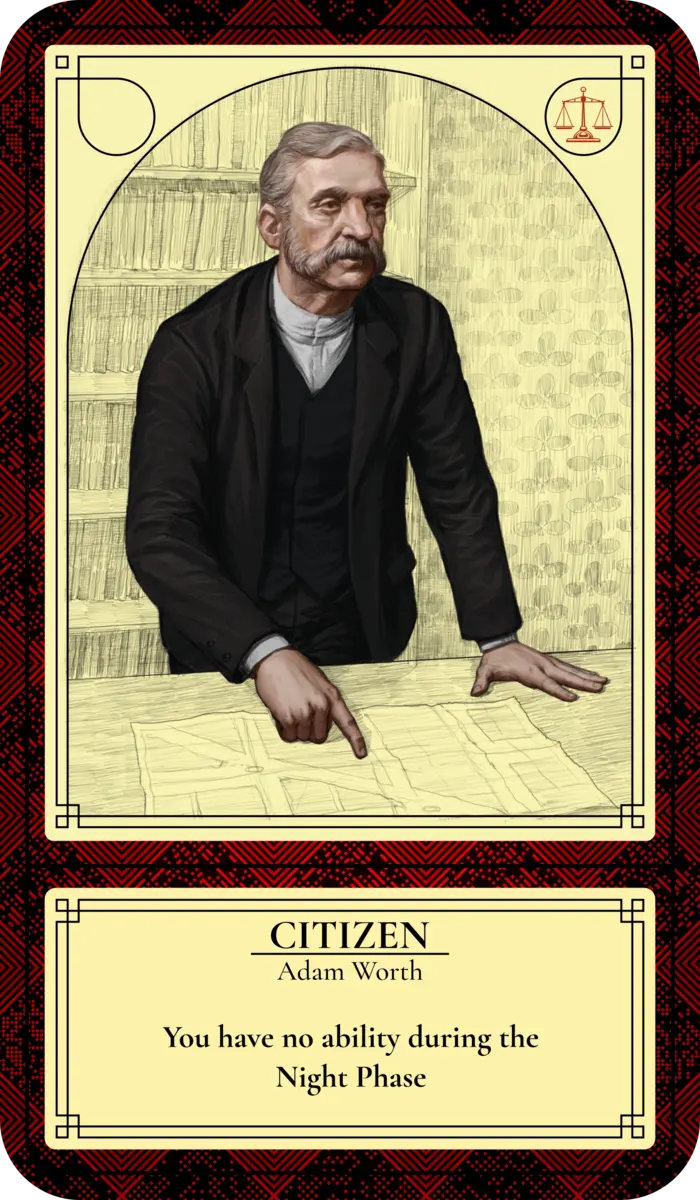
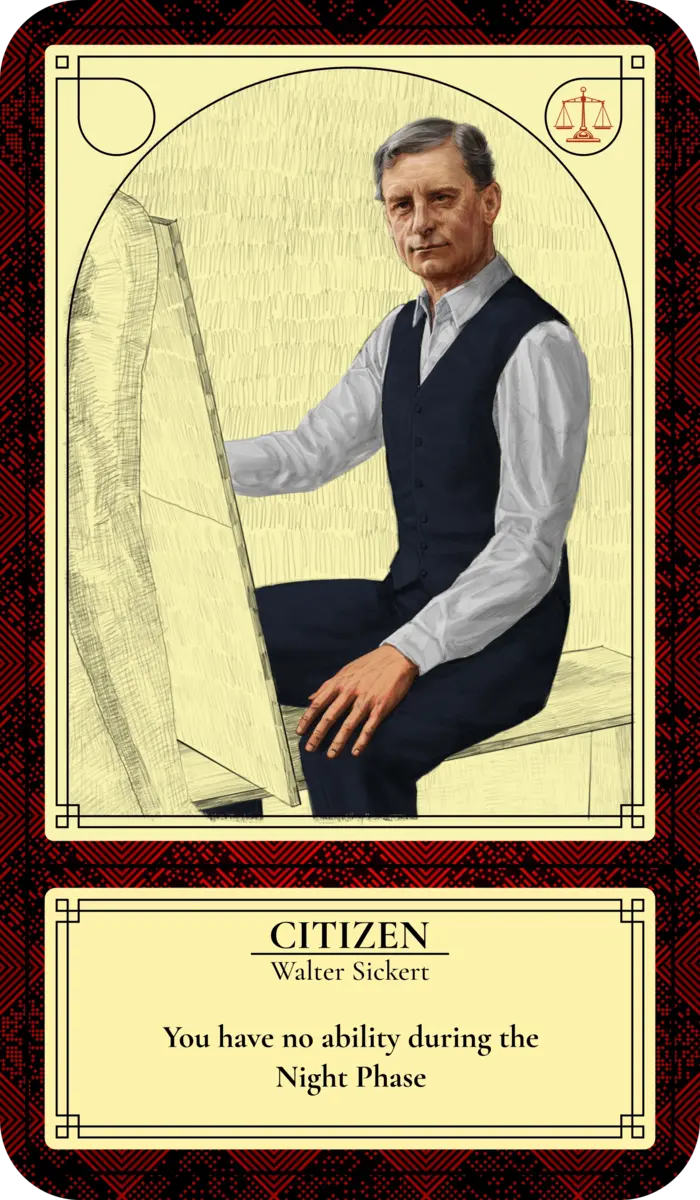
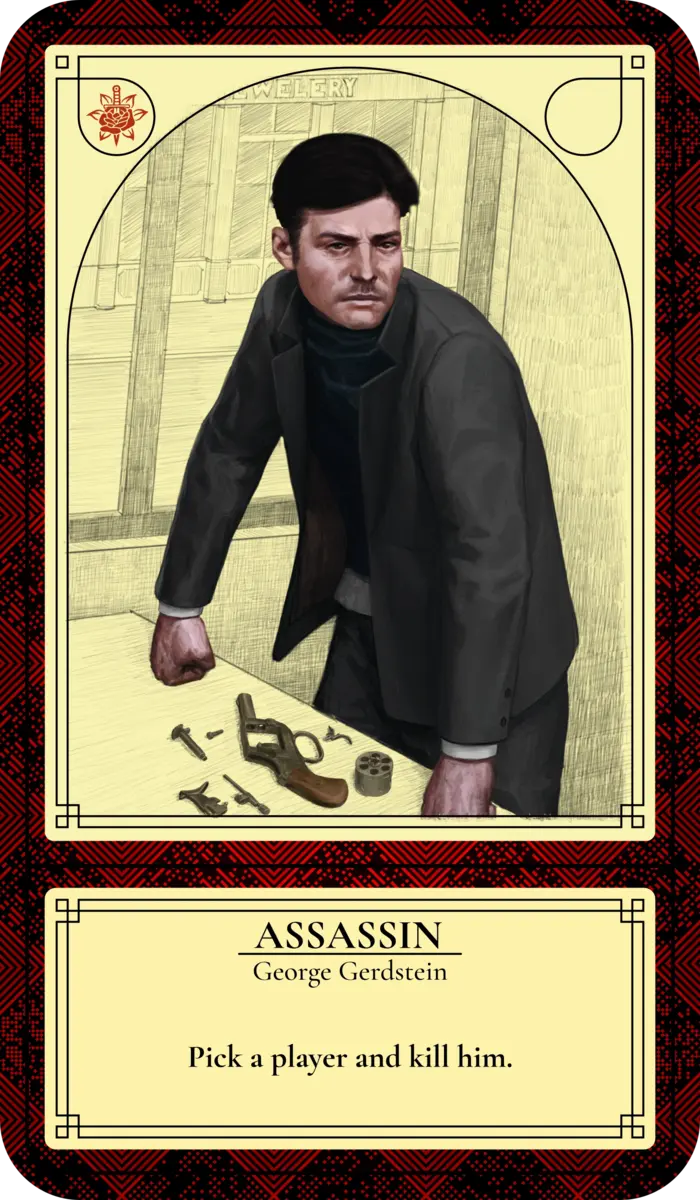
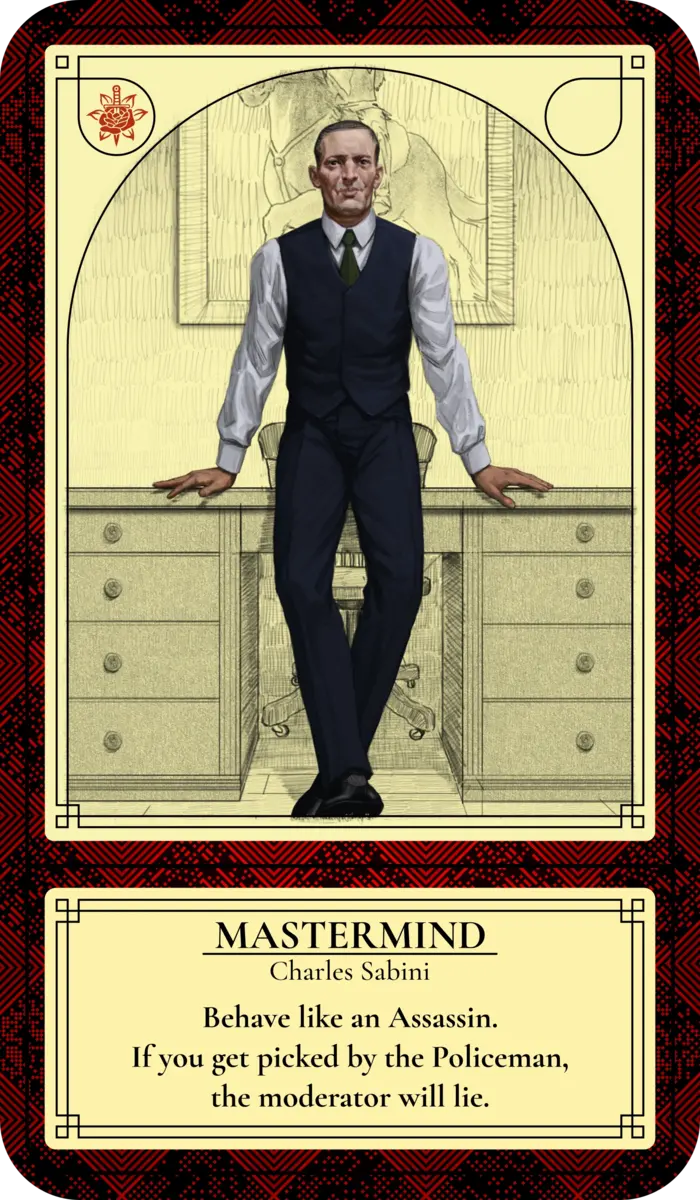
Here is the secret about Werewolf: it is Mafia wearing a village coat. Dimitry Davidoff built Mafia in 1986 — a majority trying to catch a lying minority, a night of secret action, a day of talk and a vote. The wolves and the villagers were added later. Mafia: The Final Witness is that original game as a published deck: City versus Mafia, every character drawn from a real person, a host who runs the dark, and a night that can kill. The dead do not leave the table. They keep listening, and at the last lynching they vote. If you liked Werewolf and you have a room plus a host, this is the closest table you can deal.
Two Rooms and a Boom
Two Rooms and a Boom keeps the hidden teams and throws out the graveyard. The house splits in two. Hostages move between rooms. One side has a President, the other a Bomber. If those two end the game in the same room, the bomb wins. You still have a short time to decide who to trust, and a wrong handshake is expensive. It scales past the point where a Werewolf circle gets noisy. BoardGameGeek sits around 7.0. Put it out when the party is too large to sit still with eyes shut.
Tuesday Knight GamesDeception: Murder in Hong Kong
Deception is games like Werewolf if the night were a murder and the day were a briefing. One player is a forensic scientist who cannot speak in words — they point at scene tiles. One player is the Murderer. One is an Accomplice. Everyone else has to read the tiles and the faces. The liar stays in the circle. The evidence is public. People who like Mafia’s accusations often like this, because you still name someone, but you are arguing about clues on the table instead of who coughed in the dark. The community average is about 7.4.
BoardGameGeekWerewords
Werewords keeps the village and drops the long night of deaths. A Mayor knows a secret word. Villagers ask yes-or-no questions to find it. A Werewolf already knows the word and has to steer the table wrong without being named. It is the closest short cousin if you like the wolf theme and you do not want a graveyard. Bézier Games made it for a table that will sit for twenty minutes, then deal again. BoardGameGeek averages about 7.1.
Bézier GamesThe Resistance
The Resistance is Don Esbenson’s answer to a Werewolf night that sends people to the sofa. Hidden spies try to fail missions. The majority tries to send clean teams. Everyone plays until the last card. There is no moderator and no vote that kills you for the evening. Avalon is this game with Arthurian roles; that version sits on our social deduction page. This is the cleaner original, and a good pick when you want games like Werewolf without anyone leaving the circle. The BoardGameGeek average is about 7.6.
BoardGameGeekSpyfall
In Spyfall most of the table shares a secret location. One person is the spy and does not. You ask each other questions that a local would find easy and a spy would find dangerous. Then you vote on who was fishing. The spy can still win by naming the place. It is the Werewolf feeling squeezed into a conversation: most people know, one person is guessing, and a short vote follows. It plays smaller rooms than a village game. Community ratings sit near 6.8 — people treat it as a sharp filler, not a whole evening.
BoardGameGeekSaboteur
Saboteur puts hidden traitors in a mine instead of a village. Most players are dwarves building a path to gold. A few are saboteurs breaking that path. You play cards, you watch who “helps,” and you wait to see who was lying. Nobody closes their eyes. Children can play it. The community rating hovers around 7.0. If your Werewolf group includes people who will not sit through a trial, this is the same hidden-team idea with a map of tunnels instead of a vote to kill.
BoardGameGeekGames like Werewolf compared
| Game | Players | Time | Host | Hidden phase | Table | Community |
|---|---|---|---|---|---|---|
| Mafia: The Final Witness | 6–27 | 30–90 min | Yes | Yes — a kill | 9.4 | — |
| Two Rooms and a Boom | 6–30 | 15–20 min | Timer, not a narrator | No — rooms and hostages | 8.6 | 7.0 |
| Deception: Murder in Hong Kong | 4–12 | 20–30 min | No | A crime scene, not a dark room | 8.4 | 7.4 |
| Werewords | 4–10 | 10–20 min | No | No — a secret word | 8.2 | 7.1 |
| The Resistance | 5–10 | 30 min | No | No — missions fail in secret | 8.0 | 7.6 |
| Spyfall | 3–8 | 15 min | No | No — one spy, a location | 7.8 | 6.8 |
| Saboteur | 3–10 | 30 min | No | No — a mine, hidden teams | 7.5 | 7.0 |
Community figures are BoardGameGeek averages as commonly reported in 2026 round-ups (The Resistance ~7.6, Deception ~7.4, Werewords ~7.1, Two Rooms and a Boom ~7.0, Saboteur ~7.0, Spyfall ~6.8). Mafia has no single BoardGameGeek listing that matches this deck — the folk game is free, and Mafia: The Final Witness printing is the object we sell.
How to pick games like Werewolf
Eight or more, and a host
Play Mafia. Deal The Lamp and the Lancet. You need people who can sit still with their eyes shut. That is Werewolf’s night and day at full size, with City and Mafia instead of a village.
A house party, too many chairs
Two Rooms and a Boom. The circle is the problem at that count, not the hidden teams. Split the house. Keep the distrust.
Keep the village, keep it short
Werewords. Same wolves, a secret word, about twenty minutes. If you already own One Night Ultimate Werewolf, that short night is ranked on the social deduction page.
Nobody sitting out
The Resistance. Hidden spies, missions, no graveyard. Saboteur if children are at the table. Deception if you want evidence instead of a dark living room.
And if what you actually want is a published Mafia deck — historical faces, two teams, and a last vote from the dead — that is Mafia: The Final Witness.
Games like Werewolf on a screen
Some people type games like Werewolf after a show, or because the room is not in the same house. These are not the seven above. They are the same engine in another medium.
The Traitors
A faithful majority, a hidden minority, a banishment by day, a murder by night. The show is Mafia and Werewolf with producers. You do not need a film crew. You need a room, a host, and hidden cards.
What is mafia gameTown of Salem
An online village with many roles and a chat instead of a room. The night still kills. The day still votes. It is Werewolf when the people cannot sit in the same house.
SteamMafia Game Online
Our own online mafia, free in a browser. Send friends a link, join a table of strangers, or fill the empty seats with AI players when the group is small. Night kills, day votes, same as the room.
Play freeProject Winter
A co-op survival game with traitors on the same map. You gather, you craft, you talk, and someone on the radio is lying. Closer to a session of Among Us in the snow than to a living-room vote, but the distrust is the same.
Official siteAmong Us is the 2020 household name for this on a phone. It is ranked with the other social deduction titles, not here, so the two pages do not copy each other.
FAQ
What are games like Werewolf?
Games like Werewolf are hidden-team party games: a majority with incomplete information, a smaller informed side, a private stretch, then talk and a naming. Mafia, Two Rooms and a Boom, Deception, Werewords, and The Resistance are the table names people usually mean.
Is Mafia the same as Werewolf?
They are the same kind of game with a different coat. Mafia uses a town and a criminal minority. Werewolf uses villagers and wolves. Both have a night of secret action and a day of accusations. The Final Witness is City versus Mafia, with a moderator.
What is the closest game to Werewolf?
Mafia. It is the game Werewolf was recast from. If you have six or more living players plus a host, you can deal this deck. At eight, start with The Lamp and the Lancet. If you want the wolf names and a shorter night, Werewords or One Night Ultimate Werewolf.
What games are like Werewolf for a large group?
Mafia scales well with a host. Two Rooms and a Boom takes a whole house. Blood on the Clocktower is the long hobby version — it is ranked on the social deduction page. Among Us can take fifteen people on a server.
What games are like Werewolf without a moderator?
The Resistance, Deception, Spyfall, Werewords, Two Rooms and a Boom, and Saboteur. One Night Ultimate Werewolf uses an app instead of a person. Mafia still wants a human host.
Are Secret Hitler and Avalon games like Werewolf?
Yes, in the hidden-team sense. They drop the graveyard. Everyone plays until the last card. They are ranked on the social deduction page so this list can cover cousins that page does not lead with.
Is The Traitors like Werewolf?
The television format is Mafia and Werewolf with producers: faithful versus traitors, banishments by day, murders by night. The table version you can deal without a film crew is Mafia.
How do you play Werewolf?
Deal hidden roles. At night everyone closes their eyes, wolves pick someone, a seer may look. By day the living accuse and vote. Keep going until the wolves are gone or the village cannot beat them. Mafia is that procedure with City and Mafia. In The Final Witness the dead stay at the table: they still listen, and they vote at the last lynching. The full steps for this deck are on how to play mafia.
Play one
That is the whole map: what games like Werewolf are, how they run, and seven titles that keep the feeling without repeating the other lists on this site. Reading about distrust is nothing like sitting inside it. If you have a real room and someone willing to host, start with Mafia — it is where all of this began.