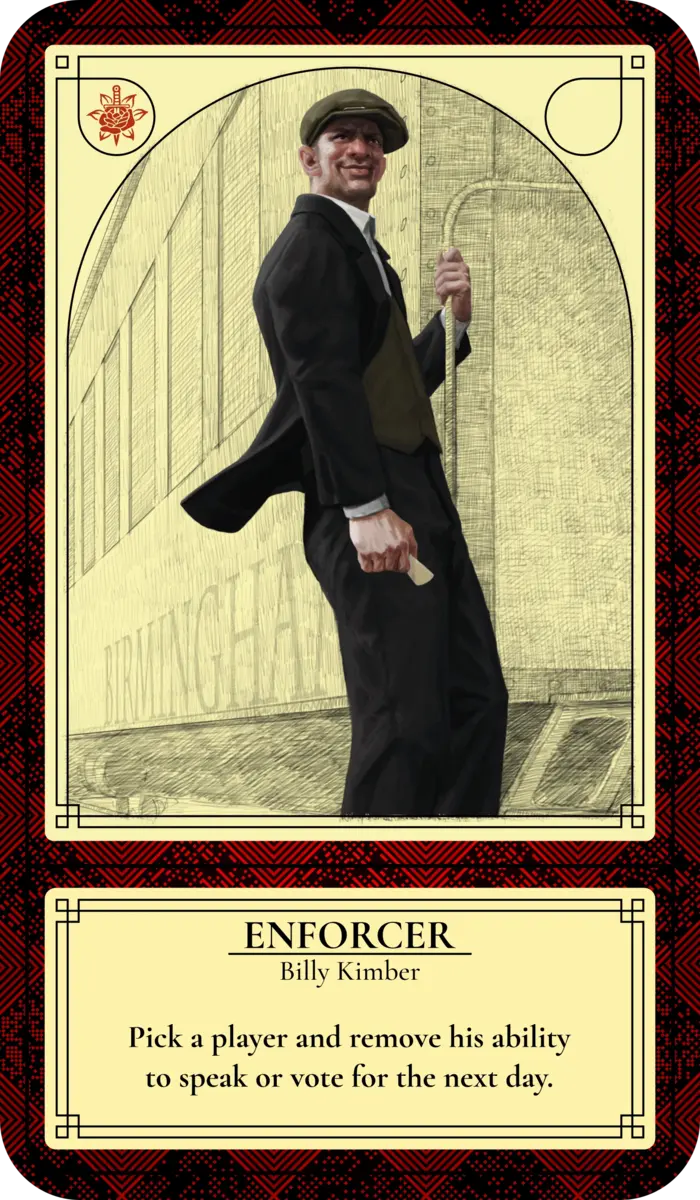
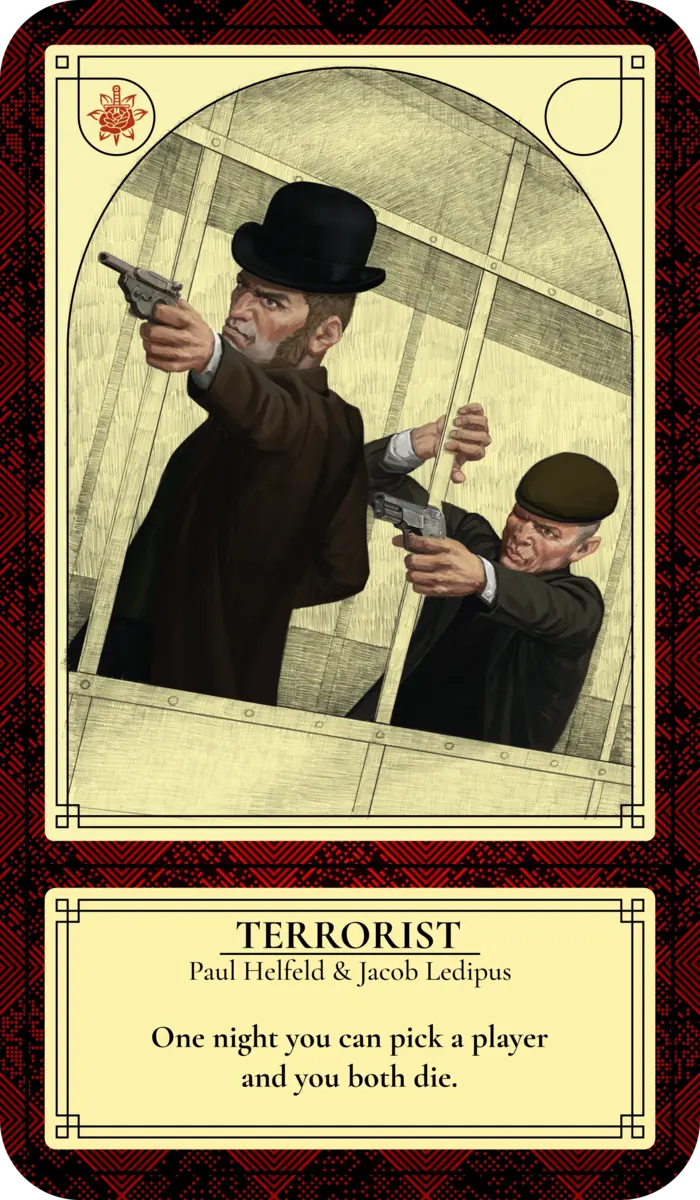
What this card does
Each night you pick a player and kill them. By day you look like everyone else.

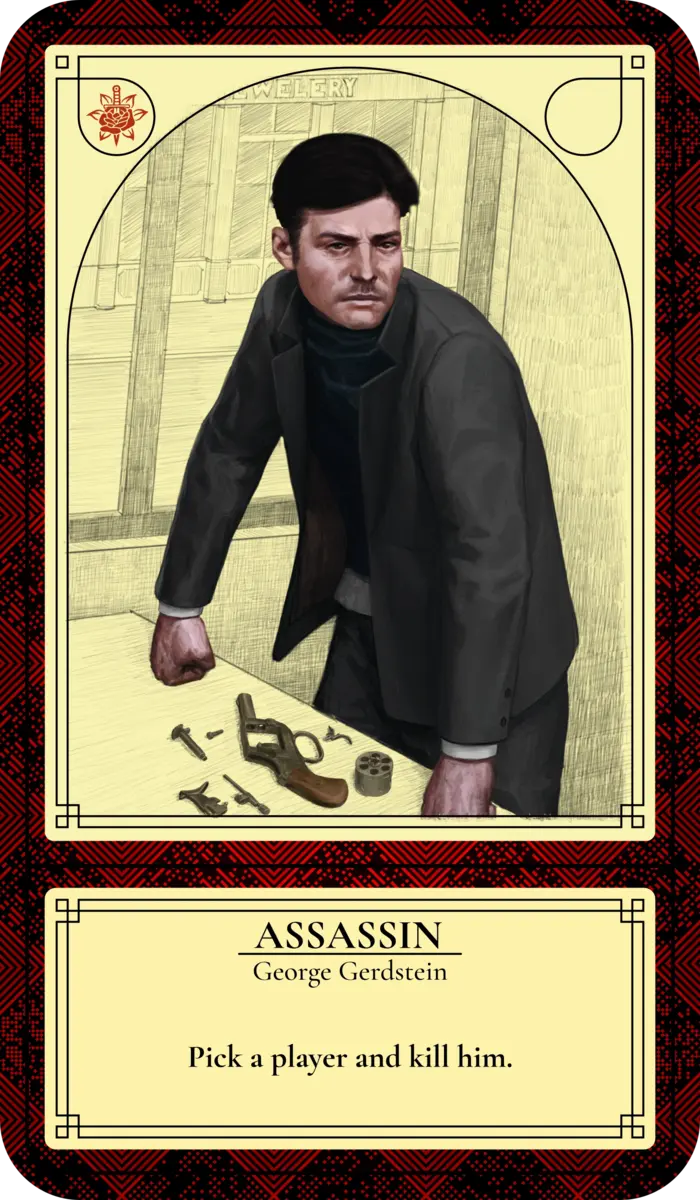
The Mafia Night Kill Each night 3 in the deck
What this card does
Each night you pick a player and kill them. By day you look like everyone else.
How to play
When the host calls the Assassins, open your eyes.
Pick a player each night and kill them.
Close your eyes. If more than one Assassin is seated, you pick one player together.
Tips
The Assassin is one of the mafia roles in the mafia party game.
In the box
Published mixes that seat this card. Pick the list that fits the room, then deal.
When only six friends could make it, you still light the lamp and put the lancet on the table. One knife is plenty in a room this close.
Someone found a seventh chair in the hall and the evening grew a little kinder. Same one knife, one more neighbour to talk to.
The teaching deal. Eight chairs, one lamp, one lancet — and two knives that already know each other.
Still one lamp — but now one door hits back. Call on the wrong house at night and you will wish you had sent a note.
The classic table of nine. Two killers, a cop, a doctor — and the vote does the rest.
For tables that like clues. Read the dead, check a team, and mind the Duelist’s duel.
One lamp, and it can be lied to. The Yard filed him under City, and the Yard is never wrong.
She points first, and somebody’s night simply does not happen. And the man at the door duels his callers.
The Bishop taxes the Assassins’ knife. The Terrorist’s exit does not go through the parish.
One seat raises the recently dead. One seat burns them off the roll. And the lamp may be lying.
The City gets tools, the Mafia gets tricks. You win this one as a table, not as four solo stars.
Gunn and Henry both in chairs, and a slab for everyone else. Two checks a night — while they live.
The client cannot be summoned. The job never happened. And the house still hits back.
Built for rooms that love to argue. Words win this deal — and careless words lose it.
A soldier with two shots, and a room daring him to spend both. The Lawyer would rather nobody stood trial at all.
Minutes are read at the end of the evening — and some names have been made unavailable.
The Oracle dies pointing. The Vigilante has two arguments of his own. The Terrorist needs only one.
Two checks a night. One of them may still be a kindness from Sabini.
The veterans’ deal. Twenty players, three Assassins, and a day that has to keep moving.
Warzone-sized, different firm. Two Assassins, a man the Yard already cleared, and a Bishop taxing the wrong knife.
Write every wake. Call them in the same order. The quiet ones in the dark are not all done with the evening.
Every useful face in a chair. Two more chairs take the last Citizens. After that the box really is empty.
The deck
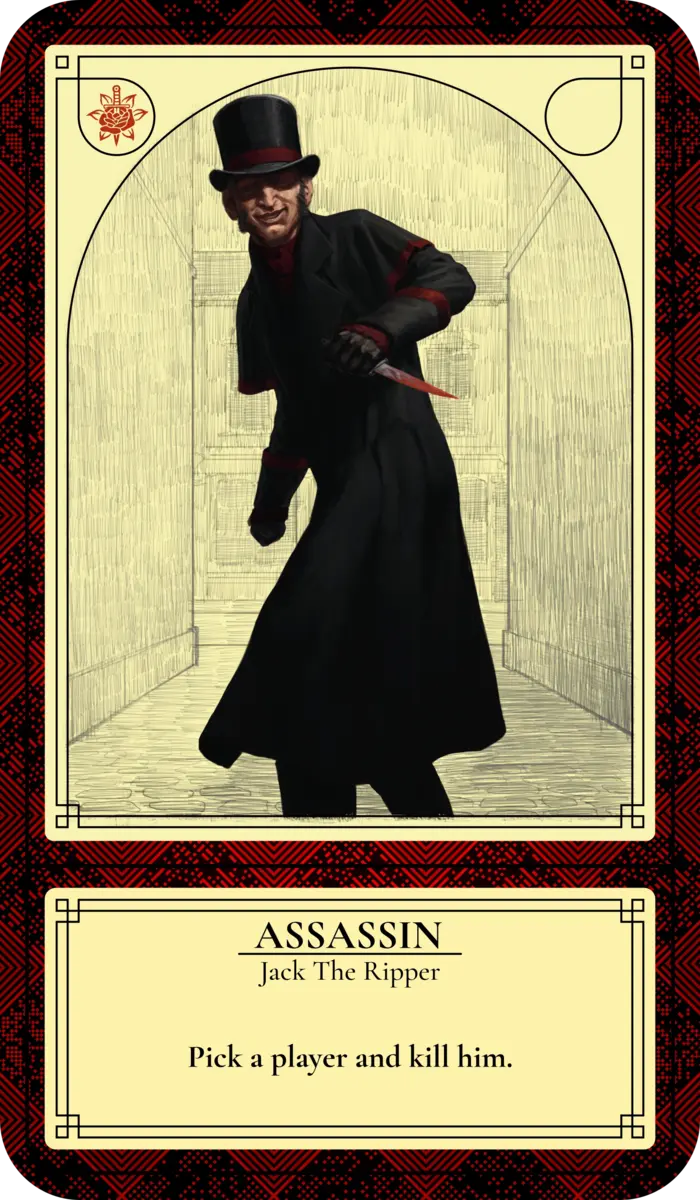
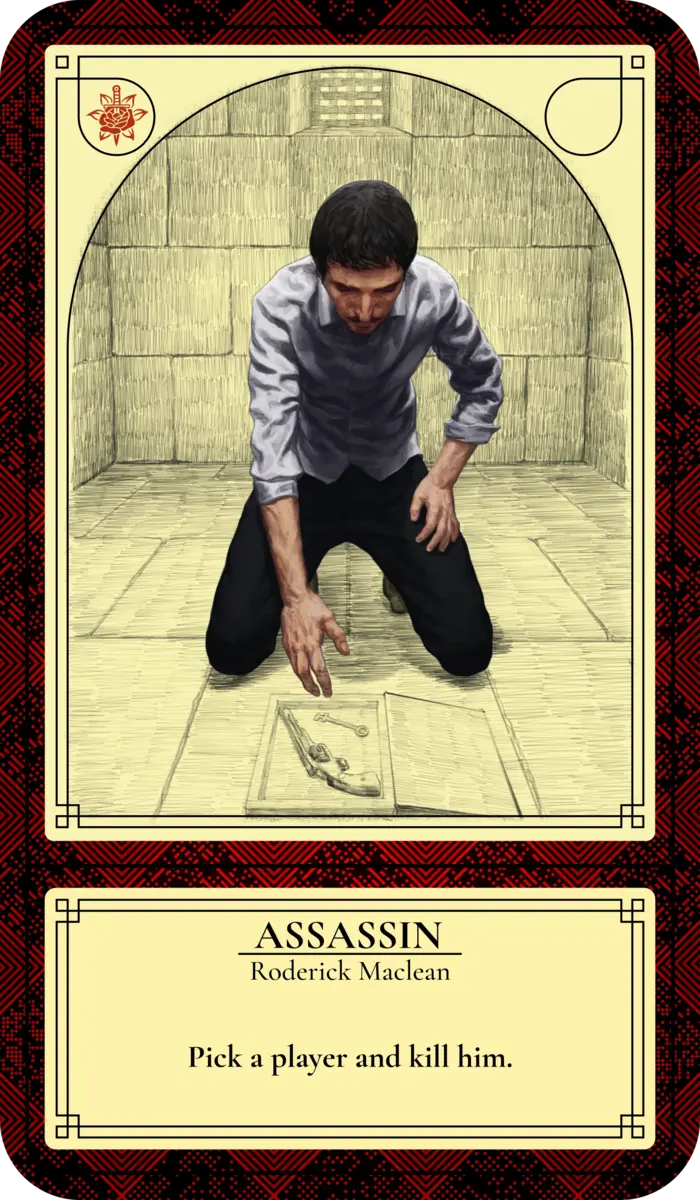
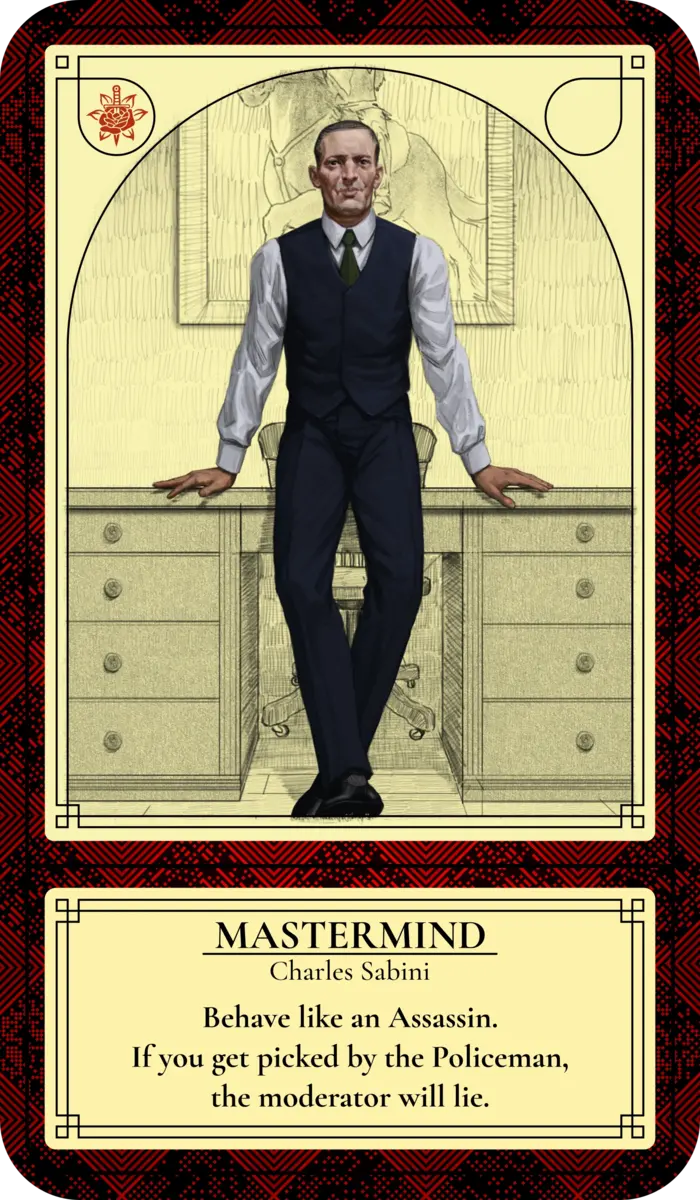
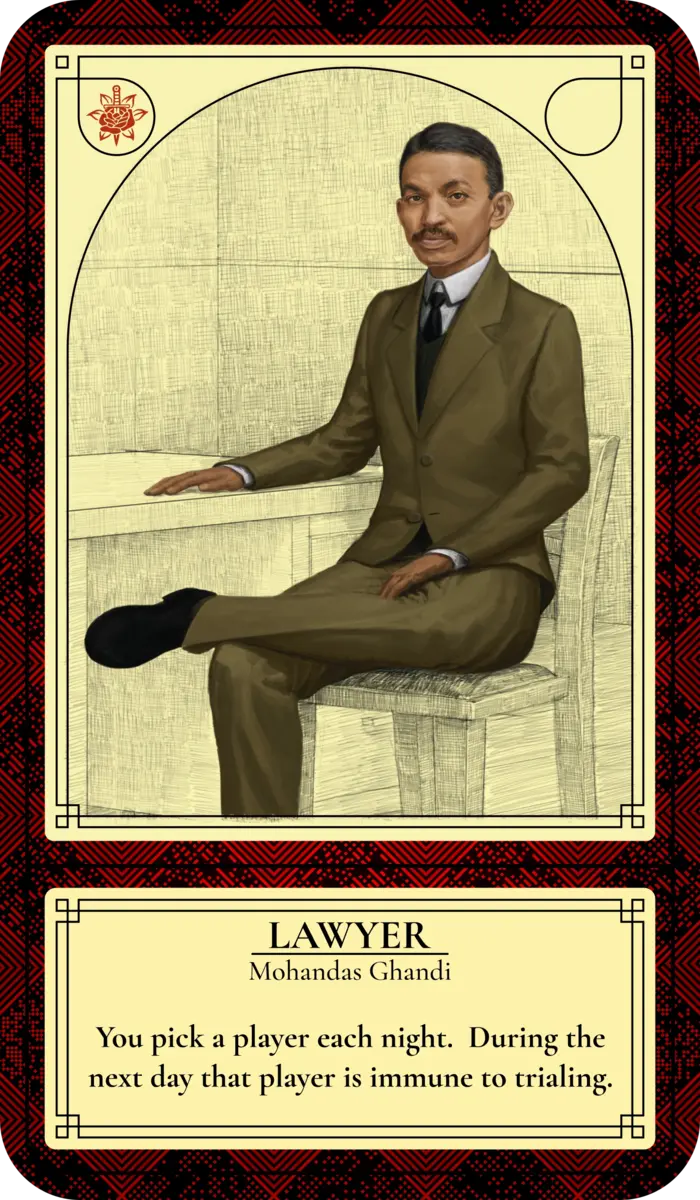
Assassin has 3 printed faces. The job is the same. Only the person on the card changes.
East End lore
The Assassin needs no reason the table would understand, only a target and the night. George Gardstein came to London a refugee from a failed revolution against the Tsar, already practised in the things that revolution teaches: bomb-making, pistol work, and robbery for the cause. He led the gang that tunnelled towards a jeweller's safe in Houndsditch. When unarmed constables forced the door, the shooting began at point-blank range in a dark passage, and three policemen died. Gardstein was hit by one of his own men, carried half a mile through Whitechapel, and died in a borrowed bed before morning. Nobody has ever established his real name. That is the Assassin: he strikes, he vanishes, and even the men who find the body cannot say who it was.
In the lore, it was Darby Sabini who brought him in, putting money and protection around a Latvian anarchist that no respectable firm would touch. The alliance needed men who could not be reasoned with, and Gardstein needed a city that would not ask questions. He came to the Three Harpies with two of his own. One of them spent an hour arguing about Africa with the young soldier, and neither side won.
“Before I bleed for a man, I like to know his name. His real one.”
George Gardstein
Street
By day they buy drinks like anyone else. After dark, this is how the East End settled a problem.
Meeting
The Mafia needs a cut the table cannot see. This is that cut. The face still has to look ordinary in the morning.
The room
If the room smells blood, this is the first card they name. That is the job, and it is the danger.
Inspired by
c.1887–1910
Three unarmed policemen were shot dead in the City of London in a single night, and the man who did most of the shooting was killed by his own side by accident. That was December 1910. British constables carried a truncheon and a whistle; the men they walked in on carried Mauser and Dreyse automatic pistols. The police had been called to a jeweller's in Houndsditch because neighbours heard hammering — someone was breaking through the back wall of the shop next door. Seven officers went in without weapons. Three died. It remains the worst loss of life the City of London Police has ever suffered, and it lasted about ninety seconds.
The gang were Latvian revolutionaries who had fled the failed 1905 uprising against the Russian Tsar and washed up in the East End with the skills that came from it: expropriation, bomb-making, pistol work. Gardstein — a false name, one of several, his real identity still disputed — was the one they followed. They had rented the house behind the shop, run a gas cylinder for cutting, and were tunnelling toward a safe holding some forty thousand pounds of jewellery. When the police forced the door, the shooting began at point-blank range in a dark passage. Gardstein was hit in the back by a round fired by one of his own men. They dragged him half a mile through Whitechapel and put him in a bed on Grove Street, where a doctor was brought and told nothing, and he died before morning. The police found him with the pistols still in the room. Two weeks later the surviving members were cornered on Sidney Street, and the Home Secretary — Winston Churchill — came in person to watch a company of Scots Guards fire into a London terrace until it burned with the men inside.
They arrived as refugees. The Russian Empire had put down the 1905 revolution in the Baltic provinces with punitive columns, field executions, and floggings in village squares, and thousands of young Latvians left rather than be hanged. London took them in and gave them tailoring shops, sweated labour, and rooms in Stepney. Some of them kept organising. The money from a robbery was not for themselves; it was for the cause back home, which is what expropriation meant. Gardstein had already been an armed revolutionary for years before he ever set foot in England.
The aftermath fell on everyone who looked like them. The trial that followed collapsed — every defendant acquitted or discharged — but the press had already decided, and the Aliens Act politics that followed reshaped British immigration for a generation. Nobody has ever established with certainty what his name was.
Forget the forty thousand pounds and the three dead constables. Remember only this: he came to London to hide, and the men who hunted him could not even establish who they had killed.
The Mafia
Same team. Different jobs.
Mafia is easier to play than it looks. Everyone gets a hidden card — most of the table is City, a hidden few are Mafia. At night the killers quietly pick a victim while a doctor tries to guess who needs saving and a cop digs for the truth. By day the survivors argue about what happened, put someone on trial, and vote. The City wins by finding every killer; the Mafia wins by surviving until they can win a vote. The walkthrough takes you through the whole game, from the deal to the last trial.
How to play mafiaYour first game should be The Lamp and the Lancet — eight players and only three night wakes, so nobody gets lost. With a ninth chair the same deal becomes, naturally, The Ninth Chair. All twenty published deals, up to twenty-seven players, are on the setups page.
The teaching deal. Eight chairs, one lamp, one lancet — and two knives that already know each other.
City: 1 Policeman, 1 Doctor, Citizens to fill Mafia: 2 Assassins
The classic table of nine. Two killers, a cop, a doctor — and the vote does the rest.
City: 1 Policeman, 1 Doctor, Citizens to fill Mafia: 2 Assassins