What this card does
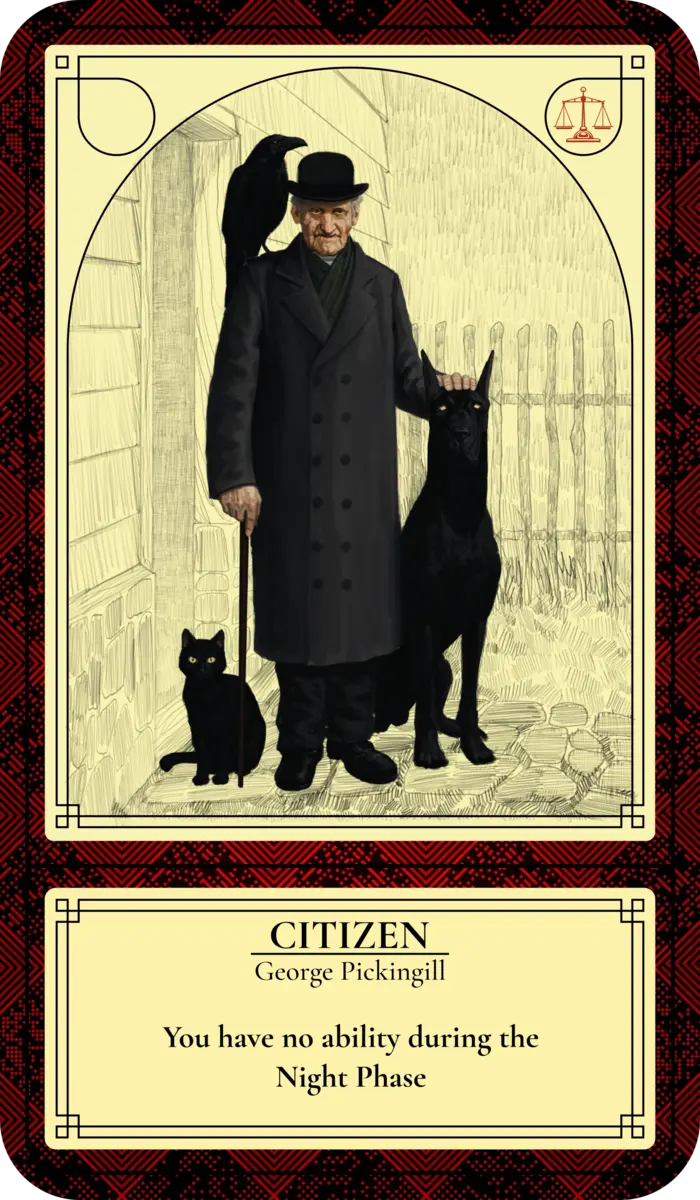
In a mafia card game most people are Citizens. You have a hidden card. You have no ability during the night phase. By day you talk, you accuse, and you vote.

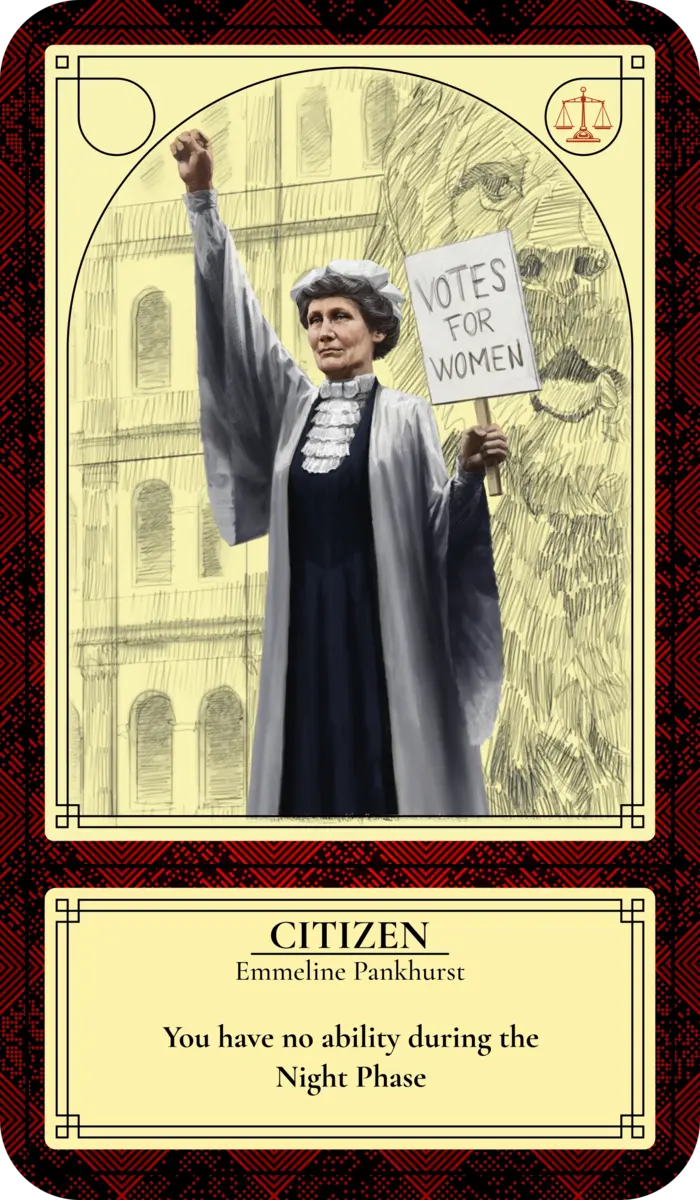
The City Day No night job 9 in the deck
What this card does
In a mafia card game most people are Citizens. You have a hidden card. You have no ability during the night phase. By day you talk, you accuse, and you vote.
How to play
You have no ability during the night phase. Close your eyes. Stay asleep.
Talk, accuse, and vote. That is the whole job.
Look once. Put it away. The card is the only proof.
Tips
The Citizen is one of the mafia roles in the mafia party game.
In the box
Published mixes that seat this card. Pick the list that fits the room, then deal.
When only six friends could make it, you still light the lamp and put the lancet on the table. One knife is plenty in a room this close.
Someone found a seventh chair in the hall and the evening grew a little kinder. Same one knife, one more neighbour to talk to.
The teaching deal. Eight chairs, one lamp, one lancet — and two knives that already know each other.
Still one lamp — but now one door hits back. Call on the wrong house at night and you will wish you had sent a note.
The classic table of nine. Two killers, a cop, a doctor — and the vote does the rest.
For tables that like clues. Read the dead, check a team, and mind the Duelist’s duel.
One lamp, and it can be lied to. The Yard filed him under City, and the Yard is never wrong.
She points first, and somebody’s night simply does not happen. And the man at the door duels his callers.
The Bishop taxes the Assassins’ knife. The Terrorist’s exit does not go through the parish.
One seat raises the recently dead. One seat burns them off the roll. And the lamp may be lying.
The City gets tools, the Mafia gets tricks. You win this one as a table, not as four solo stars.
Gunn and Henry both in chairs, and a slab for everyone else. Two checks a night — while they live.
The client cannot be summoned. The job never happened. And the house still hits back.
Built for rooms that love to argue. Words win this deal — and careless words lose it.
A soldier with two shots, and a room daring him to spend both. The Lawyer would rather nobody stood trial at all.
Minutes are read at the end of the evening — and some names have been made unavailable.
The Oracle dies pointing. The Vigilante has two arguments of his own. The Terrorist needs only one.
Two checks a night. One of them may still be a kindness from Sabini.
The veterans’ deal. Twenty players, three Assassins, and a day that has to keep moving.
Warzone-sized, different firm. Two Assassins, a man the Yard already cleared, and a Bishop taxing the wrong knife.
Write every wake. Call them in the same order. The quiet ones in the dark are not all done with the evening.
Every useful face in a chair. Two more chairs take the last Citizens. After that the box really is empty.
The deck
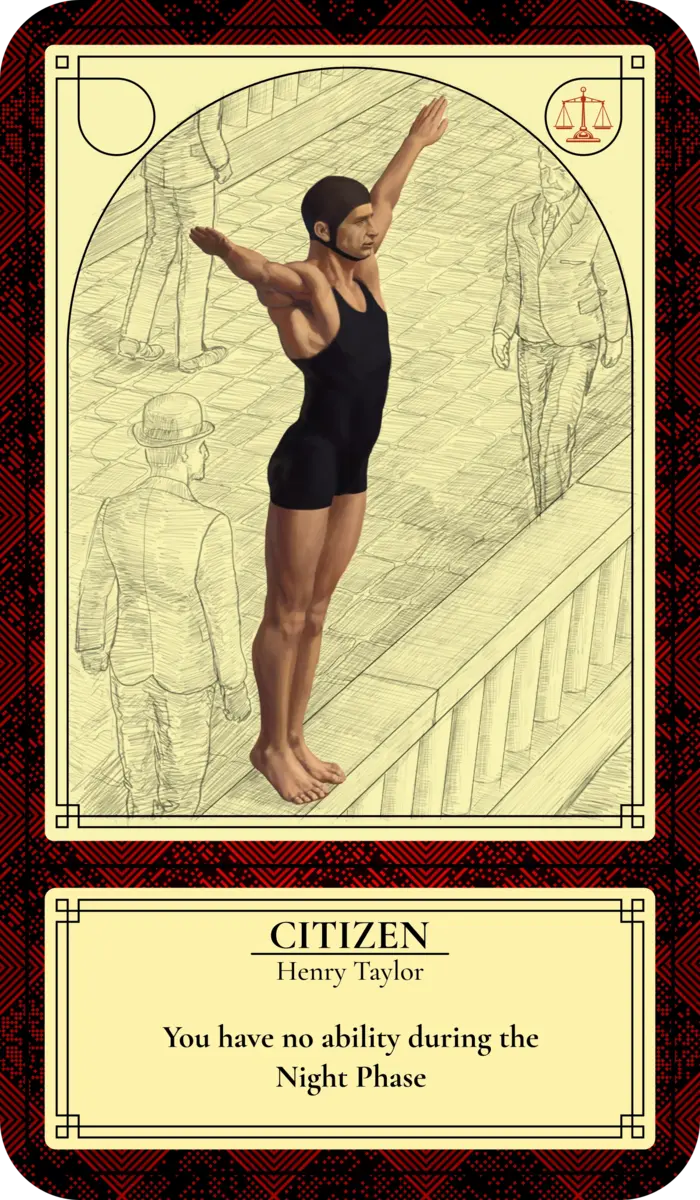
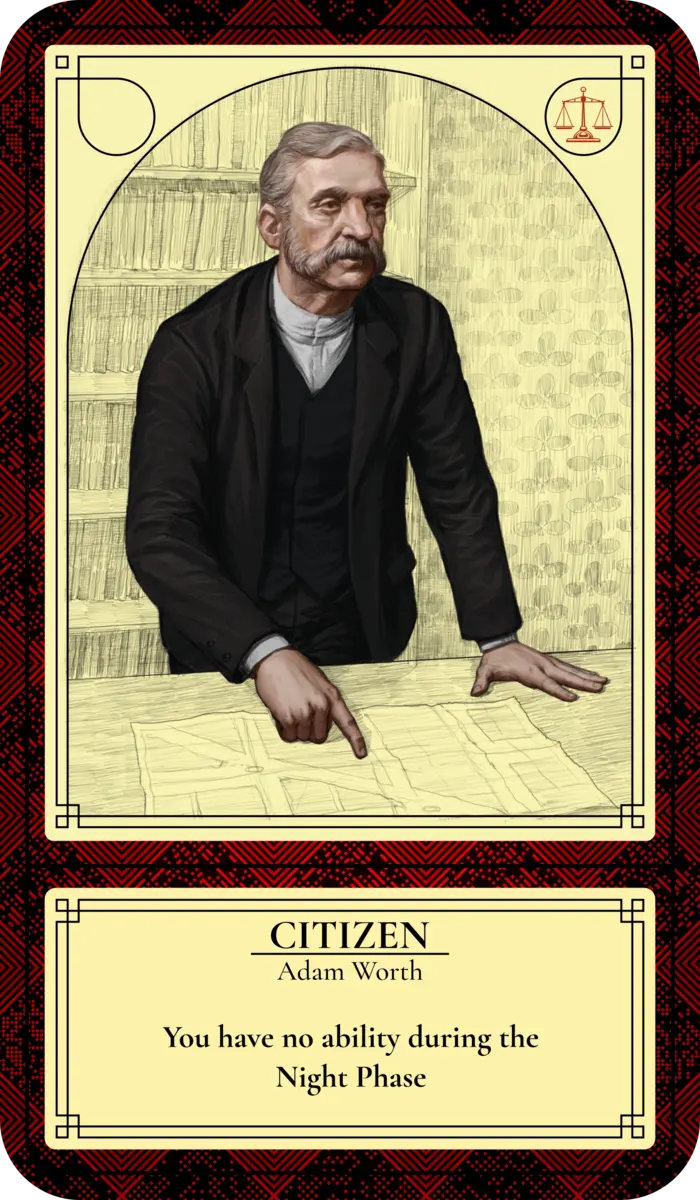
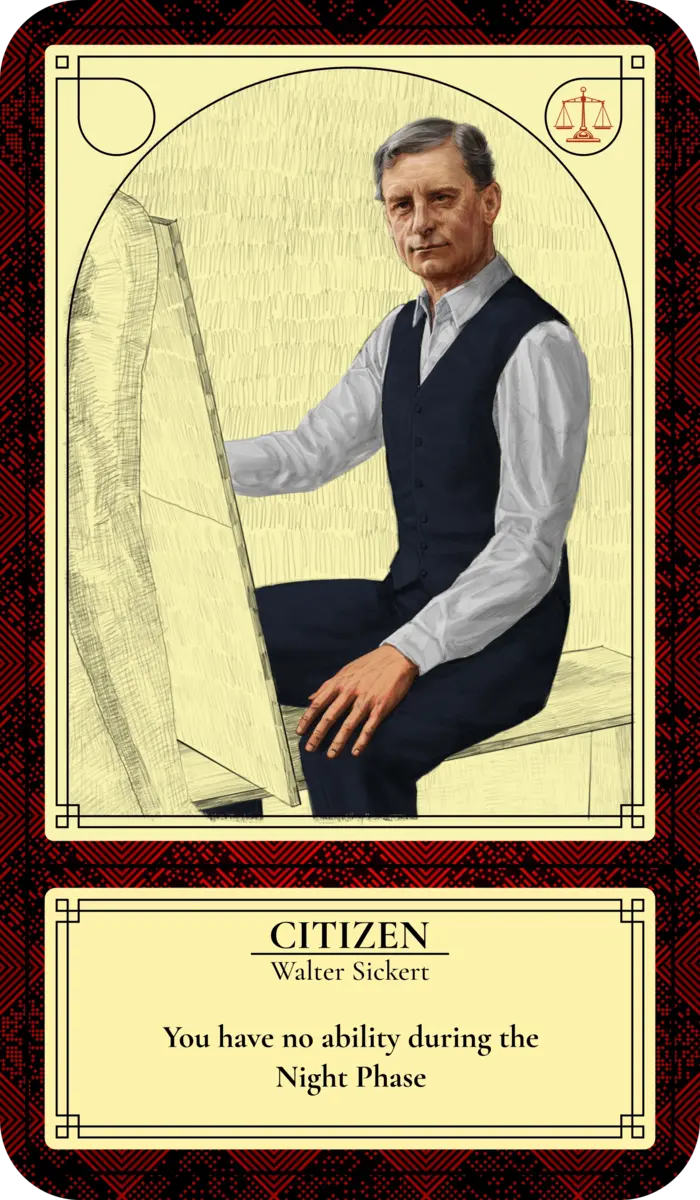
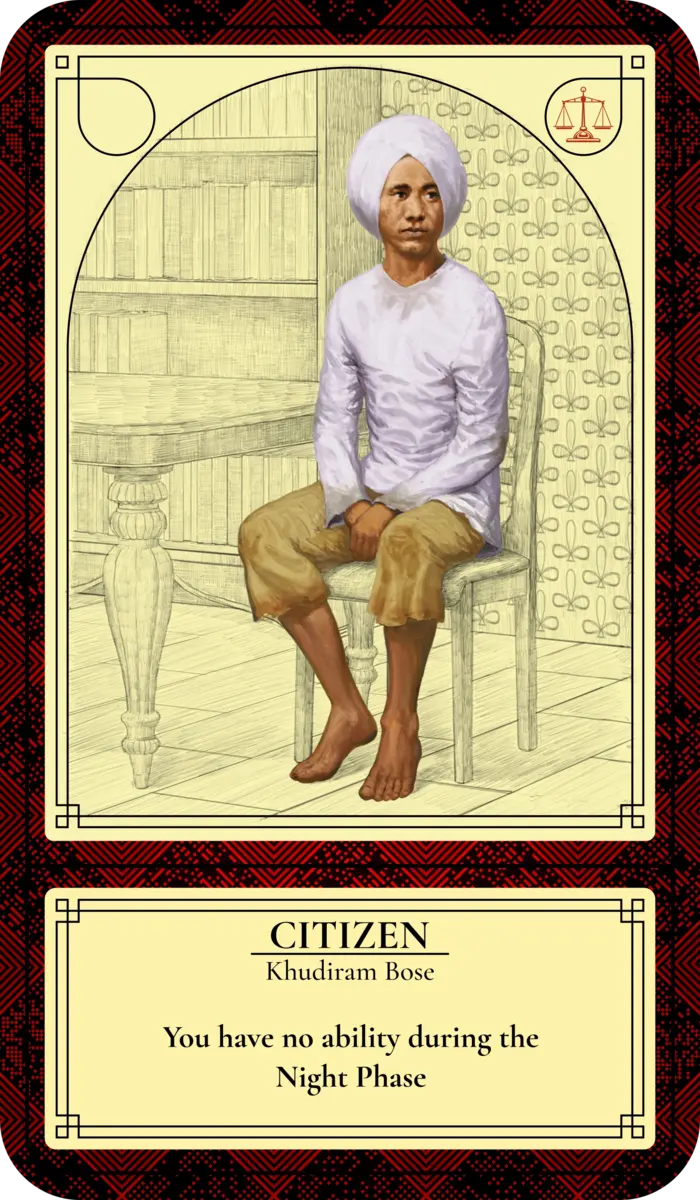
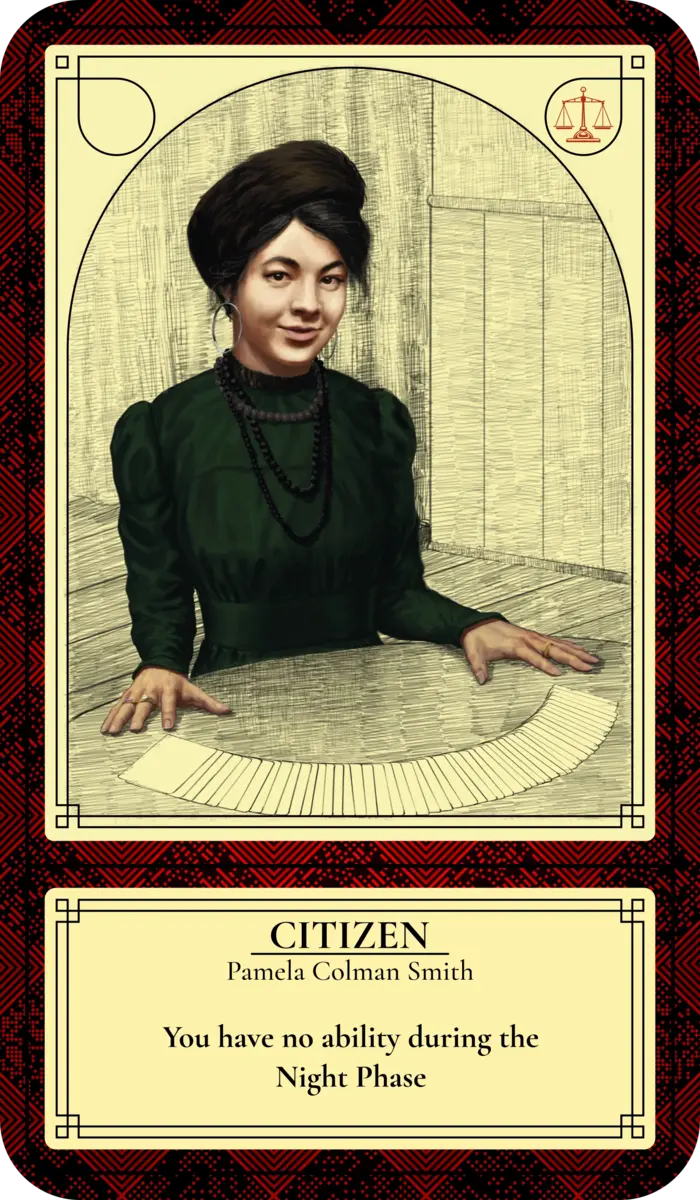
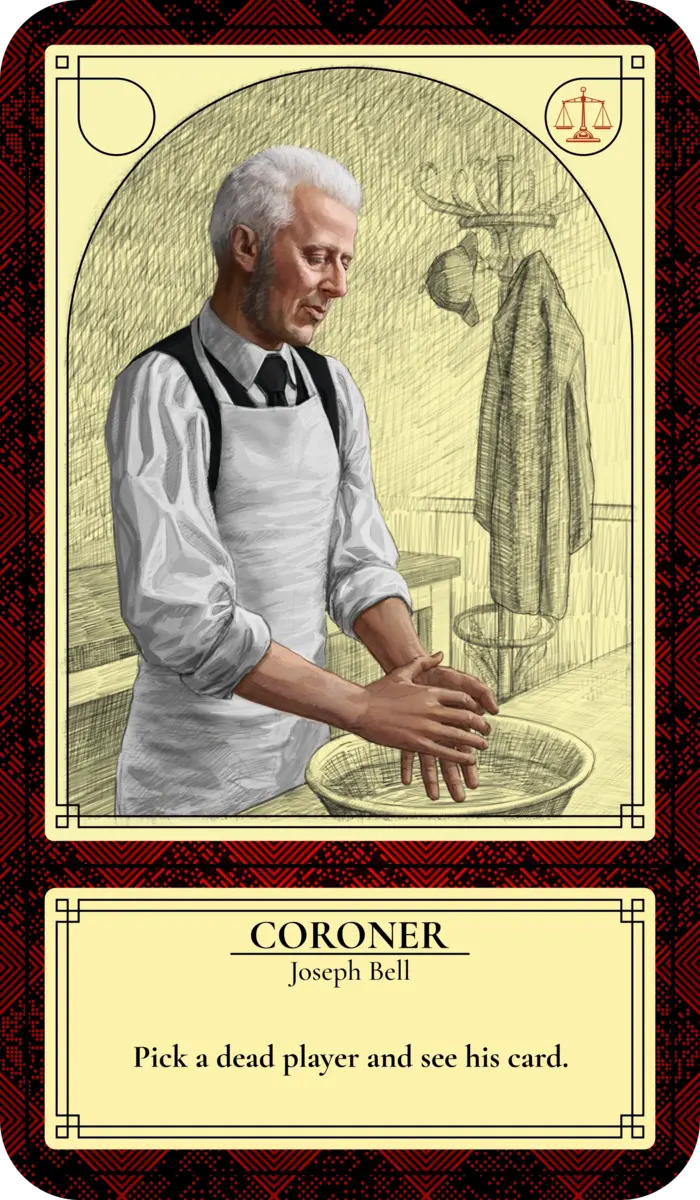
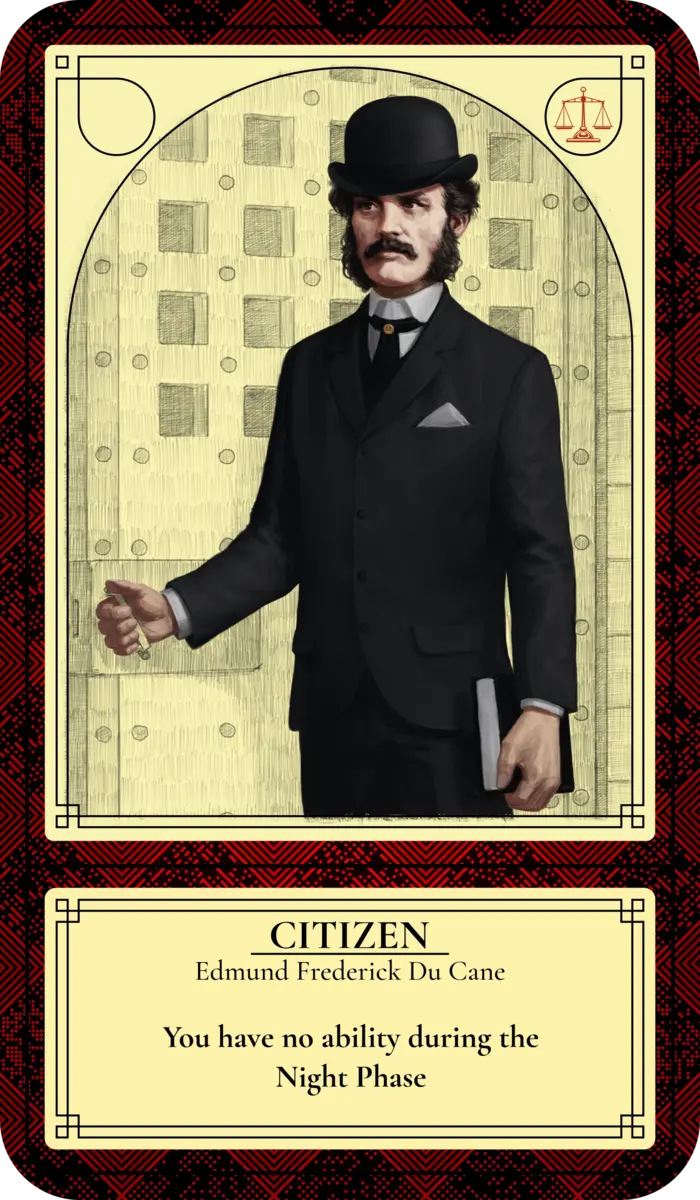
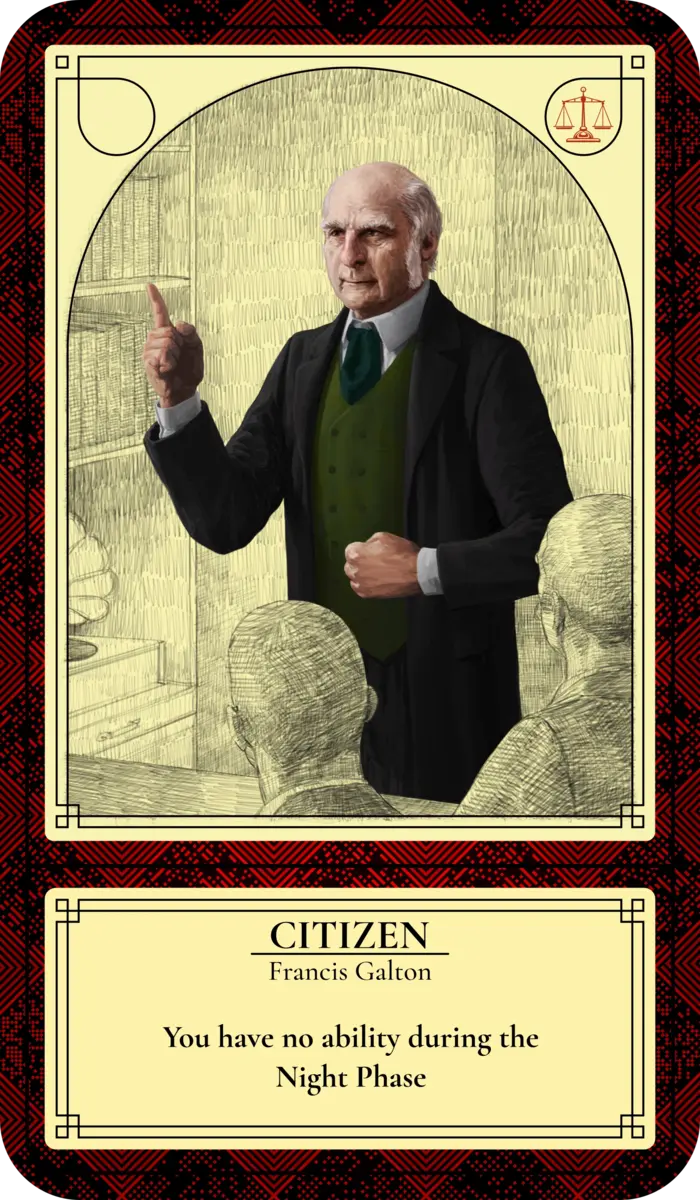
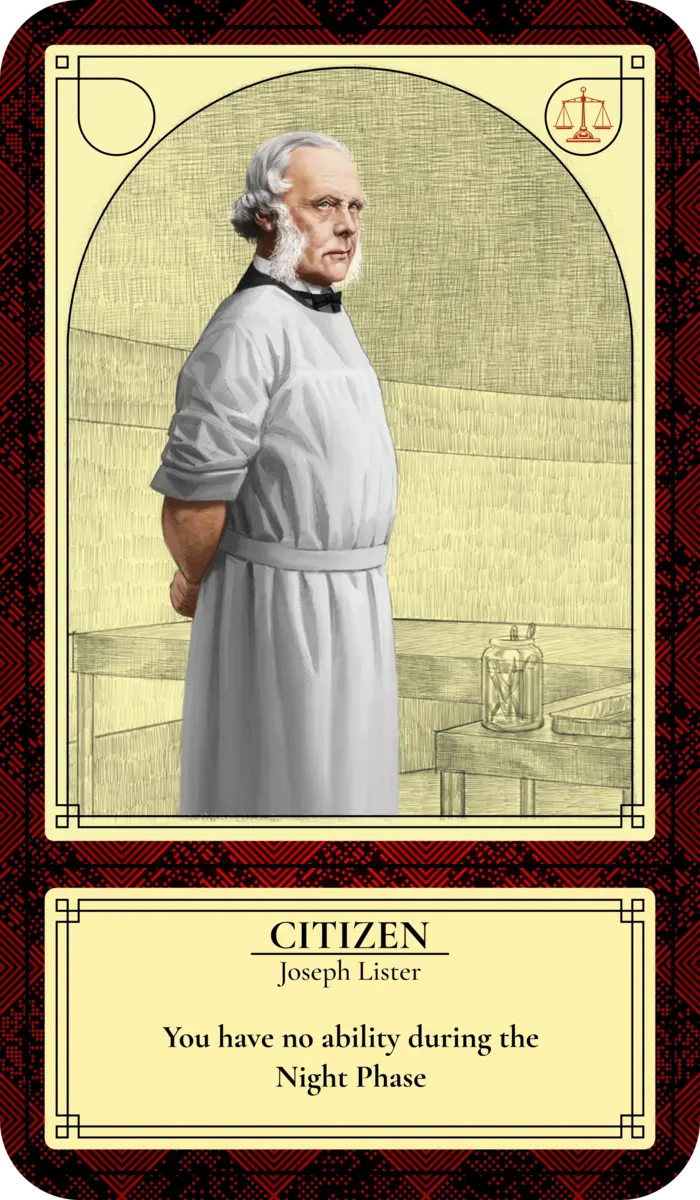
Citizen has 9 printed faces. The job is the same. Only the person on the card changes.
East End lore
A Citizen has no power at night. Their weapon is the day: the voice, the argument, the vote. Nobody in history used that weapon harder than Emmeline Pankhurst. She was five foot three and had no office, no army and no permission, and she built a movement that broke windows, filled prisons and outlasted every government that tried to silence it. At one point Parliament passed a law purely so it could release her when she was near death and arrest her again once she recovered. It did not work. She could walk into a room of frightened, respectable people and have them on their feet in ten minutes. That is the Citizen at full strength: no trick, only a voice nobody can make sit down.
In the lore, Galton wrote to her in Manchester. She had served as a Guardian of the Poor and had walked more of the streets behind those docks than anyone he could name. If the men on the river had been bought, their wives knew it, and they would tell her what they would never tell a constable. She knew Galton's work, did not care for it, and came anyway. At the Three Harpies she arrived alone and looked at the room the way an inspector looks at a kitchen.
“I have learned to read a gentleman's letter twice. Once for what it says, and once for what it was careful not to.”
Emilia Pankhurst
Street
Mill hands, clerks, and shopkeepers fill the East End. Most people in a mafia card game look like this — ordinary, and hard to prove.
Meeting
The City lives or dies on ordinary chairs. This seat is the crowd: talk, doubt, and a vote when the talk runs out.
The room
A silent Citizen worries people. A loud one worries them too. The table has to live with both.
Inspired by
1858–1928
She broke the British government. Not metaphorically—the Home Office passed a bespoke act of Parliament simply because they could not keep one woman in a cell. Release her near death; re-arrest her upon recovery. Eleven times in twelve months they opened the gates, and eleven times they came back for her. She was in her fifties. She was five foot three. Against her stood the police, the prisons, and the full weight of the Empire. None of it worked.
She built the weapon herself: the Women's Social and Political Union. No committees, no votes, no compromises, and zero interest in permission. On signal, they shattered West End storefronts. They burned country estates, chained themselves to iron railings, slashed museum canvases, and firebombed a Cabinet minister’s house. Beaten in Parliament Square and dragged into cells, they were pinned down, jaws pried open, and force-fed through rubber tubes. Then they walked back out and did it again. At the Old Bailey, she ran her own defense, telling the court she would die before serving their sentence. They gave her three years. She served it in fragments, between collapses.
She was raised in Moss Side by parents who treated radical politics as a daily duty; she attended her first rally at fourteen. She married a barrister who authored the Married Women’s Property Act, then buried him at forty—leaving her broke with five children. As Registrar of Births and Deaths and Guardian of the local workhouse, the theoretical became raw reality: pregnant thirteen-year-olds; shoeless children in winter cotton; mothers legally barred from signing for their own babies. Twenty years of polite petitioning ended right there.
When war broke out, she halted the campaign overnight. She handed Britain’s most disciplined militant network over to government recruitment, stumping the country for the very men who had force-fed her. Years later, she ran for Parliament as a Conservative in Whitechapel—the absolute bottom of the East End docks. She died in June 1928, weeks shy of full, equal suffrage.
Forget the court records and the broken glass. Remember only this: she could walk into a room of terrified, respectable citizens and have them on their feet in ten minutes—because she had long since quit waiting for permission to speak.
The City
Same team. Different jobs.
Mafia is easier to play than it looks. Everyone gets a hidden card — most of the table is City, a hidden few are Mafia. At night the killers quietly pick a victim while a doctor tries to guess who needs saving and a cop digs for the truth. By day the survivors argue about what happened, put someone on trial, and vote. The City wins by finding every killer; the Mafia wins by surviving until they can win a vote. The walkthrough takes you through the whole game, from the deal to the last trial.
How to play mafiaYour first game should be The Lamp and the Lancet — eight players and only three night wakes, so nobody gets lost. With a ninth chair the same deal becomes, naturally, The Ninth Chair. All twenty published deals, up to twenty-seven players, are on the setups page.
The teaching deal. Eight chairs, one lamp, one lancet — and two knives that already know each other.
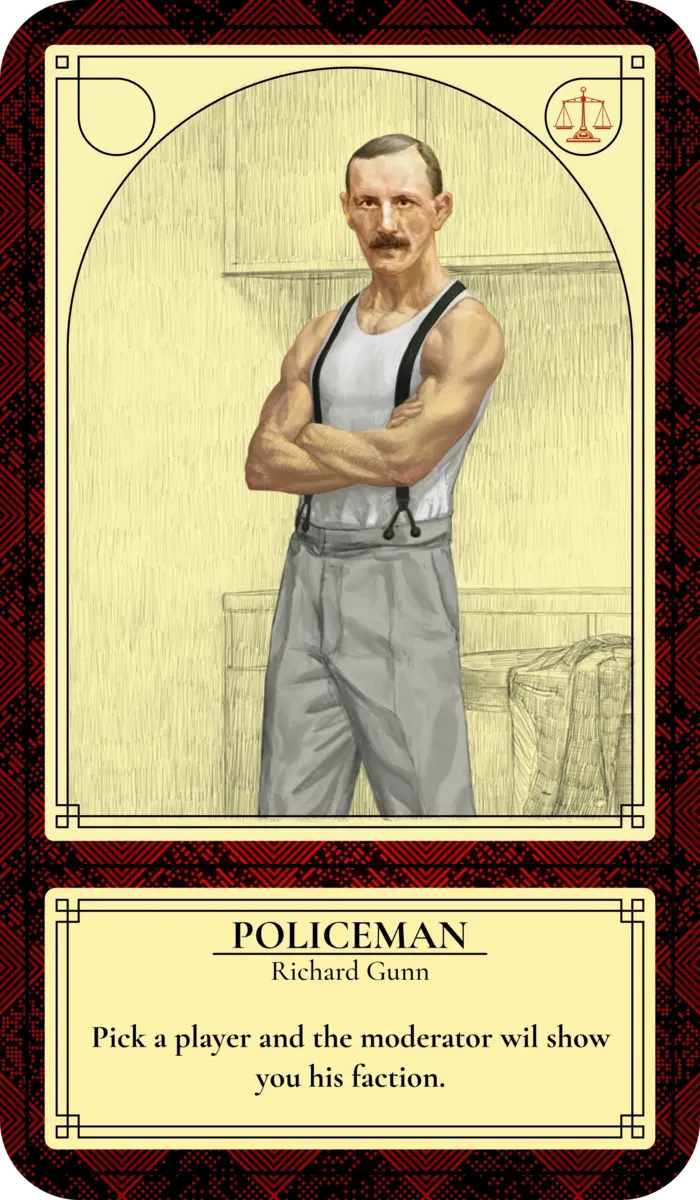
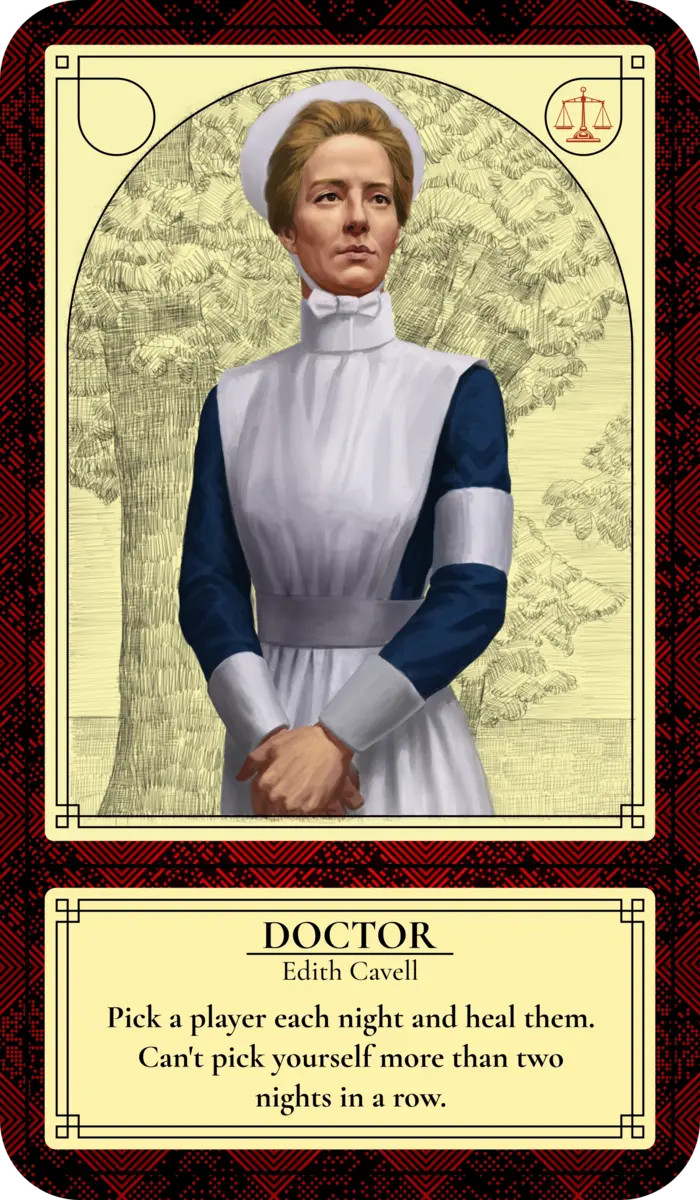
City: 1 Policeman, 1 Doctor, Citizens to fill Mafia: 2 Assassins
The classic table of nine. Two killers, a cop, a doctor — and the vote does the rest.
City: 1 Policeman, 1 Doctor, Citizens to fill Mafia: 2 Assassins