What this card does
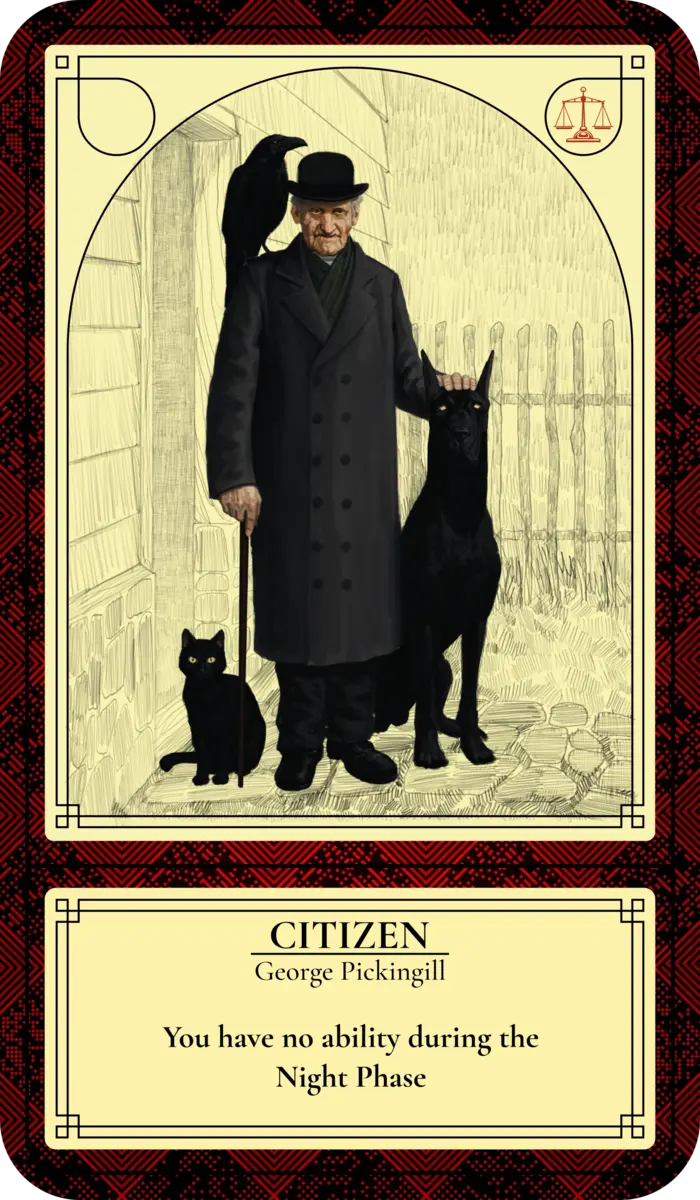
In a mafia card game most people are Citizens. You have a hidden card. You have no ability during the night phase. By day you talk, you accuse, and you vote.

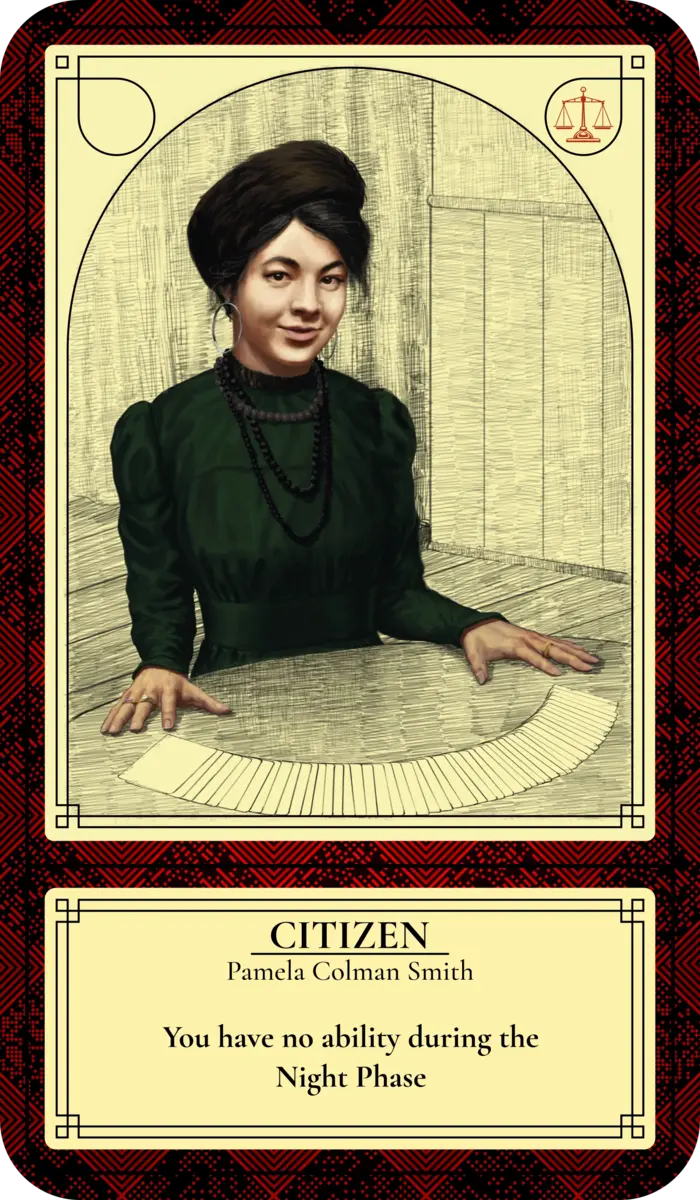
The City Day No night job 9 in the deck
What this card does
In a mafia card game most people are Citizens. You have a hidden card. You have no ability during the night phase. By day you talk, you accuse, and you vote.
How to play
You have no ability during the night phase. Close your eyes. Stay asleep.
Talk, accuse, and vote. That is the whole job.
Look once. Put it away. The card is the only proof.
Tips
The Citizen is one of the mafia roles in the mafia party game.
In the box
Published mixes that seat this card. Pick the list that fits the room, then deal.
When only six friends could make it, you still light the lamp and put the lancet on the table. One knife is plenty in a room this close.
Someone found a seventh chair in the hall and the evening grew a little kinder. Same one knife, one more neighbour to talk to.
The teaching deal. Eight chairs, one lamp, one lancet — and two knives that already know each other.
Still one lamp — but now one door hits back. Call on the wrong house at night and you will wish you had sent a note.
The classic table of nine. Two killers, a cop, a doctor — and the vote does the rest.
For tables that like clues. Read the dead, check a team, and mind the Duelist’s duel.
One lamp, and it can be lied to. The Yard filed him under City, and the Yard is never wrong.
She points first, and somebody’s night simply does not happen. And the man at the door duels his callers.
The Bishop taxes the Assassins’ knife. The Terrorist’s exit does not go through the parish.
One seat raises the recently dead. One seat burns them off the roll. And the lamp may be lying.
The City gets tools, the Mafia gets tricks. You win this one as a table, not as four solo stars.
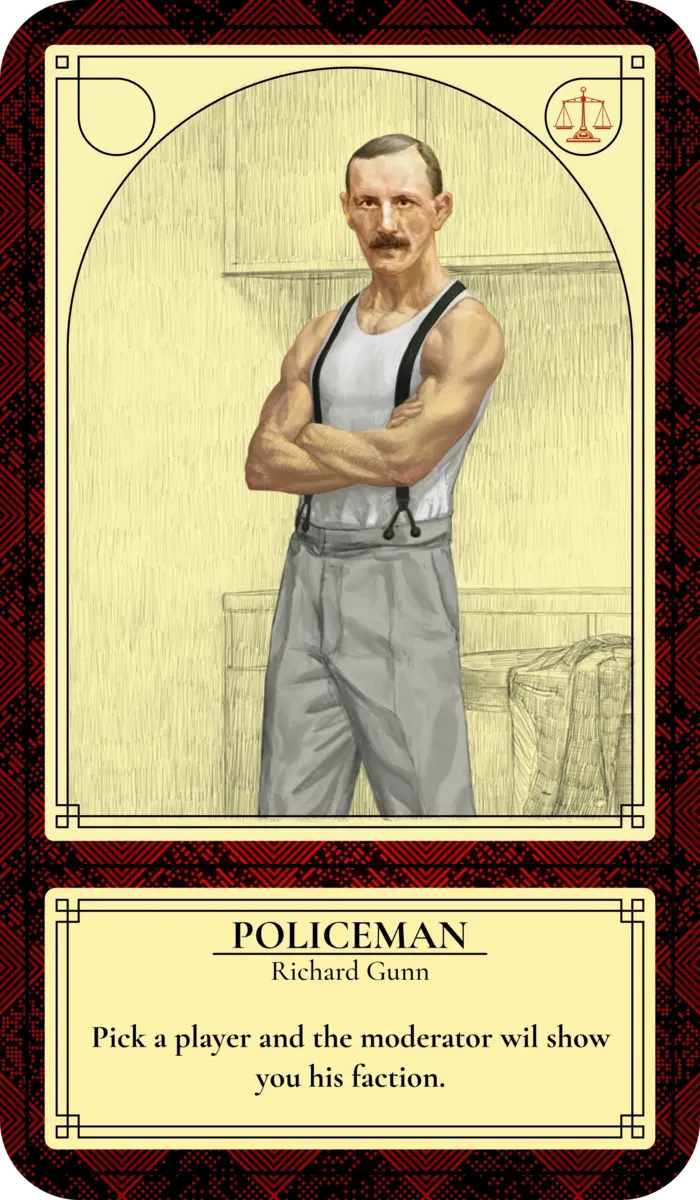
Gunn and Henry both in chairs, and a slab for everyone else. Two checks a night — while they live.
The client cannot be summoned. The job never happened. And the house still hits back.
Built for rooms that love to argue. Words win this deal — and careless words lose it.
A soldier with two shots, and a room daring him to spend both. The Lawyer would rather nobody stood trial at all.
Minutes are read at the end of the evening — and some names have been made unavailable.
The Oracle dies pointing. The Vigilante has two arguments of his own. The Terrorist needs only one.
Two checks a night. One of them may still be a kindness from Sabini.
The veterans’ deal. Twenty players, three Assassins, and a day that has to keep moving.
Warzone-sized, different firm. Two Assassins, a man the Yard already cleared, and a Bishop taxing the wrong knife.
Write every wake. Call them in the same order. The quiet ones in the dark are not all done with the evening.
Every useful face in a chair. Two more chairs take the last Citizens. After that the box really is empty.
The deck
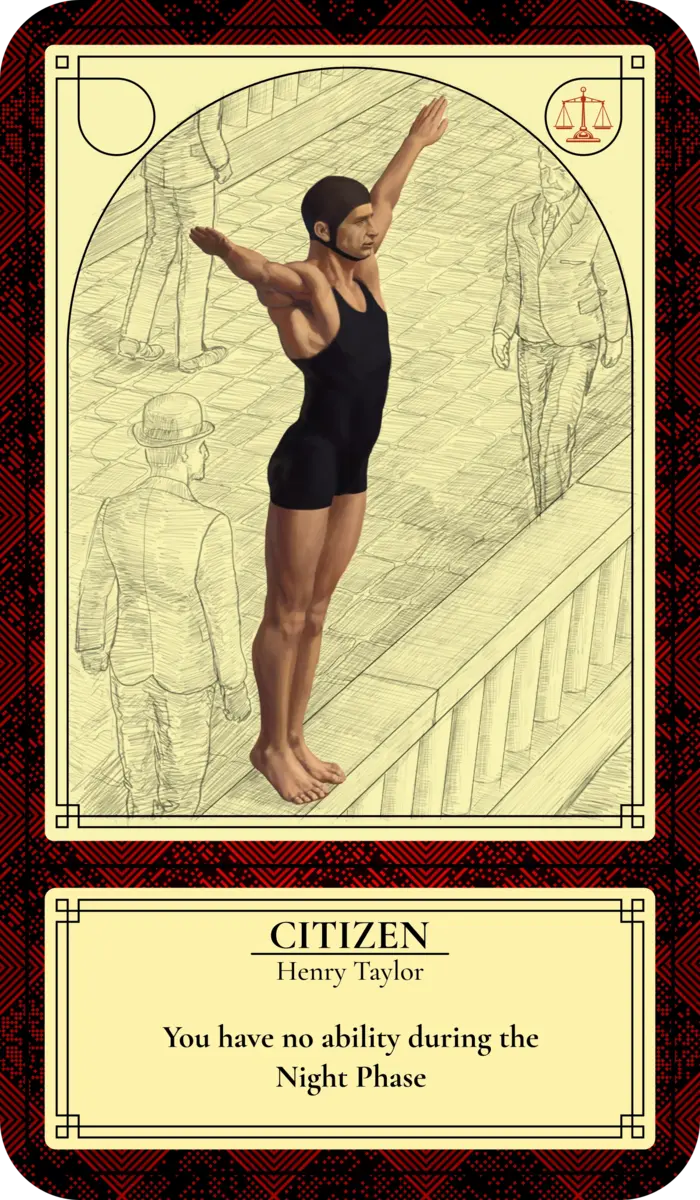
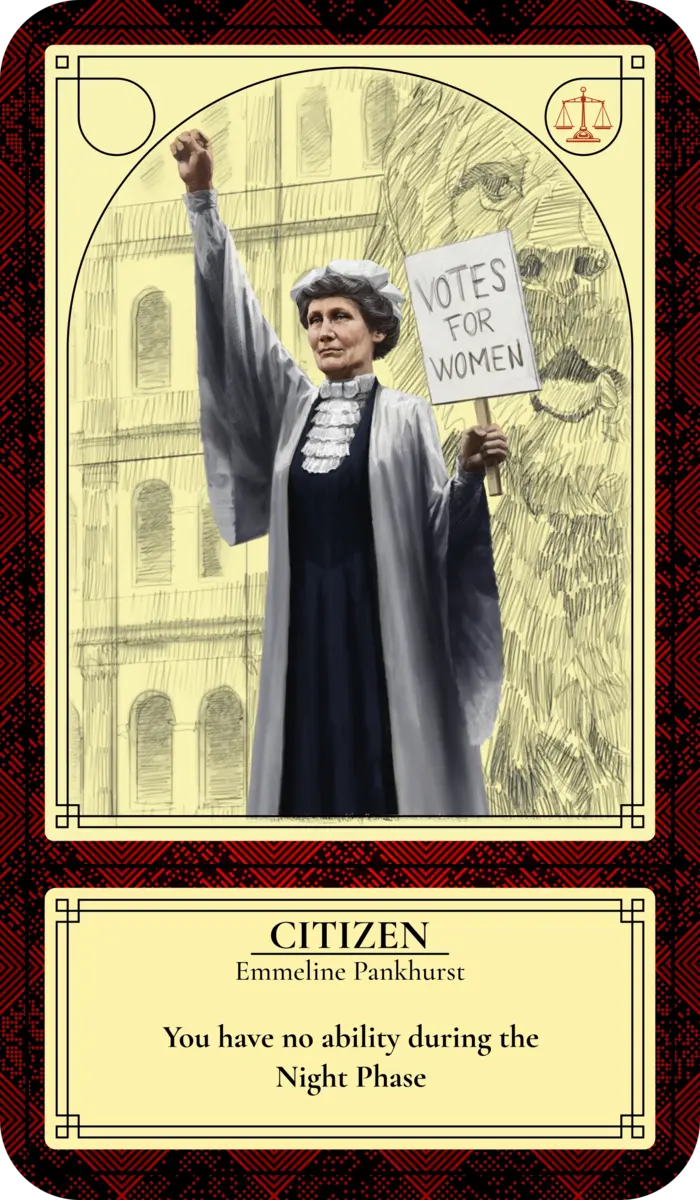
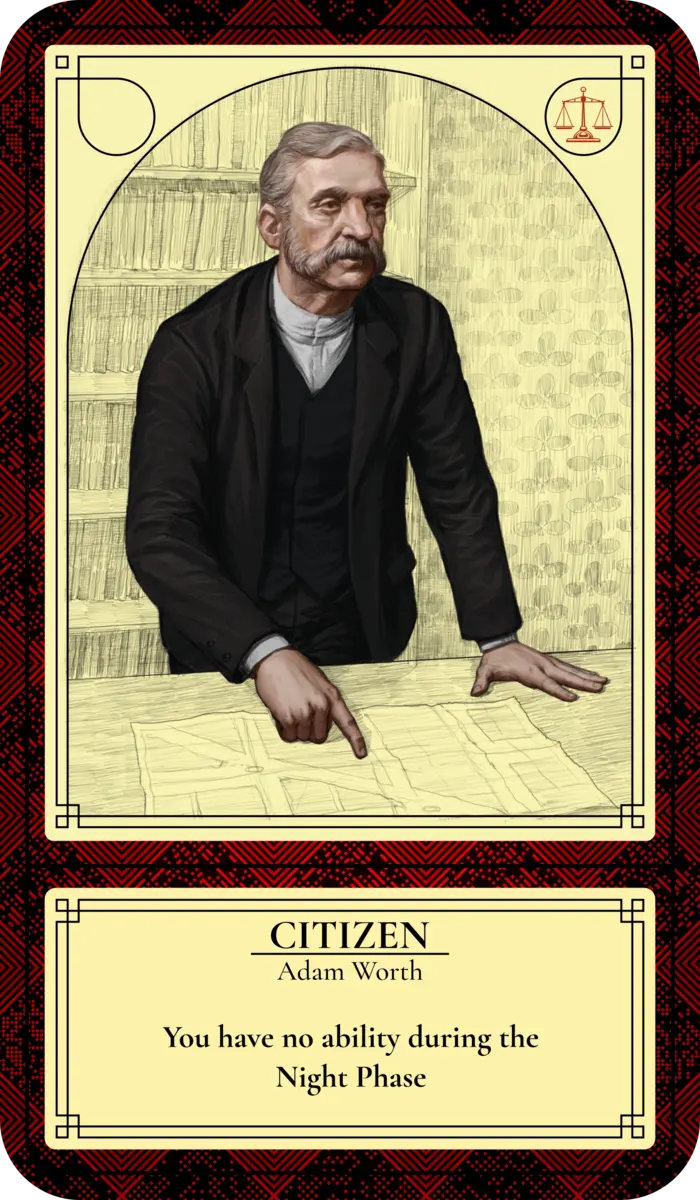
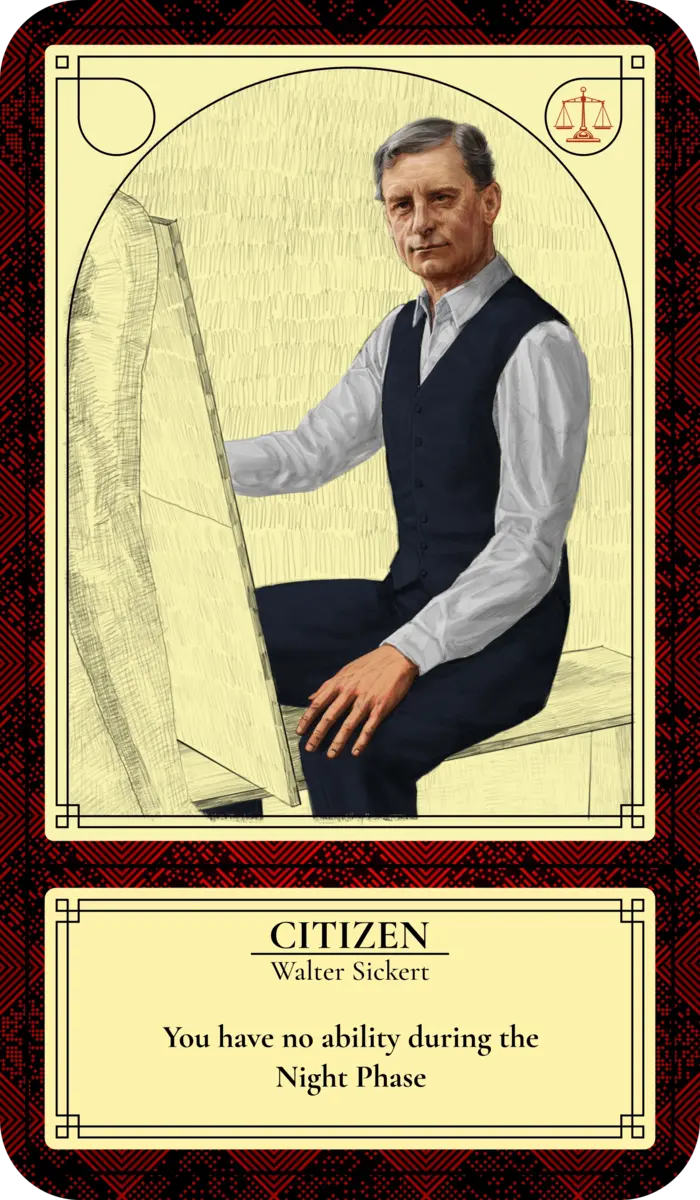
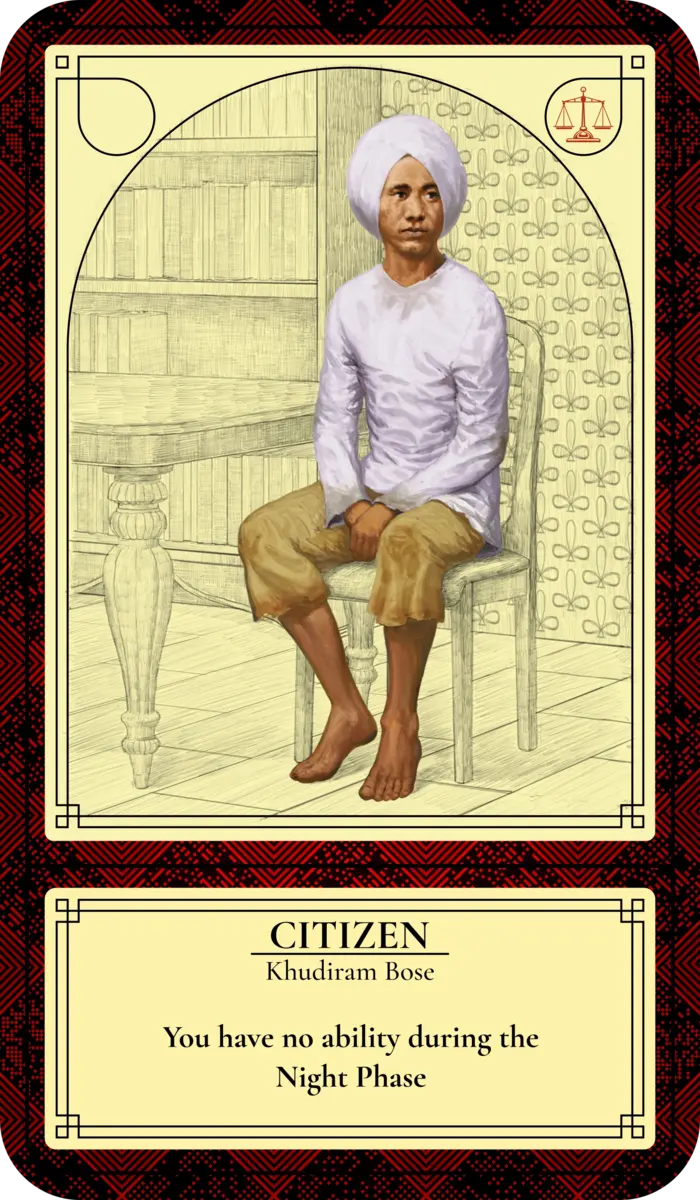
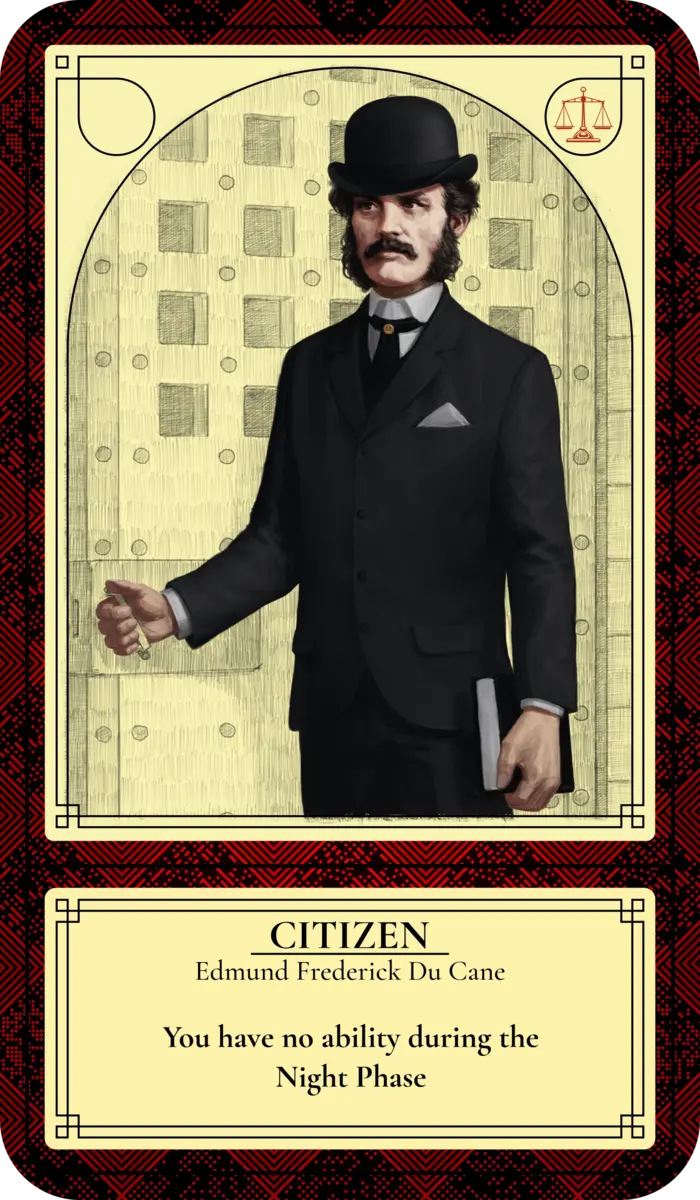
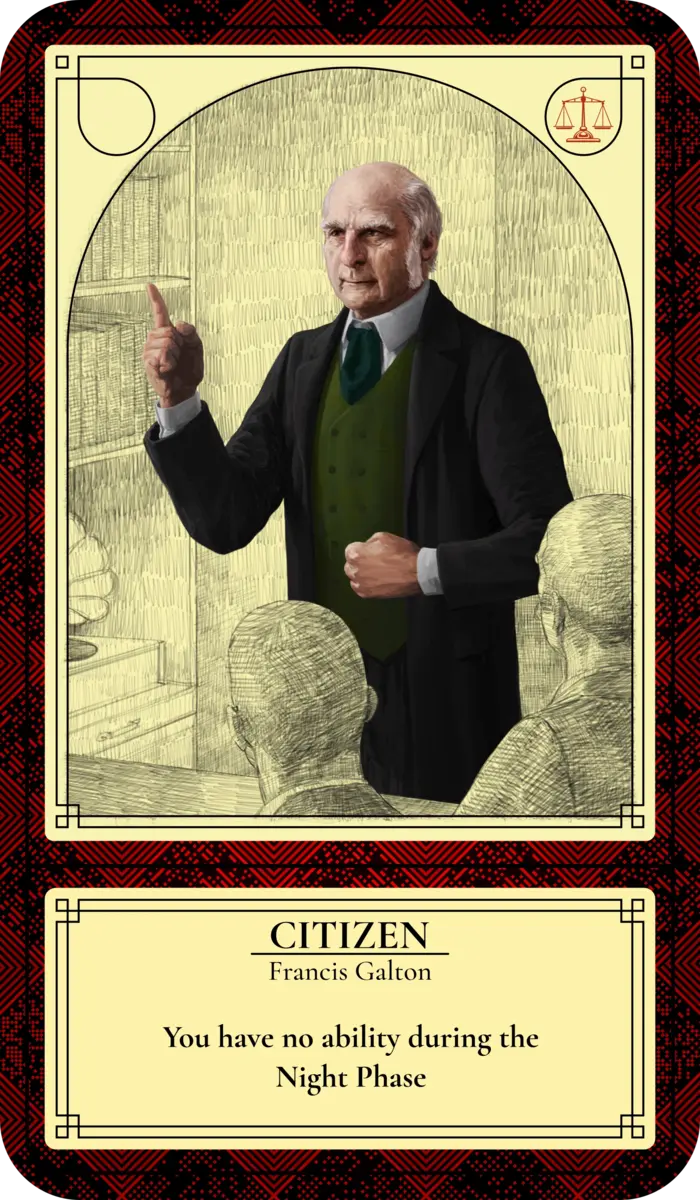
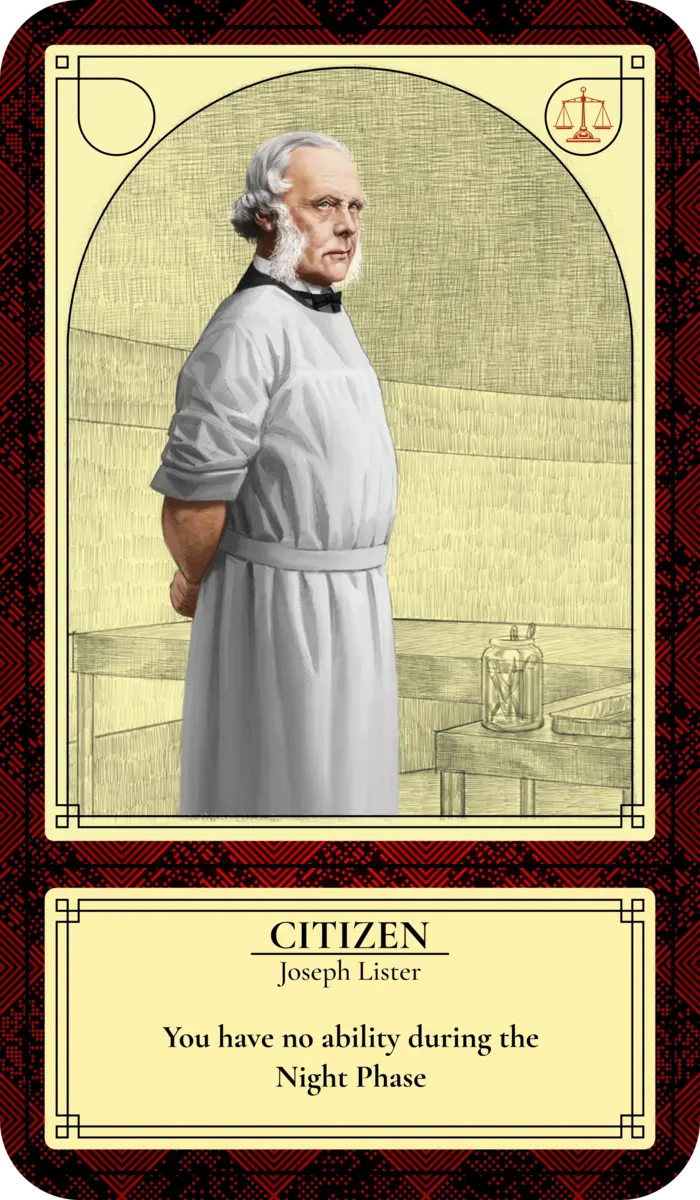
Citizen has 9 printed faces. The job is the same. Only the person on the card changes.
East End lore
A Citizen has no power to see the future, and Pamela Colman Smith drew the future for everyone else. Pick up a tarot deck anywhere in the world and you are almost certainly holding her pictures. She drew all seventy-eight cards in about six months, and where her instructions ran out she invented, so that what she imagined is now what the whole world believes those cards mean. She was paid one flat fee and left her initials in the corner, and she died in debt with no known grave. That is the Citizen: someone who seems to know more than they should, holding nothing but a pack of cards and their own judgment.
In the lore, nobody recruited her. Galton had not written to her, and Adam Worth's people had not brought her. She walked into the Three Harpies with a portfolio under her arm, on the one night the house had been emptied of strangers. She sat at the corner table telling fortunes for anyone who asked and drank very little. Both sides spent the evening trying to find out who had brought her in, and neither side had.
“I painted the future so anyone could read it. Nobody told me what it said.”
Pamela Colman Smith
Street
Mill hands, clerks, and shopkeepers fill the East End. Most people in a mafia card game look like this — ordinary, and hard to prove.
Meeting
The City lives or dies on ordinary chairs. This seat is the crowd: talk, doubt, and a vote when the talk runs out.
The room
A silent Citizen worries people. A loud one worries them too. The table has to live with both.
Inspired by
1878–1951
Pick up a pack of tarot cards anywhere in the world today — a deck of seventy-eight illustrated cards used for fortune-telling — and you are almost certainly holding her drawings. She made them in London in 1909 for a publisher called Rider, working to the instructions of an occult scholar named Arthur Waite. She was paid one flat fee, no royalties, and her initials in the corner: a small monogram, PCS, that most owners of the deck have never noticed. The deck has never gone out of print in over a century.
She did it in roughly six months. Before her, only twenty-two of the seventy-eight cards had ever been given pictures; the rest were plain, like the pips on ordinary playing cards. She drew all seventy-eight. Where Waite's notes ran out, she invented — and what she invented is now what the entire world believes those cards mean. A man face down with ten swords in his back. A figure in a yellow cloak turned away from three spilled cups, refusing to look at the two still standing. A young man stepping off a cliff with a small dog at his heel. Flat colour, hard black outline, no shading, lit like a stage. That was deliberate: she had worked in the theatre, designing sets and lighting, and she knew a picture has to carry to the back of the room.
She was born in London to an American family and raised largely in Jamaica, where her father worked, and she spent her childhood in Kingston listening to the island's folk tales. She trained at an art school in Brooklyn and left without finishing when her mother died and the money stopped. Then she went to London and made a living out of anything that would pay: illustrating books, designing for the stage, running her own small magazine, and performing Jamaican stories aloud to paying audiences in costume — one woman holding a room by herself. She joined the Golden Dawn, a London occult society whose members included the poet W. B. Yeats, which is how she met Waite. Alfred Stieglitz, the New York photographer, gave her a solo exhibition, the first he ever gave to anyone who was not a photographer.
None of it made her. She became a Catholic, moved to Cornwall, and sank what she had into a scheme to run a holiday house for priests. It failed. The deck kept selling and never sent her another penny. She died at Bude in 1951, in debt, and her belongings were auctioned to pay it. There is no known grave. Within thirty years her pictures had been reissued so many times that they had become the default way an entire civilisation imagines fate.
Forget the seventy-eight cards and the single fee. Remember only this: she drew the world's images of destiny and died unable to persuade anyone that she mattered, which is the ordinary condition of a person who happens to be right.
The City
Same team. Different jobs.
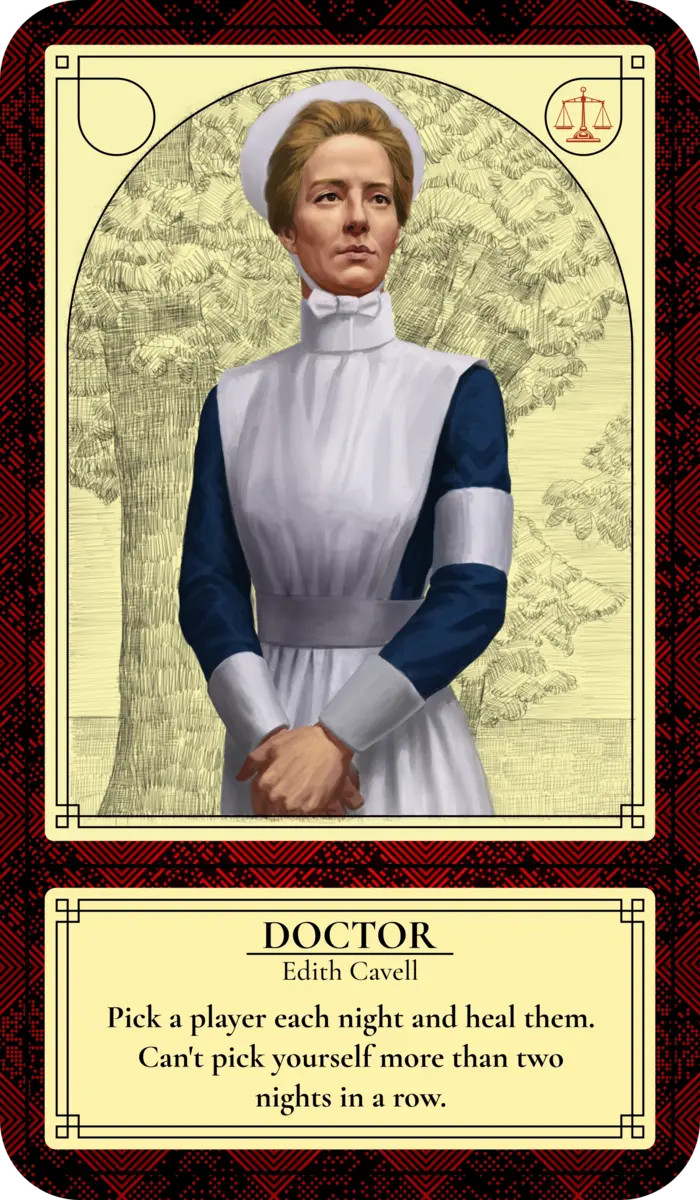
Mafia is easier to play than it looks. Everyone gets a hidden card — most of the table is City, a hidden few are Mafia. At night the killers quietly pick a victim while a doctor tries to guess who needs saving and a cop digs for the truth. By day the survivors argue about what happened, put someone on trial, and vote. The City wins by finding every killer; the Mafia wins by surviving until they can win a vote. The walkthrough takes you through the whole game, from the deal to the last trial.
How to play mafiaYour first game should be The Lamp and the Lancet — eight players and only three night wakes, so nobody gets lost. With a ninth chair the same deal becomes, naturally, The Ninth Chair. All twenty published deals, up to twenty-seven players, are on the setups page.
The teaching deal. Eight chairs, one lamp, one lancet — and two knives that already know each other.
City: 1 Policeman, 1 Doctor, Citizens to fill Mafia: 2 Assassins
The classic table of nine. Two killers, a cop, a doctor — and the vote does the rest.
City: 1 Policeman, 1 Doctor, Citizens to fill Mafia: 2 Assassins