What this card does
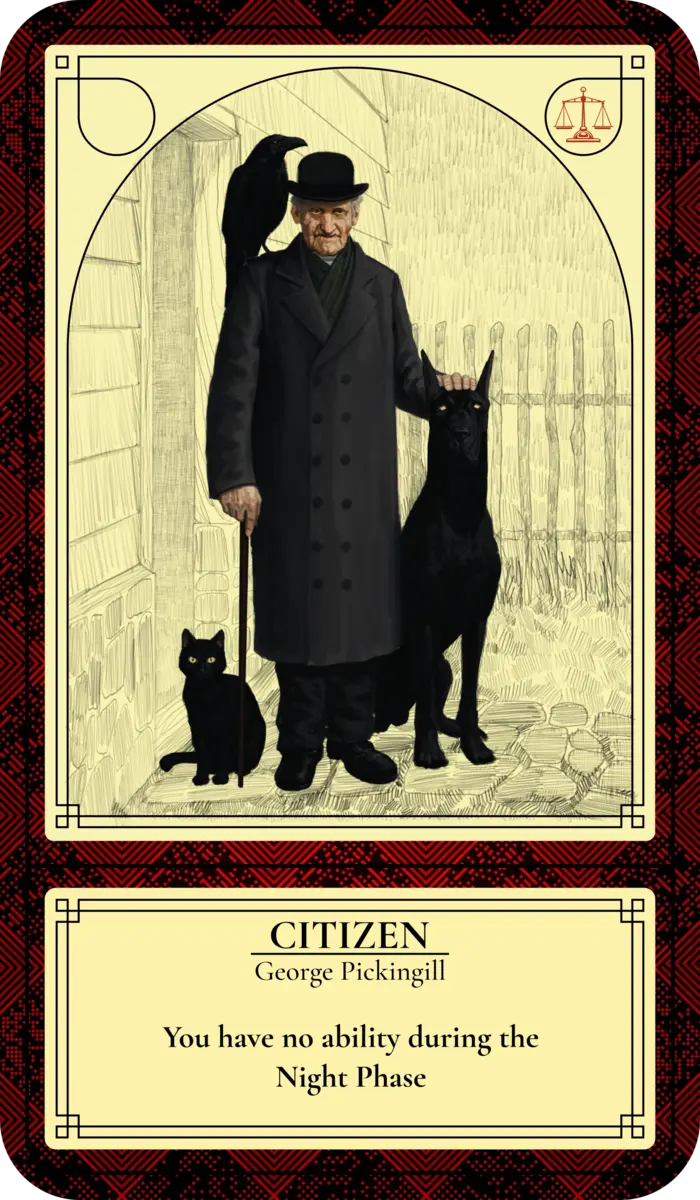
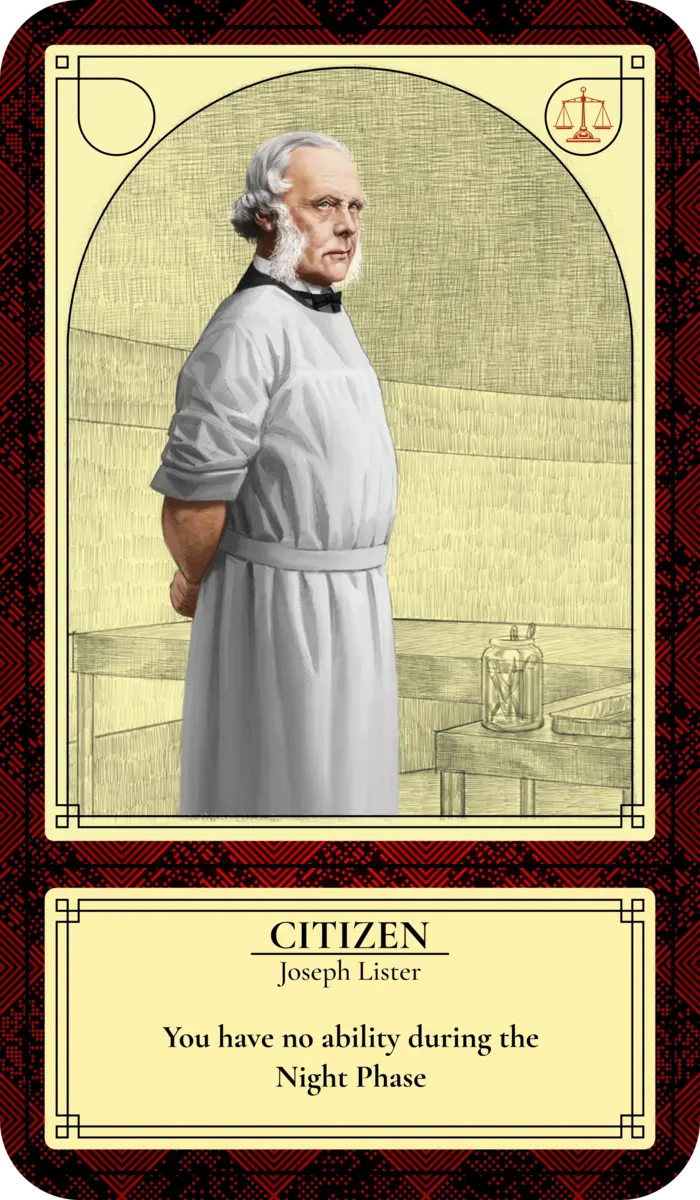
In a mafia card game most people are Citizens. You have a hidden card. You have no ability during the night phase. By day you talk, you accuse, and you vote.

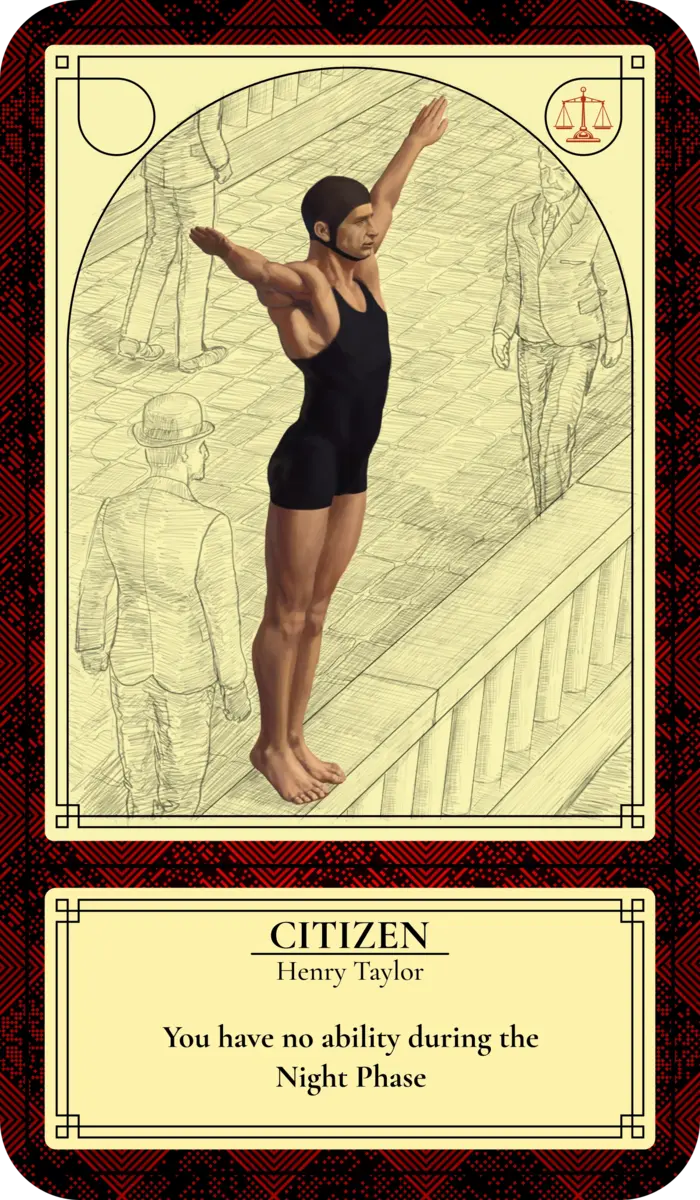
The City Day No night job 9 in the deck
What this card does
In a mafia card game most people are Citizens. You have a hidden card. You have no ability during the night phase. By day you talk, you accuse, and you vote.
How to play
You have no ability during the night phase. Close your eyes. Stay asleep.
Talk, accuse, and vote. That is the whole job.
Look once. Put it away. The card is the only proof.
Tips
The Citizen is one of the mafia roles in the mafia party game.
In the box
Published mixes that seat this card. Pick the list that fits the room, then deal.
When only six friends could make it, you still light the lamp and put the lancet on the table. One knife is plenty in a room this close.
Someone found a seventh chair in the hall and the evening grew a little kinder. Same one knife, one more neighbour to talk to.
The teaching deal. Eight chairs, one lamp, one lancet — and two knives that already know each other.
Still one lamp — but now one door hits back. Call on the wrong house at night and you will wish you had sent a note.
The classic table of nine. Two killers, a cop, a doctor — and the vote does the rest.
For tables that like clues. Read the dead, check a team, and mind the Duelist’s duel.
One lamp, and it can be lied to. The Yard filed him under City, and the Yard is never wrong.
She points first, and somebody’s night simply does not happen. And the man at the door duels his callers.
The Bishop taxes the Assassins’ knife. The Terrorist’s exit does not go through the parish.
One seat raises the recently dead. One seat burns them off the roll. And the lamp may be lying.
The City gets tools, the Mafia gets tricks. You win this one as a table, not as four solo stars.
Gunn and Henry both in chairs, and a slab for everyone else. Two checks a night — while they live.
The client cannot be summoned. The job never happened. And the house still hits back.
Built for rooms that love to argue. Words win this deal — and careless words lose it.
A soldier with two shots, and a room daring him to spend both. The Lawyer would rather nobody stood trial at all.
Minutes are read at the end of the evening — and some names have been made unavailable.
The Oracle dies pointing. The Vigilante has two arguments of his own. The Terrorist needs only one.
Two checks a night. One of them may still be a kindness from Sabini.
The veterans’ deal. Twenty players, three Assassins, and a day that has to keep moving.
Warzone-sized, different firm. Two Assassins, a man the Yard already cleared, and a Bishop taxing the wrong knife.
Write every wake. Call them in the same order. The quiet ones in the dark are not all done with the evening.
Every useful face in a chair. Two more chairs take the last Citizens. After that the box really is empty.
The deck
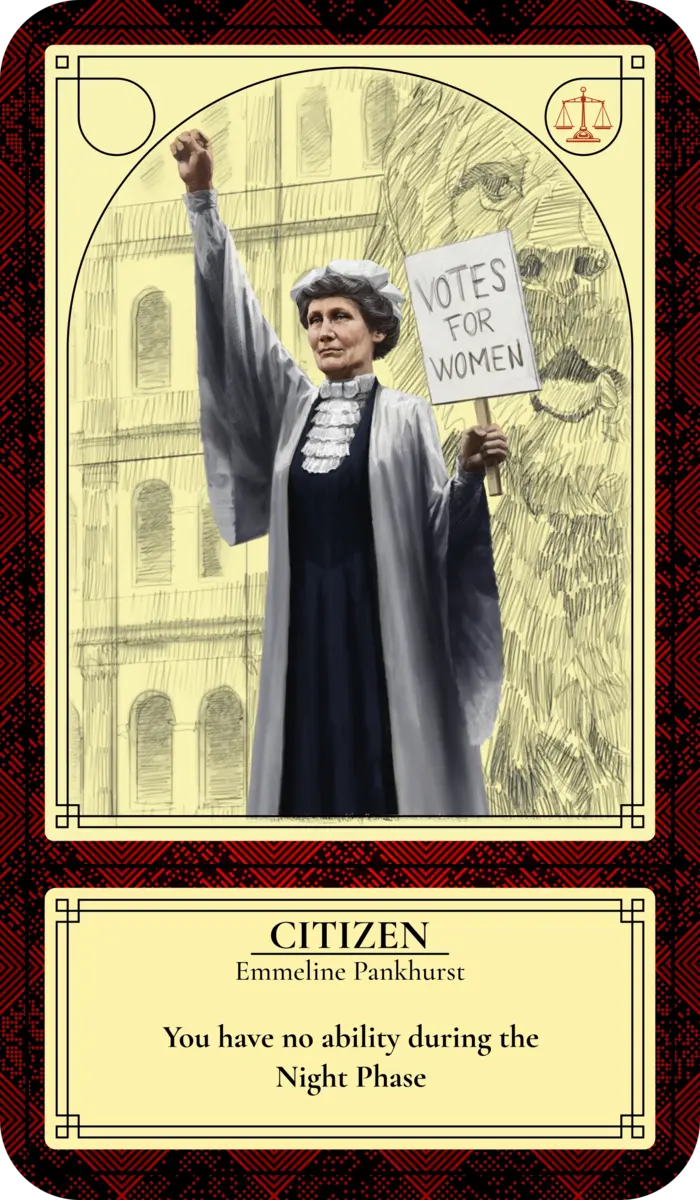
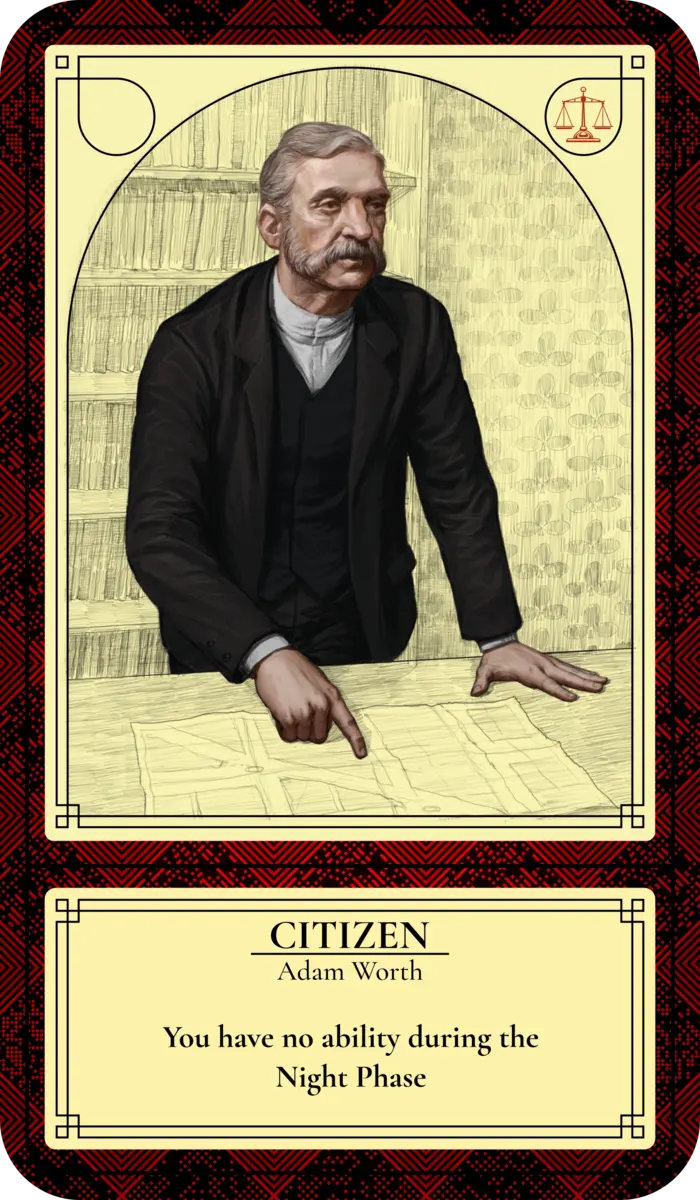
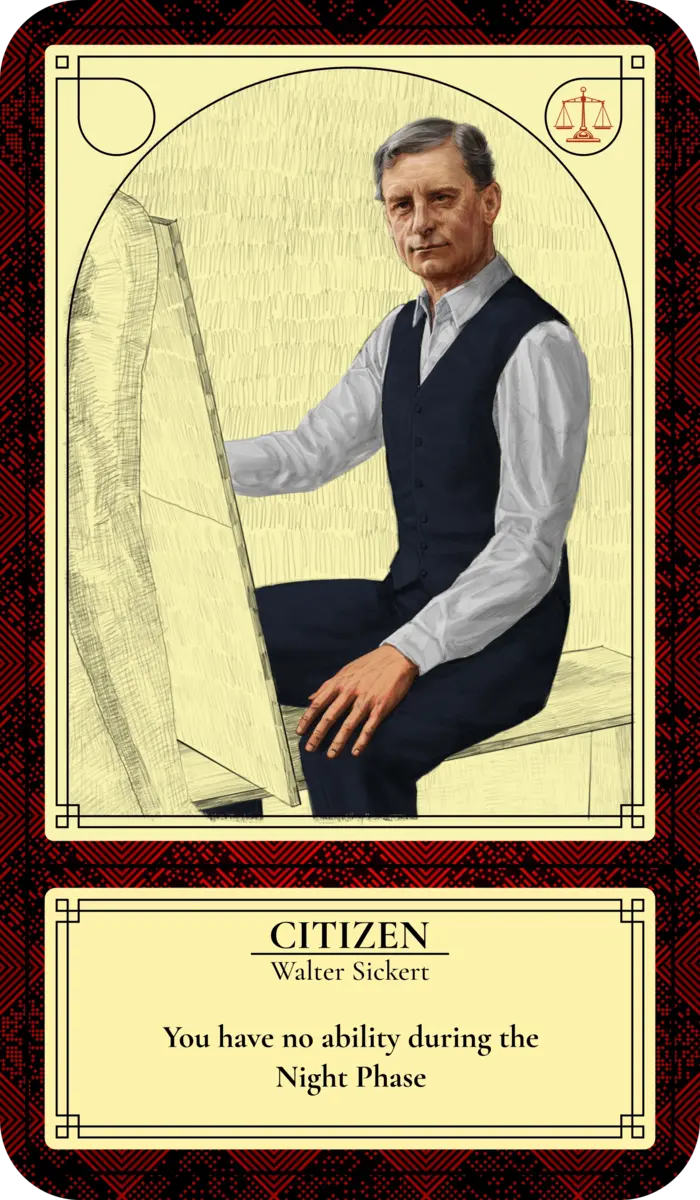
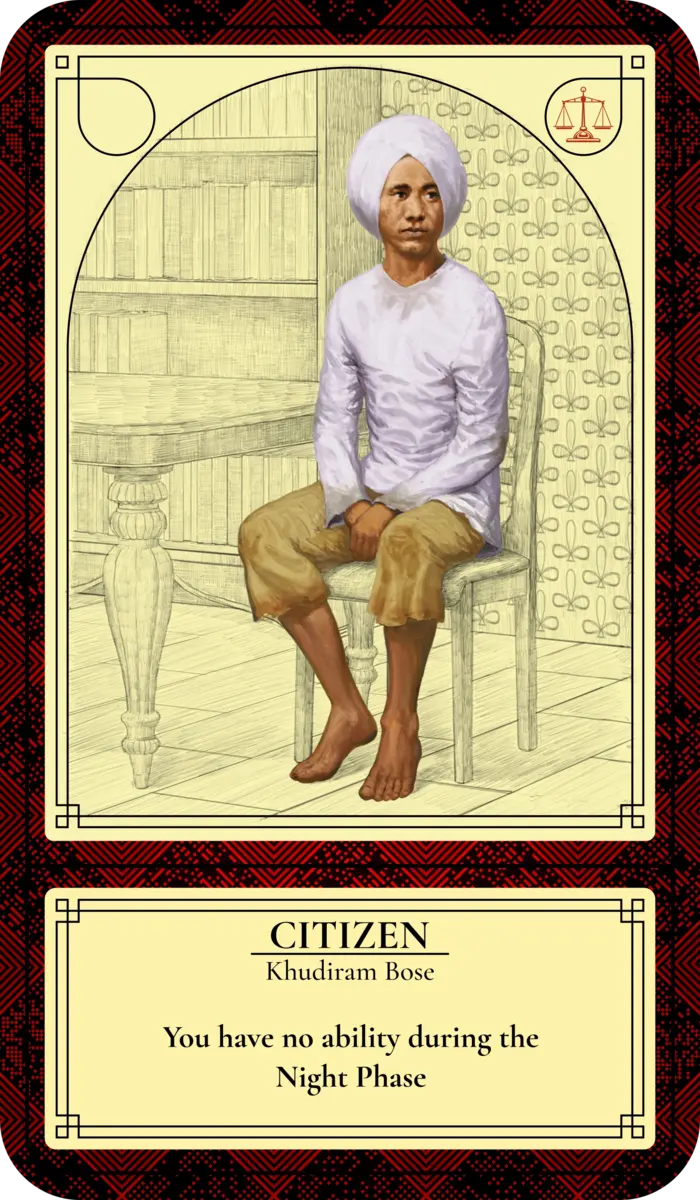
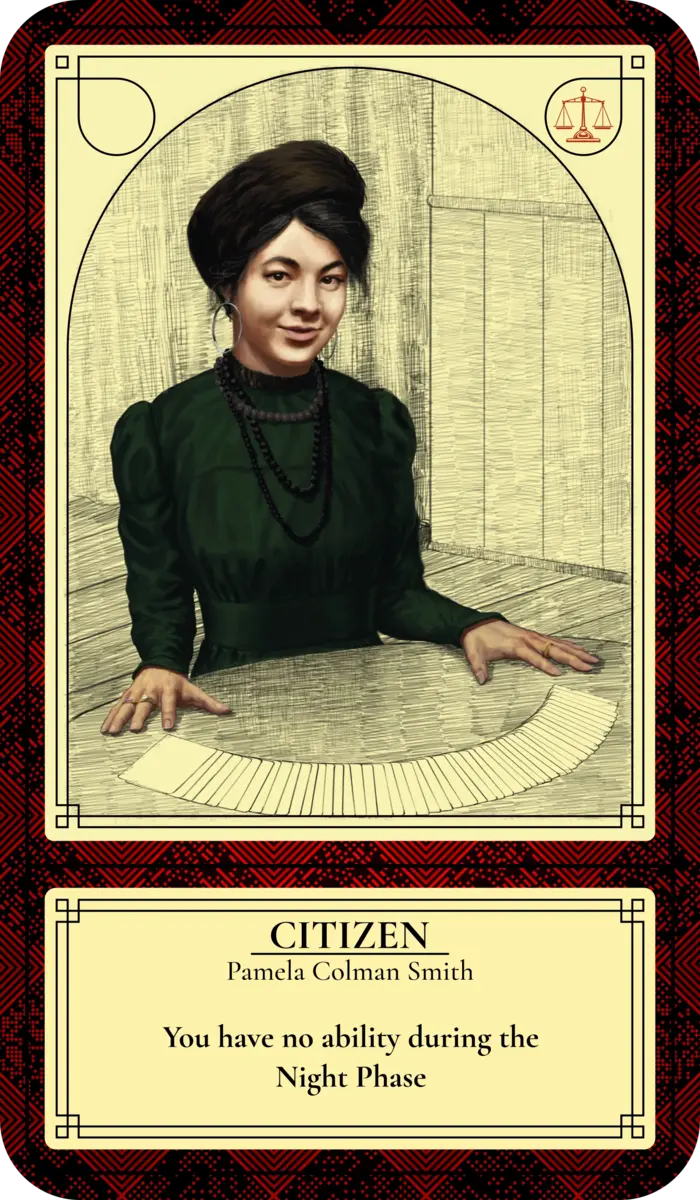
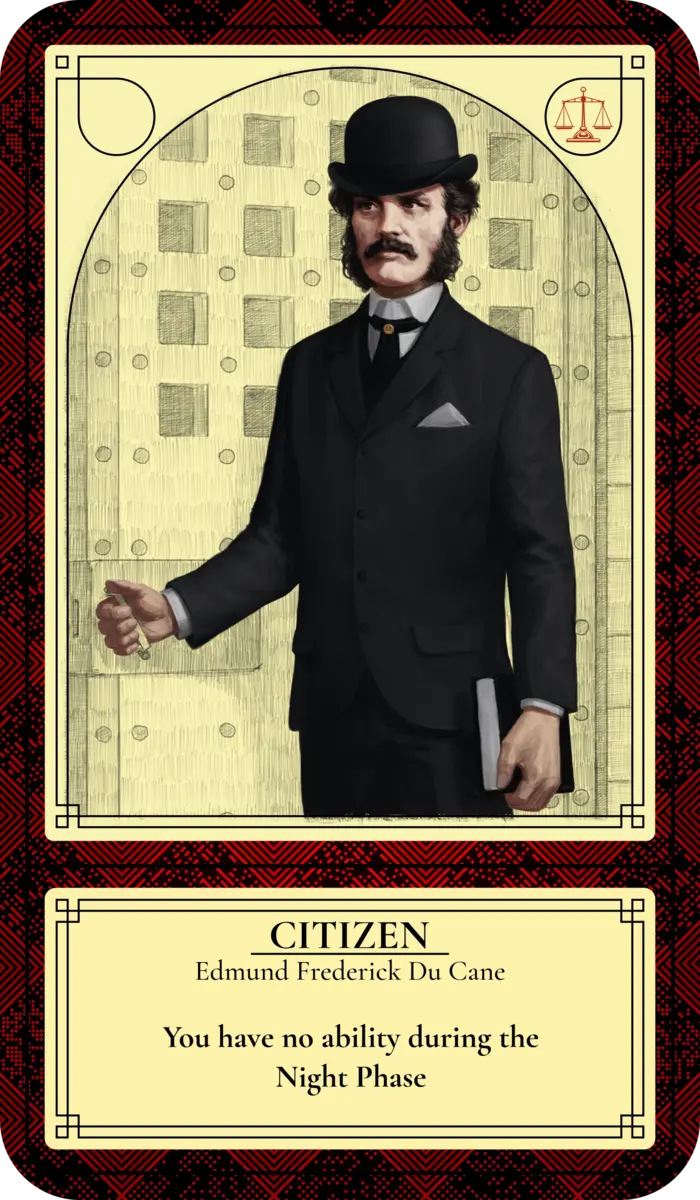
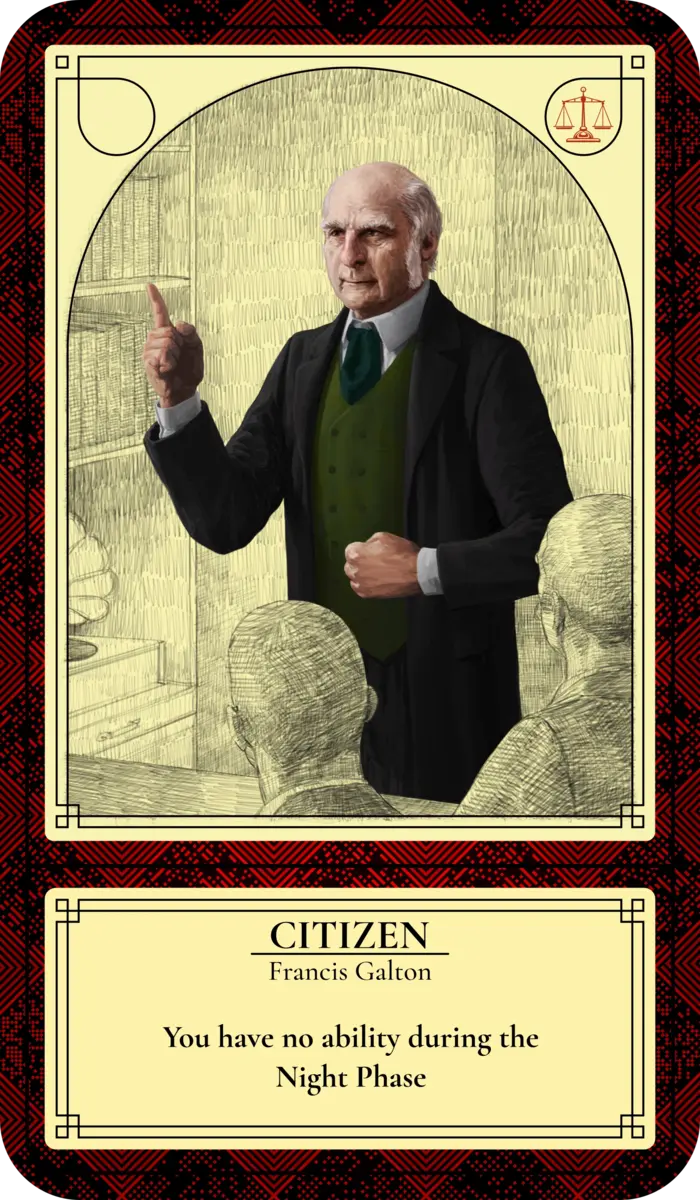
Citizen has 9 printed faces. The job is the same. Only the person on the card changes.
East End lore
A Citizen has no trick at night, and Henry Taylor never had one either. He was an orphaned mill hand from Hollinwood who learned to swim in dye-fouled canals and in the public baths on the cheap night before the water was changed. Once, in a single week at the London Games, he won three Olympic golds in an unheated tank sunk into a running track. Nobody handed him an advantage. That is the Citizen: nothing to hide behind, only what you are willing to do in daylight with the one vote you have.
In the lore, Henry found him through the swimming clubs. Every gate on the docks was paid for, but nobody watched the water, because nobody went into the river there and expected to come out. Taylor did, five times, at two in the morning. On the fifth he put his hand on a coat and found a man who had been in the river for months, with a tin tobacco box and two dry sheets of paper in his pocket. Taylor carried them to Kensington. Seventeen days later, he stopped being anywhere.
“The river keeps what you give it. I just ask it nicely to give some back.”
Henry Taylor
Street
Mill hands, clerks, and shopkeepers fill the East End. Most people in a mafia card game look like this — ordinary, and hard to prove.
Meeting
The City lives or dies on ordinary chairs. This seat is the crowd: talk, doubt, and a vote when the talk runs out.
The room
A silent Citizen worries people. A loud one worries them too. The table has to live with both.
Inspired by
1885–1951
Three gold medals in a single week. Eight across four Games — a tally no British athlete would match for a hundred years. At the mile, and at any distance long enough to break a man who was measuring the finish, he was the undisputed best on earth.
At the 1908 London Olympics, organizers sank a canvas-sided, unheated tank straight into the infield of the White City running track. Before a crowd that had paid to watch the runners, a twenty-three-year-old mill hand won the 400 meters, won the 1500, and anchored the gold-medal relay. Three titles in seven days. The first Briton in history to do it.
He was forged in Hollinwood. Orphaned young, raised by an older brother who carried him to the water before he could swim a stroke, he went into the cotton mills as a boy and stayed there. He trained where a working man could: in dye-fouled canals, and in the public baths on the last night before a water change — when entry was a penny cheaper because the basin was thick with the week's grease.
In 1914 he traded the mills for the Royal Navy and survived the bloodbath at Jutland. After the war he ran a public house into the ground, losing it with the soft-hearted carelessness of a man who never learned to count coin. He finished as an attendant at the Chadderton baths, handing towels to schoolboys who didn't know his name, selling his Olympic gold one medal at a time to make the rent.
Forget the tally. Remember only this: Henry Taylor would enter cold, black water whenever he was called, stay as long as he was required to, and never once ask for a reason.
The City
Same team. Different jobs.
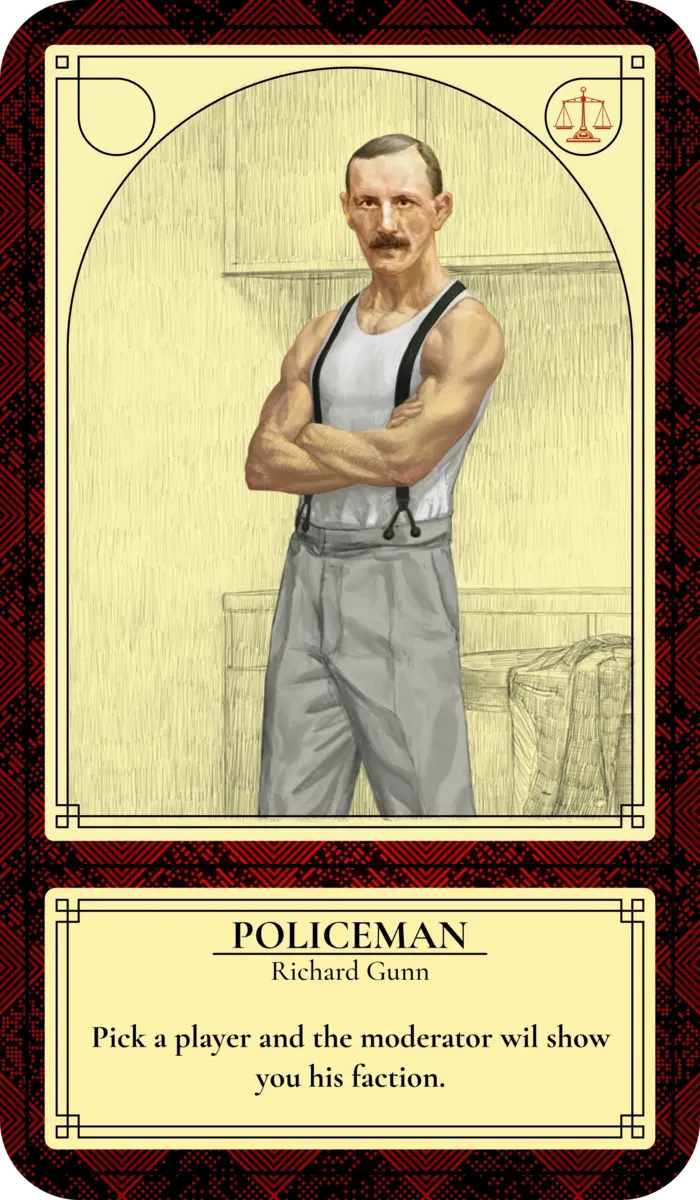
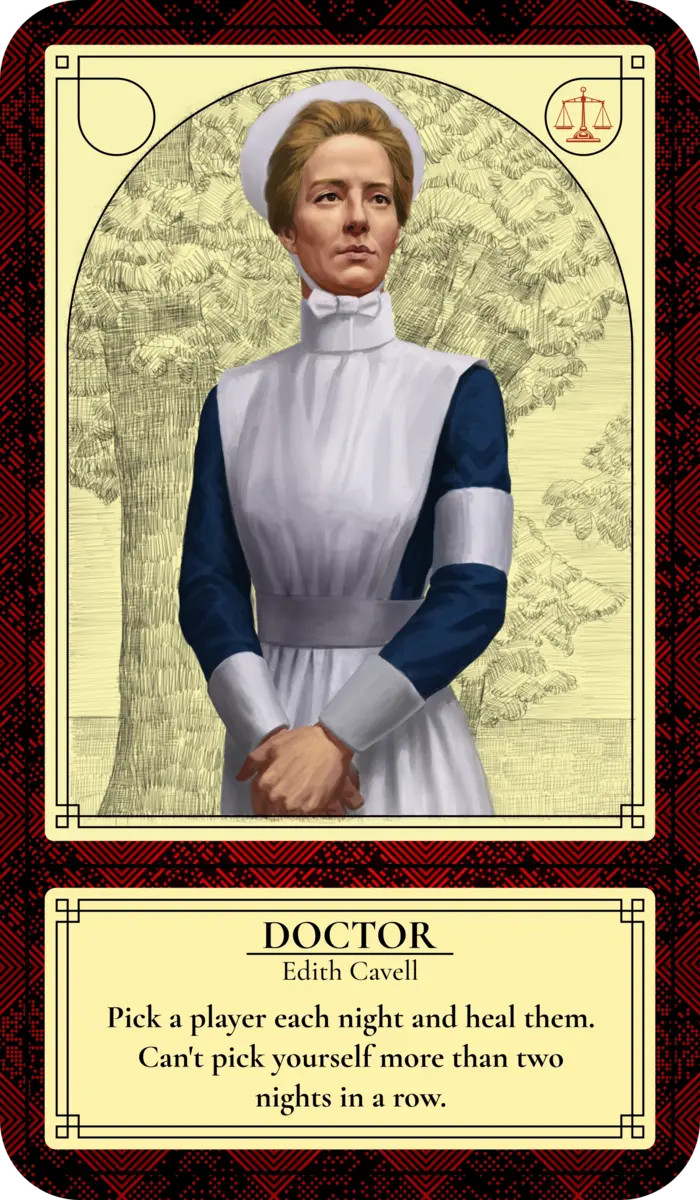
Mafia is easier to play than it looks. Everyone gets a hidden card — most of the table is City, a hidden few are Mafia. At night the killers quietly pick a victim while a doctor tries to guess who needs saving and a cop digs for the truth. By day the survivors argue about what happened, put someone on trial, and vote. The City wins by finding every killer; the Mafia wins by surviving until they can win a vote. The walkthrough takes you through the whole game, from the deal to the last trial.
How to play mafiaYour first game should be The Lamp and the Lancet — eight players and only three night wakes, so nobody gets lost. With a ninth chair the same deal becomes, naturally, The Ninth Chair. All twenty published deals, up to twenty-seven players, are on the setups page.
The teaching deal. Eight chairs, one lamp, one lancet — and two knives that already know each other.
City: 1 Policeman, 1 Doctor, Citizens to fill Mafia: 2 Assassins
The classic table of nine. Two killers, a cop, a doctor — and the vote does the rest.
City: 1 Policeman, 1 Doctor, Citizens to fill Mafia: 2 Assassins