What this card does
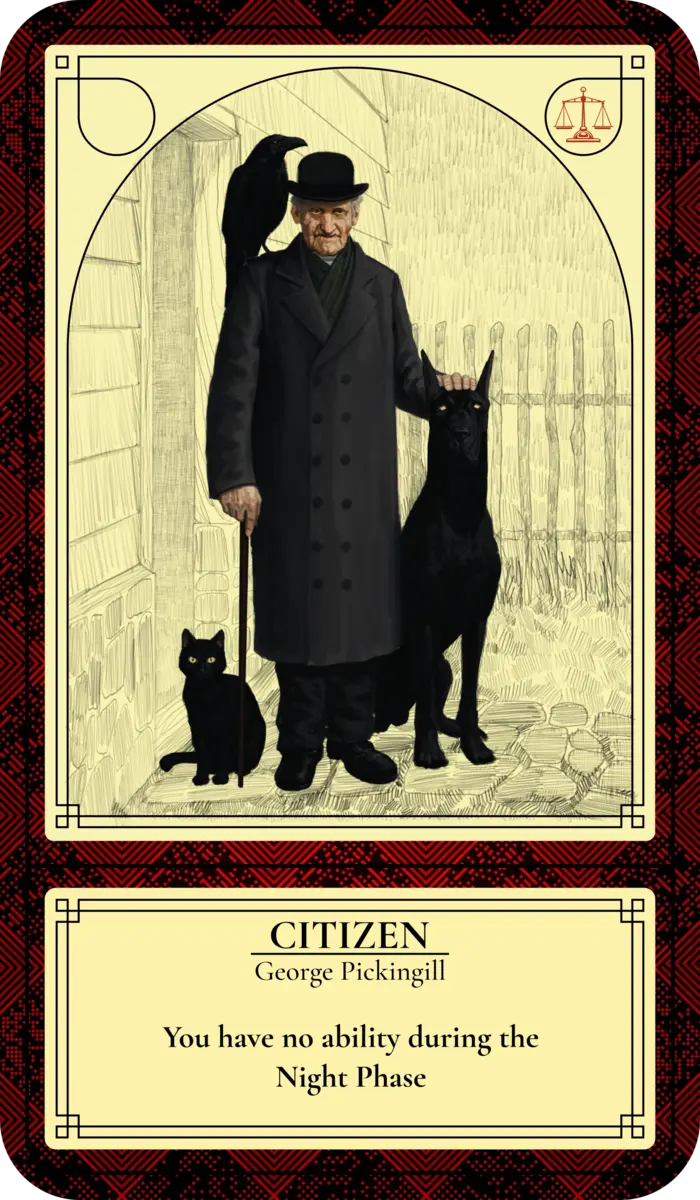
In a mafia card game most people are Citizens. You have a hidden card. You have no ability during the night phase. By day you talk, you accuse, and you vote.

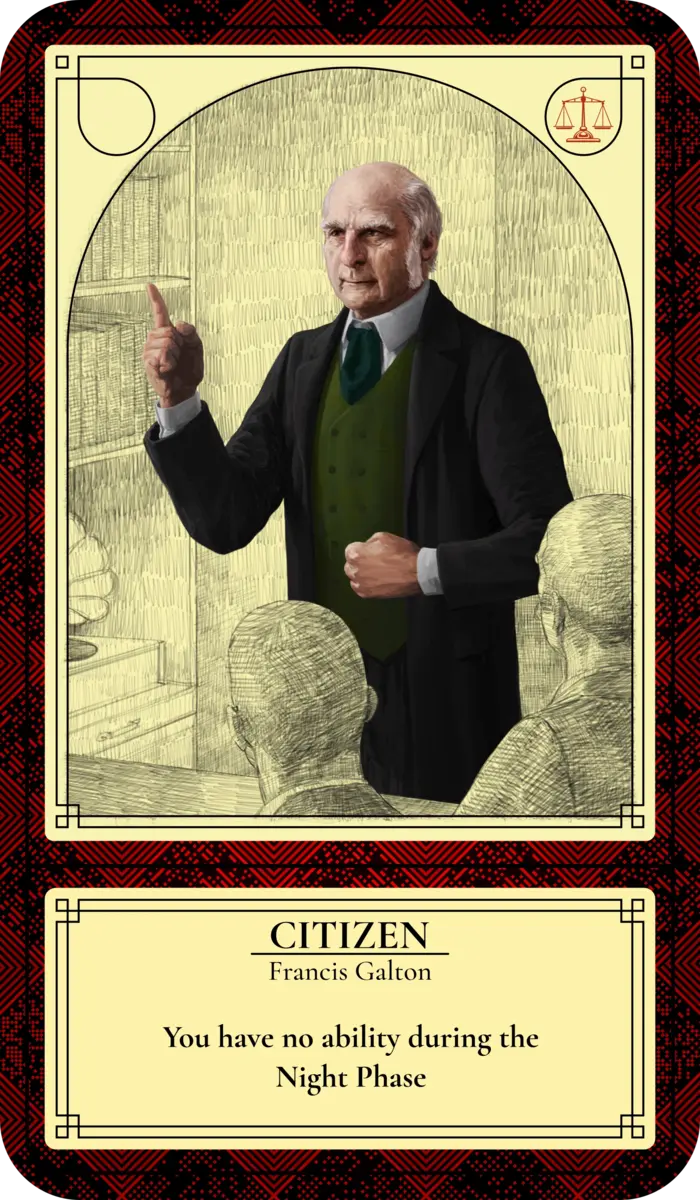
The City Day No night job 9 in the deck
What this card does
In a mafia card game most people are Citizens. You have a hidden card. You have no ability during the night phase. By day you talk, you accuse, and you vote.
How to play
You have no ability during the night phase. Close your eyes. Stay asleep.
Talk, accuse, and vote. That is the whole job.
Look once. Put it away. The card is the only proof.
Tips
The Citizen is one of the mafia roles in the mafia party game.
In the box
Published mixes that seat this card. Pick the list that fits the room, then deal.
When only six friends could make it, you still light the lamp and put the lancet on the table. One knife is plenty in a room this close.
Someone found a seventh chair in the hall and the evening grew a little kinder. Same one knife, one more neighbour to talk to.
The teaching deal. Eight chairs, one lamp, one lancet — and two knives that already know each other.
Still one lamp — but now one door hits back. Call on the wrong house at night and you will wish you had sent a note.
The classic table of nine. Two killers, a cop, a doctor — and the vote does the rest.
For tables that like clues. Read the dead, check a team, and mind the Duelist’s duel.
One lamp, and it can be lied to. The Yard filed him under City, and the Yard is never wrong.
She points first, and somebody’s night simply does not happen. And the man at the door duels his callers.
The Bishop taxes the Assassins’ knife. The Terrorist’s exit does not go through the parish.
One seat raises the recently dead. One seat burns them off the roll. And the lamp may be lying.
The City gets tools, the Mafia gets tricks. You win this one as a table, not as four solo stars.
Gunn and Henry both in chairs, and a slab for everyone else. Two checks a night — while they live.
The client cannot be summoned. The job never happened. And the house still hits back.
Built for rooms that love to argue. Words win this deal — and careless words lose it.
A soldier with two shots, and a room daring him to spend both. The Lawyer would rather nobody stood trial at all.
Minutes are read at the end of the evening — and some names have been made unavailable.
The Oracle dies pointing. The Vigilante has two arguments of his own. The Terrorist needs only one.
Two checks a night. One of them may still be a kindness from Sabini.
The veterans’ deal. Twenty players, three Assassins, and a day that has to keep moving.
Warzone-sized, different firm. Two Assassins, a man the Yard already cleared, and a Bishop taxing the wrong knife.
Write every wake. Call them in the same order. The quiet ones in the dark are not all done with the evening.
Every useful face in a chair. Two more chairs take the last Citizens. After that the box really is empty.
The deck
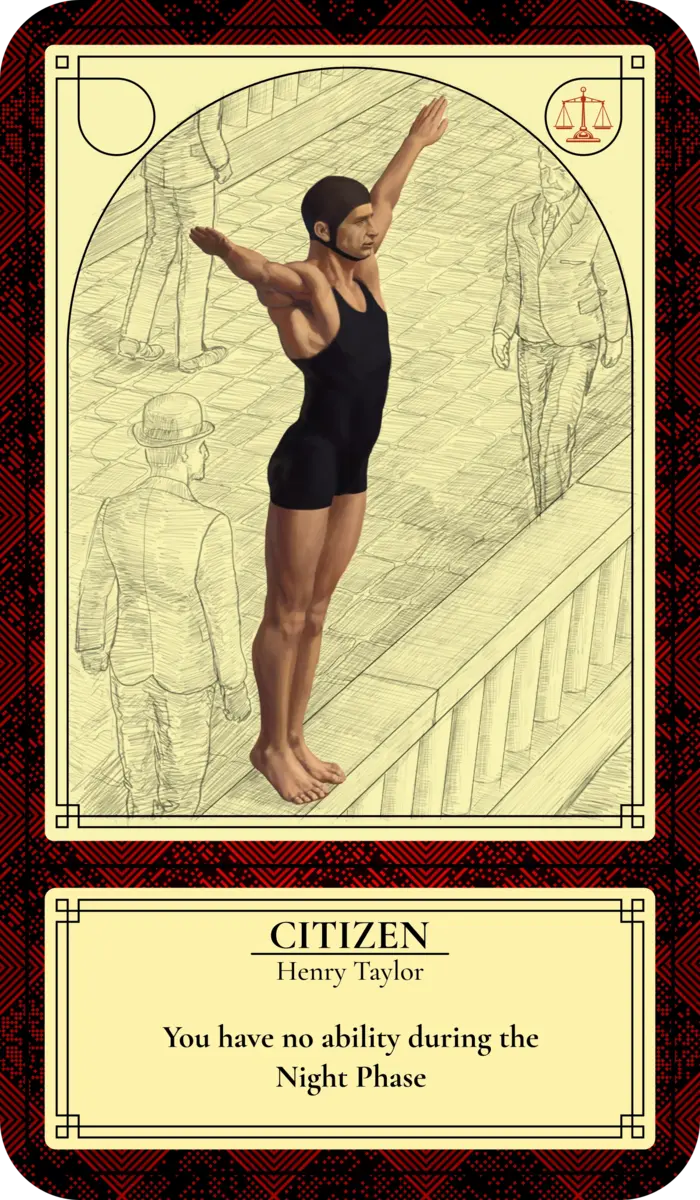
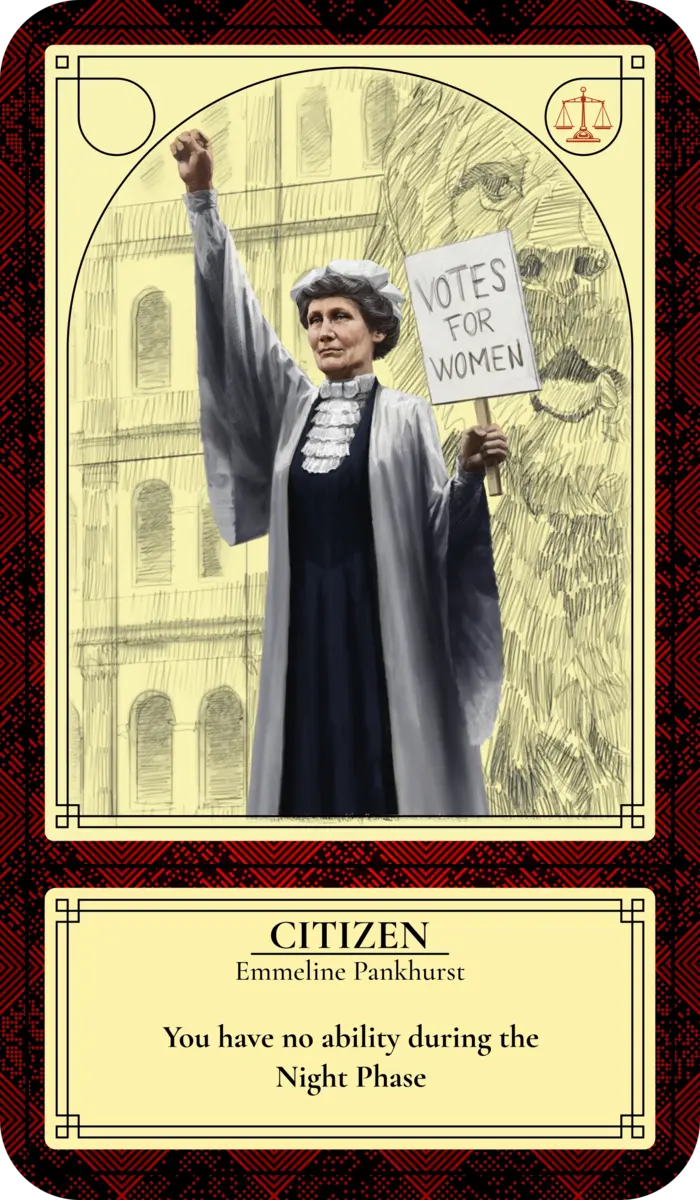
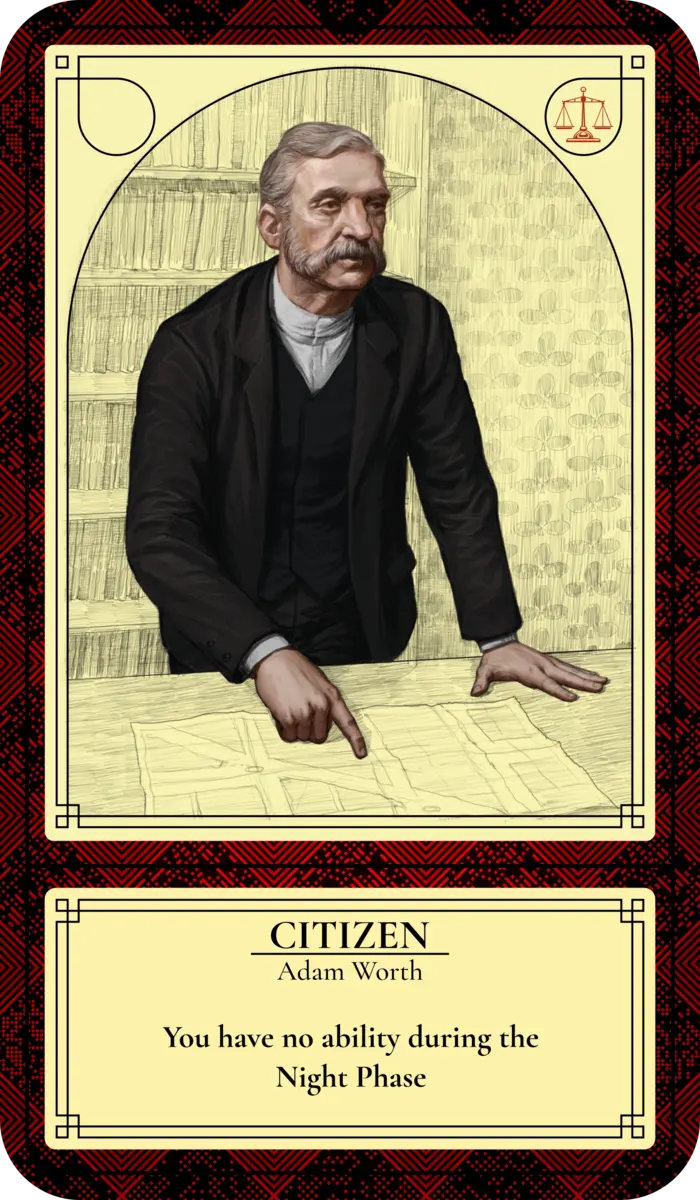
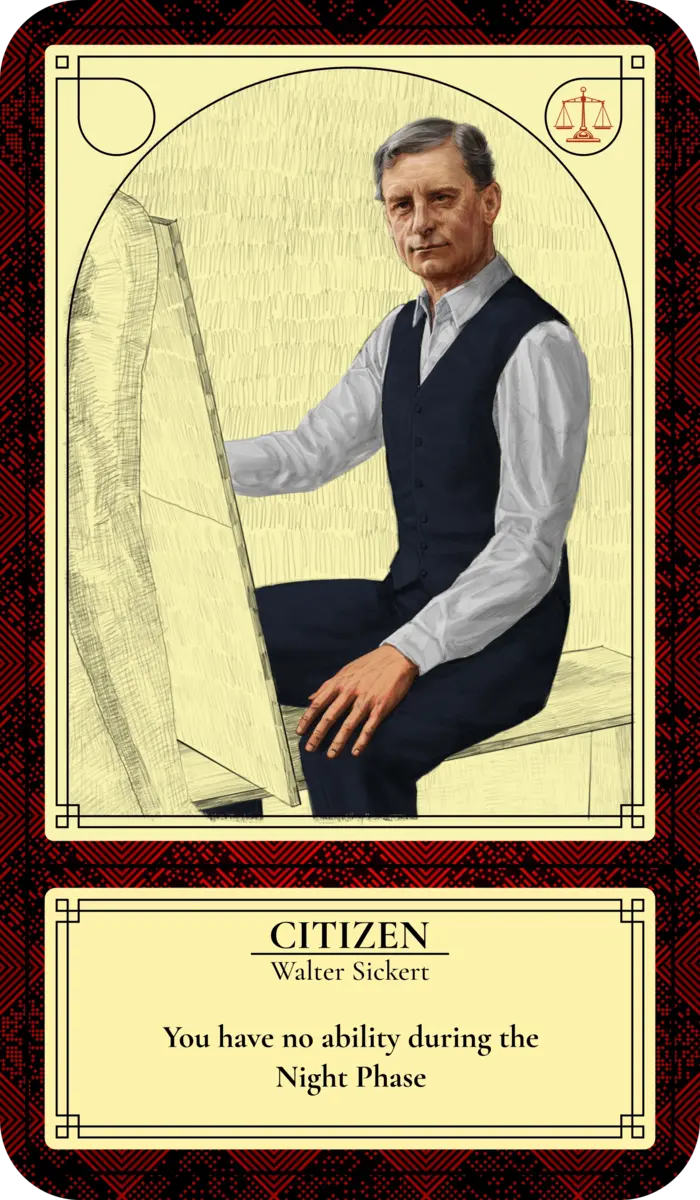
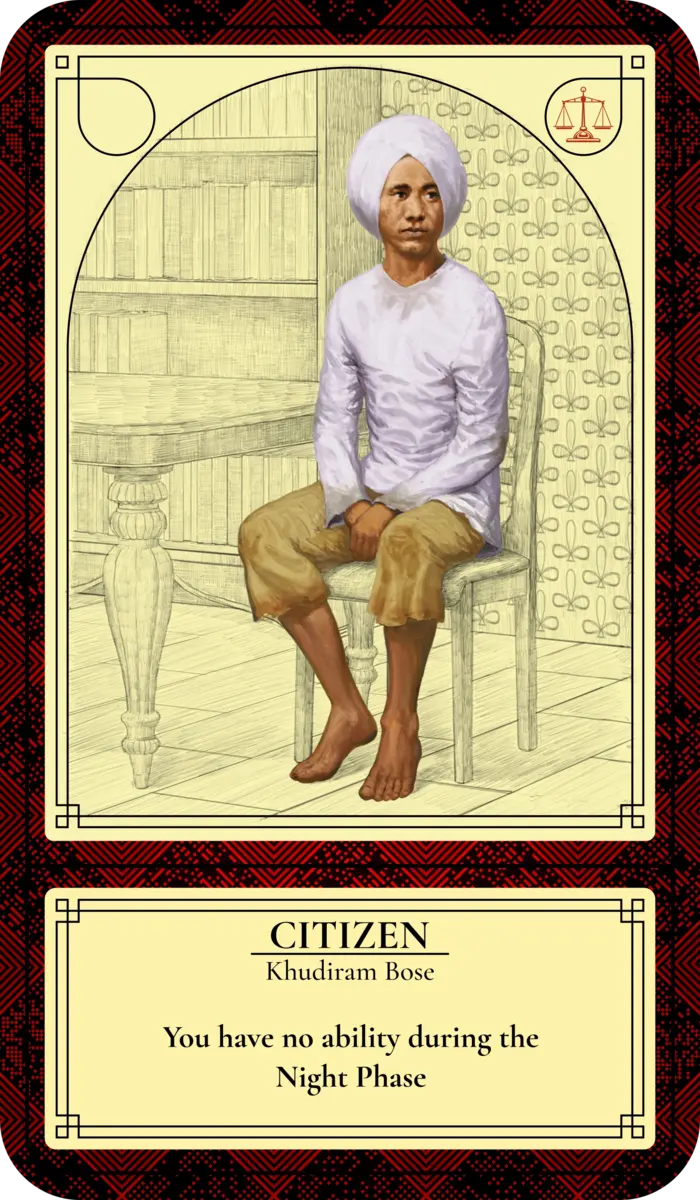
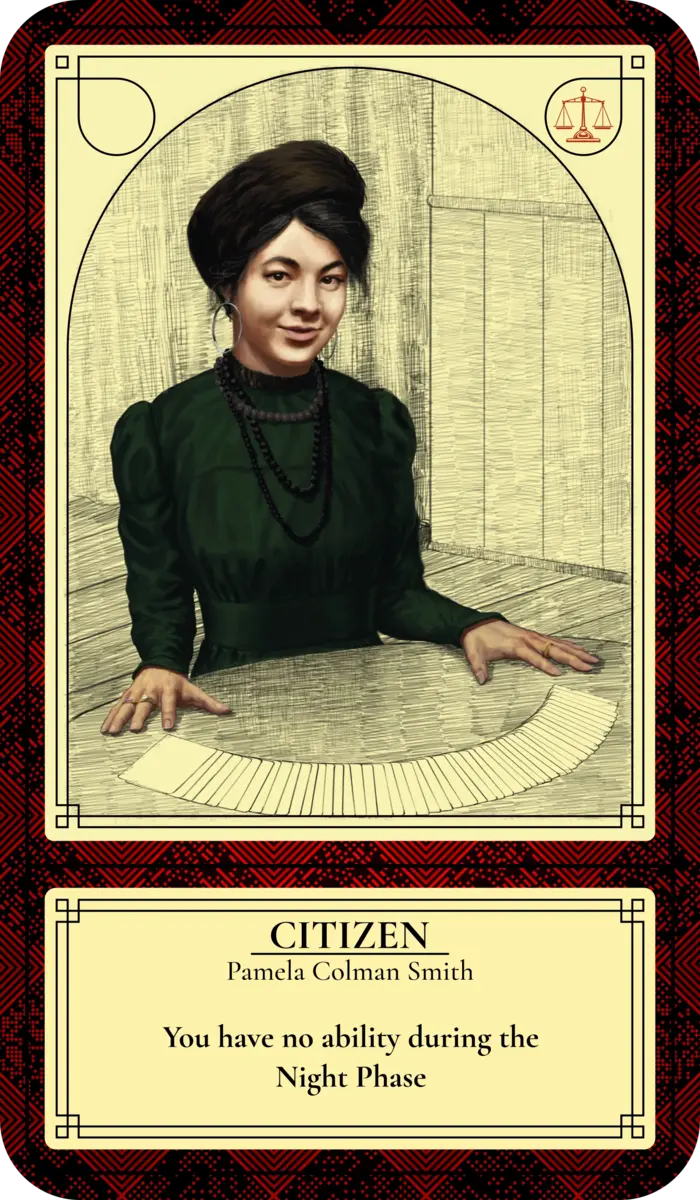
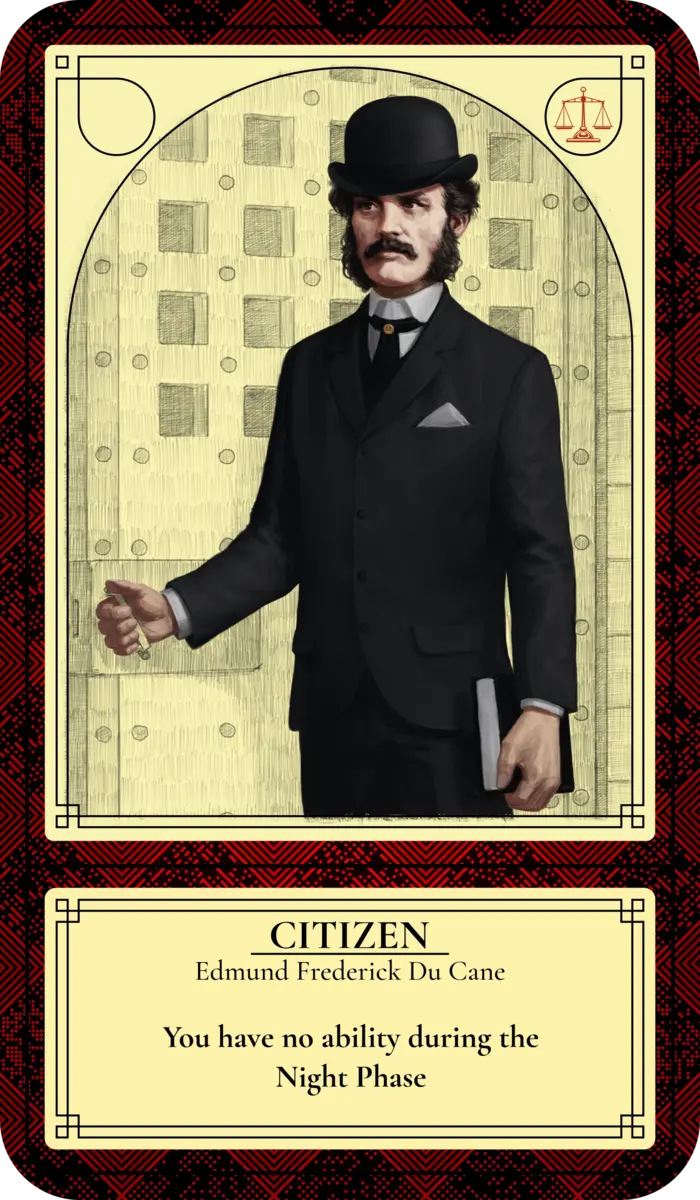
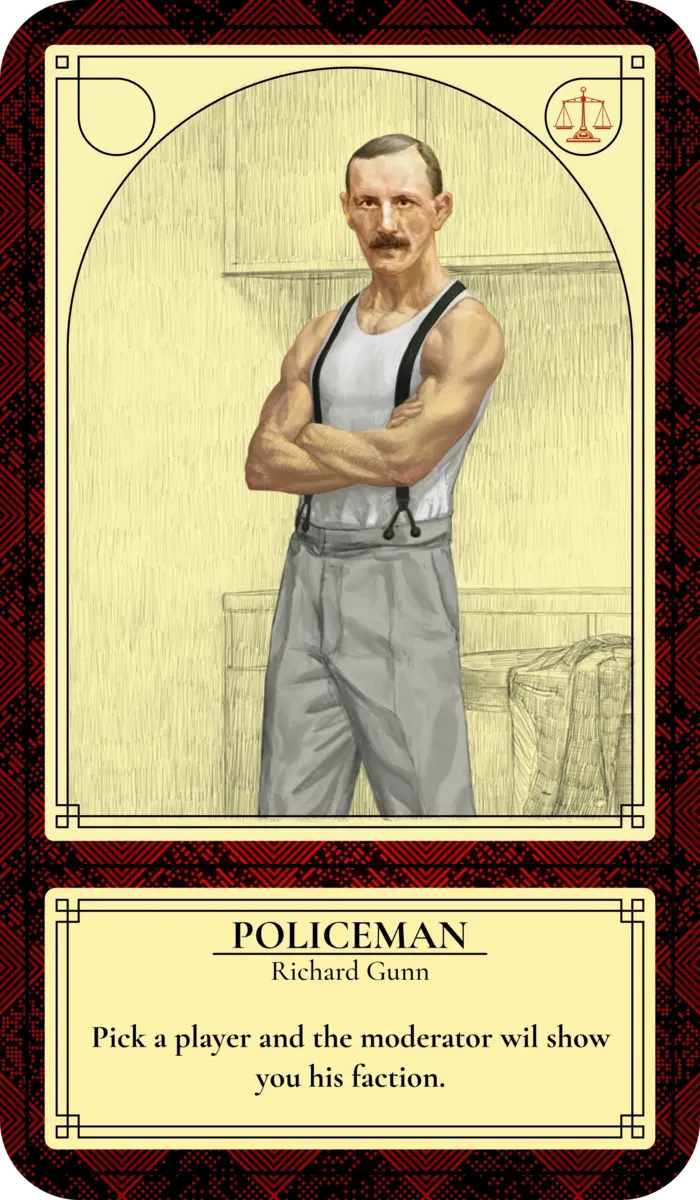
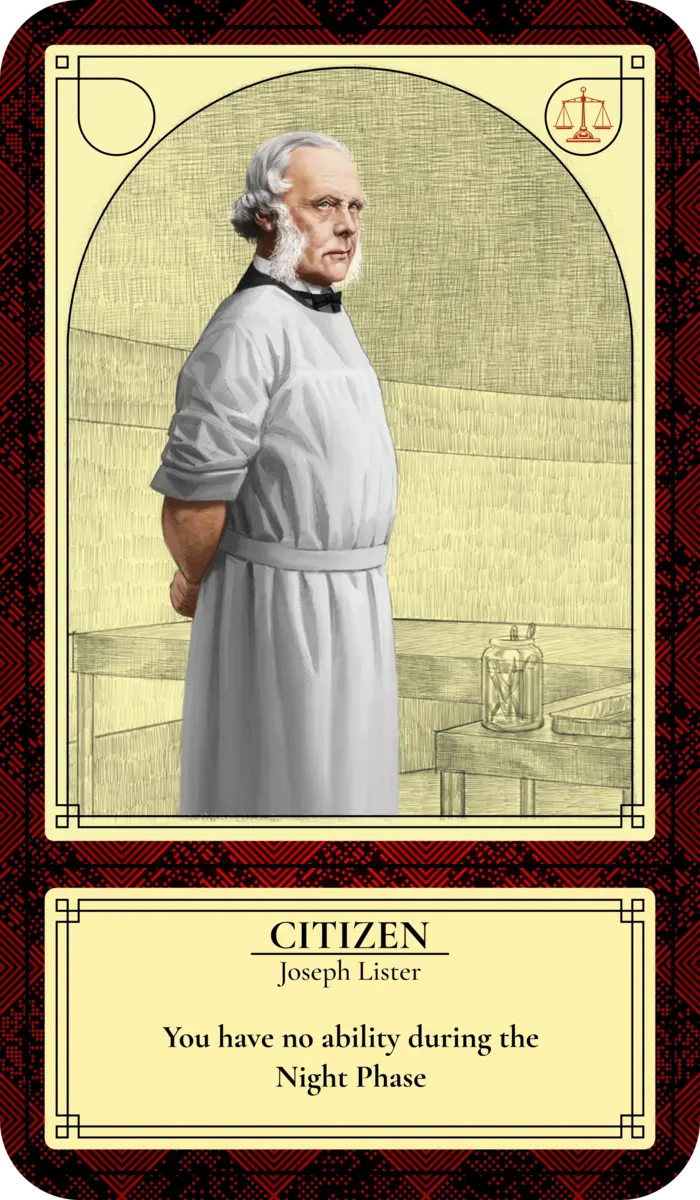
Citizen has 9 printed faces. The job is the same. Only the person on the card changes.
East End lore
A Citizen has no power at night. Everything they do, they do in daylight, by persuading the table. Francis Galton never once had to raise his voice. He was Charles Darwin's cousin, proved that fingerprints are unique for life, drew the first weather map, and worked out the mathematics of correlation that most of modern science still rests on. He measured everything: the height and grip of nine thousand members of the public, the faces of convicts, the fidgeting of a bored audience. He also coined the word eugenics and gave it its respectability, and the world paid for that long after he was gone. That is the Citizen at its most unsettling: no ability to reveal, nothing hidden on the card, and still the person everyone ends up following.
In the lore, Galton was sitting in an East End police station late one night when a boy's statement was read aloud and laughed at. It said the firms had stopped fighting and that someone had taken the docks. Galton found out it was true. Then he found out that anything carrying Darby Sabini's name went up the chain and was never heard of again. The Mafia was planning something, and nobody in England was doing anything about it. He was seventy-eight and could not walk to the Serpentine without sitting down, but honour demanded that somebody act, so he did. He wrote eight letters, gathered the City, and booked the upstairs room at the Three Harpies for eleven. On the morning it came down, he was standing in the street.
“I have never told a man a lie. I have simply never been asked the right question.”
Sir Francis Galton
Street
Mill hands, clerks, and shopkeepers fill the East End. Most people in a mafia card game look like this — ordinary, and hard to prove.
Meeting
The City lives or dies on ordinary chairs. This seat is the crowd: talk, doubt, and a vote when the talk runs out.
The room
A silent Citizen worries people. A loud one worries them too. The table has to live with both.
Inspired by
1822–1911
He invented the word eugenics, and he was Charles Darwin's cousin. Those facts belong in one sentence. Darwin published his theory of evolution in 1859; Galton read it, understood at once that it applied to human beings, and concluded that a nation could improve its own stock the way a breeder improves cattle. He coined the term in 1883. He spent the last thirty years of his life building the science, the institutions, and the respectability required to make it policy, and he never once had to raise his voice to do it. He was knighted. He died celebrated. Almost nothing he set in motion happened while anyone could see him doing it.
He got there by measuring everything, and by acquiring what was not his to acquire. He set up a laboratory where the public paid threepence to have their height, grip, hearing, and reaction time recorded — nine thousand people handed him their bodies as data and went home pleased. He proved fingerprints are unique for life and devised the system that lets police file them. He invented the weather map. He worked out correlation and regression, which underpin most of modern science. He counted fidgets in an audience to measure boredom. He mapped Britain by the attractiveness of its women. And through Edmund Du Cane, who ran every prison in England, he obtained the photographs and measurements of thousands of convicts — men in no position to refuse, catalogued by the state, handed over as a professional courtesy between gentlemen. He layered the faces on top of one another looking for the criminal type. The composite showed nothing. He published anyway.
The conviction was formed early and out of sight of witnesses. A large inherited fortune meant he never needed employment or an employer's opinion. As a young man he financed and led an expedition into unmapped South West Africa, came home with a medal from the Royal Geographical Society and a settled belief that human populations differ in worth and that the difference is inherited. He then studied the families of English judges, statesmen, and scientists, found eminence clustered in bloodlines, and concluded ability descends. That money, schooling, introductions, and names also descend, he considered, and set aside.
He founded a research fellowship in eugenics at University College London and endowed a chair with his fortune, so that the work would continue after him and under other people's names. Within twenty years of his death in 1911 the idea was law in dozens of American states; within thirty it was the working doctrine of a European government that used it first to sterilise and then to kill. He advocated none of that. He supplied the vocabulary, the statistics, the funding structure, and the good name — and by then he had been dead for years and nobody thought to look for him in it.
Forget the fingerprints and the weather maps and the knighthood. Remember only this: he never had to lie to anyone. He decided what he wanted to be true, spent fifty years building the instruments that would find it, and left the conclusions to men who did not know whose hands had shaped the tools.
The City
Same team. Different jobs.
Mafia is easier to play than it looks. Everyone gets a hidden card — most of the table is City, a hidden few are Mafia. At night the killers quietly pick a victim while a doctor tries to guess who needs saving and a cop digs for the truth. By day the survivors argue about what happened, put someone on trial, and vote. The City wins by finding every killer; the Mafia wins by surviving until they can win a vote. The walkthrough takes you through the whole game, from the deal to the last trial.
How to play mafiaYour first game should be The Lamp and the Lancet — eight players and only three night wakes, so nobody gets lost. With a ninth chair the same deal becomes, naturally, The Ninth Chair. All twenty published deals, up to twenty-seven players, are on the setups page.
The teaching deal. Eight chairs, one lamp, one lancet — and two knives that already know each other.
City: 1 Policeman, 1 Doctor, Citizens to fill Mafia: 2 Assassins
The classic table of nine. Two killers, a cop, a doctor — and the vote does the rest.
City: 1 Policeman, 1 Doctor, Citizens to fill Mafia: 2 Assassins