What this card does
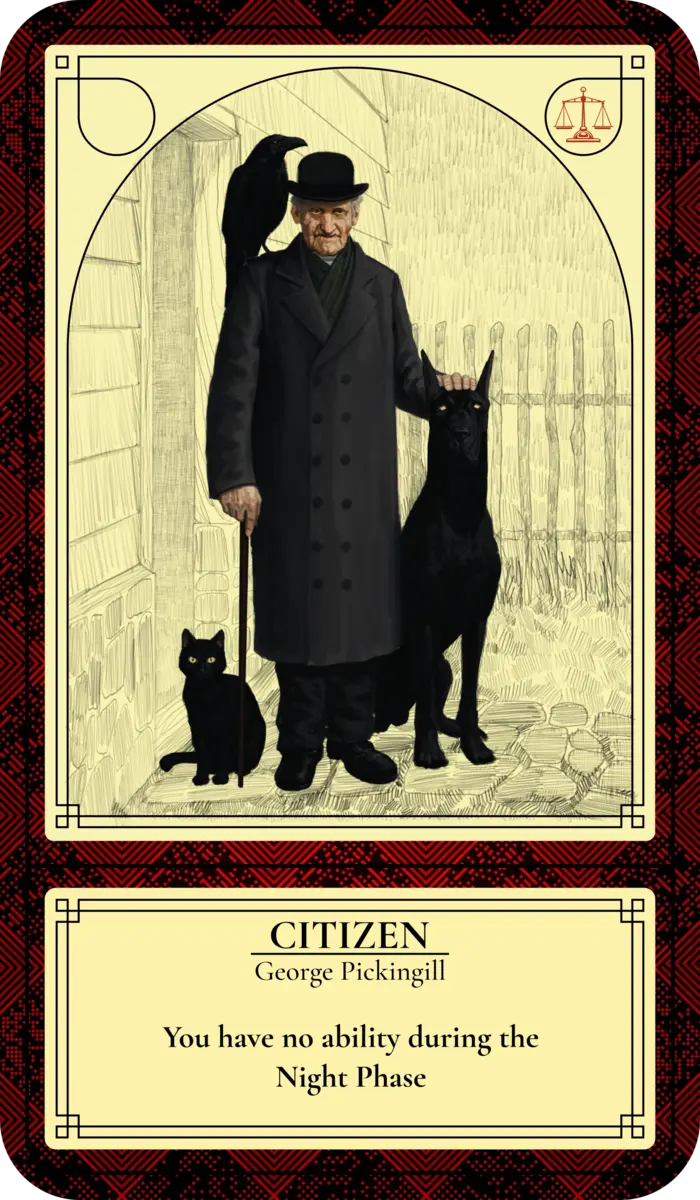
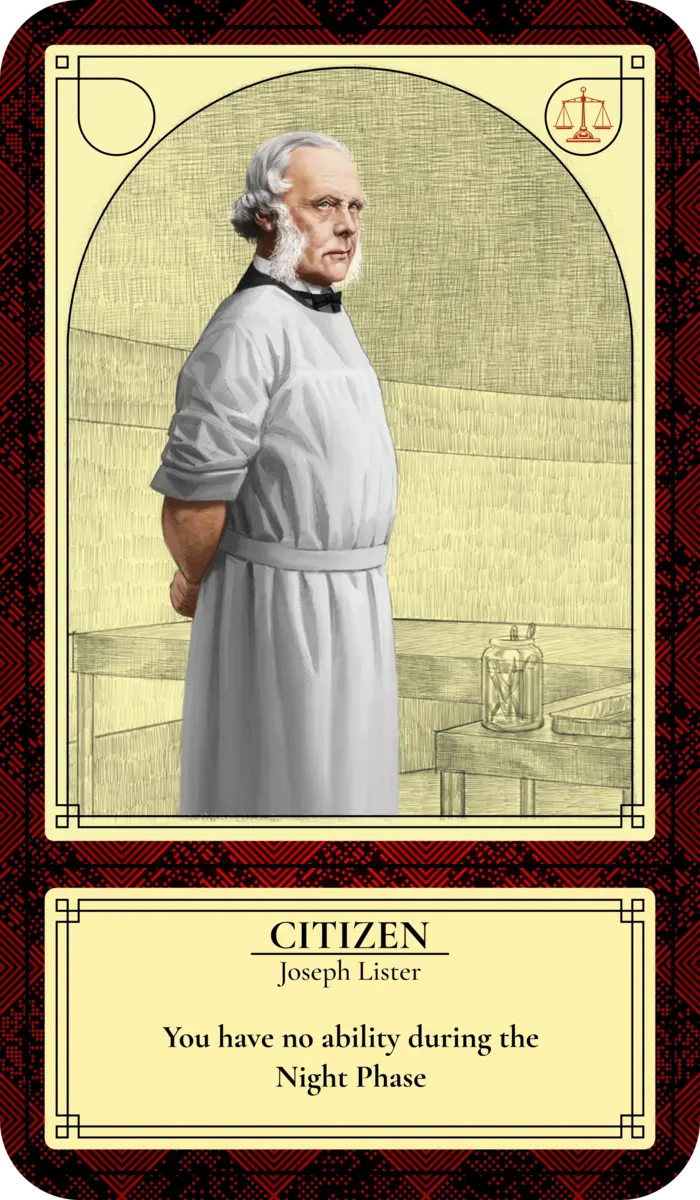
In a mafia card game most people are Citizens. You have a hidden card. You have no ability during the night phase. By day you talk, you accuse, and you vote.

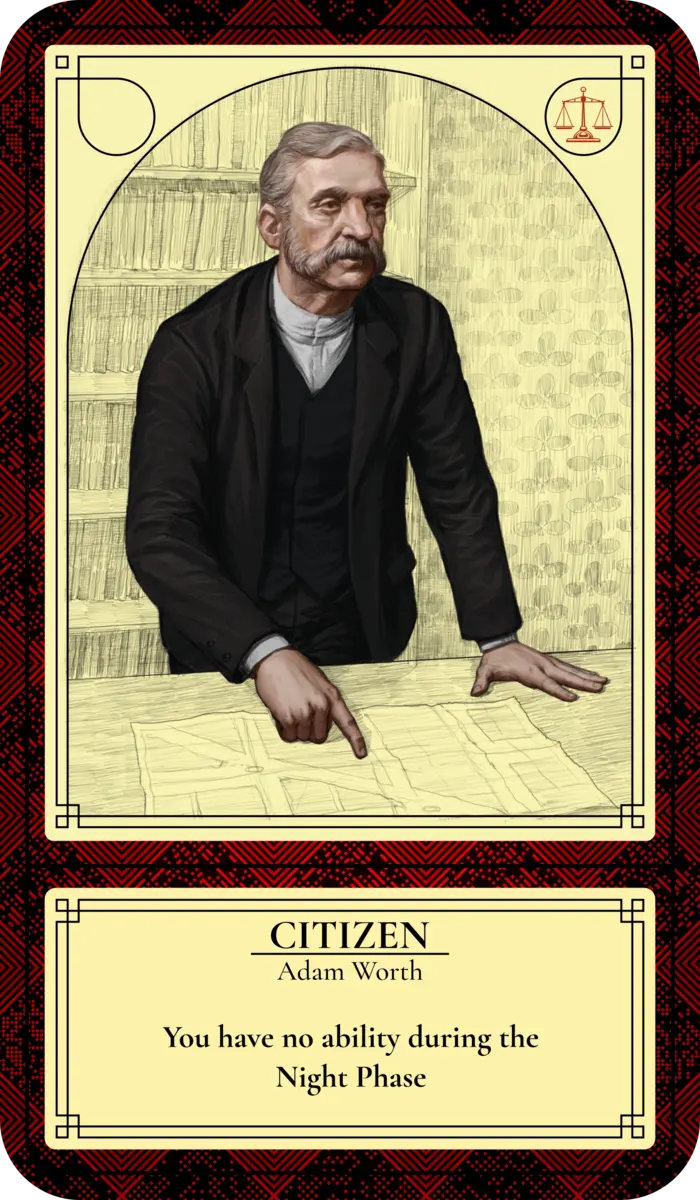
The City Day No night job 9 in the deck
What this card does
In a mafia card game most people are Citizens. You have a hidden card. You have no ability during the night phase. By day you talk, you accuse, and you vote.
How to play
You have no ability during the night phase. Close your eyes. Stay asleep.
Talk, accuse, and vote. That is the whole job.
Look once. Put it away. The card is the only proof.
Tips
The Citizen is one of the mafia roles in the mafia party game.
In the box
Published mixes that seat this card. Pick the list that fits the room, then deal.
When only six friends could make it, you still light the lamp and put the lancet on the table. One knife is plenty in a room this close.
Someone found a seventh chair in the hall and the evening grew a little kinder. Same one knife, one more neighbour to talk to.
The teaching deal. Eight chairs, one lamp, one lancet — and two knives that already know each other.
Still one lamp — but now one door hits back. Call on the wrong house at night and you will wish you had sent a note.
The classic table of nine. Two killers, a cop, a doctor — and the vote does the rest.
For tables that like clues. Read the dead, check a team, and mind the Duelist’s duel.
One lamp, and it can be lied to. The Yard filed him under City, and the Yard is never wrong.
She points first, and somebody’s night simply does not happen. And the man at the door duels his callers.
The Bishop taxes the Assassins’ knife. The Terrorist’s exit does not go through the parish.
One seat raises the recently dead. One seat burns them off the roll. And the lamp may be lying.
The City gets tools, the Mafia gets tricks. You win this one as a table, not as four solo stars.
Gunn and Henry both in chairs, and a slab for everyone else. Two checks a night — while they live.
The client cannot be summoned. The job never happened. And the house still hits back.
Built for rooms that love to argue. Words win this deal — and careless words lose it.
A soldier with two shots, and a room daring him to spend both. The Lawyer would rather nobody stood trial at all.
Minutes are read at the end of the evening — and some names have been made unavailable.
The Oracle dies pointing. The Vigilante has two arguments of his own. The Terrorist needs only one.
Two checks a night. One of them may still be a kindness from Sabini.
The veterans’ deal. Twenty players, three Assassins, and a day that has to keep moving.
Warzone-sized, different firm. Two Assassins, a man the Yard already cleared, and a Bishop taxing the wrong knife.
Write every wake. Call them in the same order. The quiet ones in the dark are not all done with the evening.
Every useful face in a chair. Two more chairs take the last Citizens. After that the box really is empty.
The deck
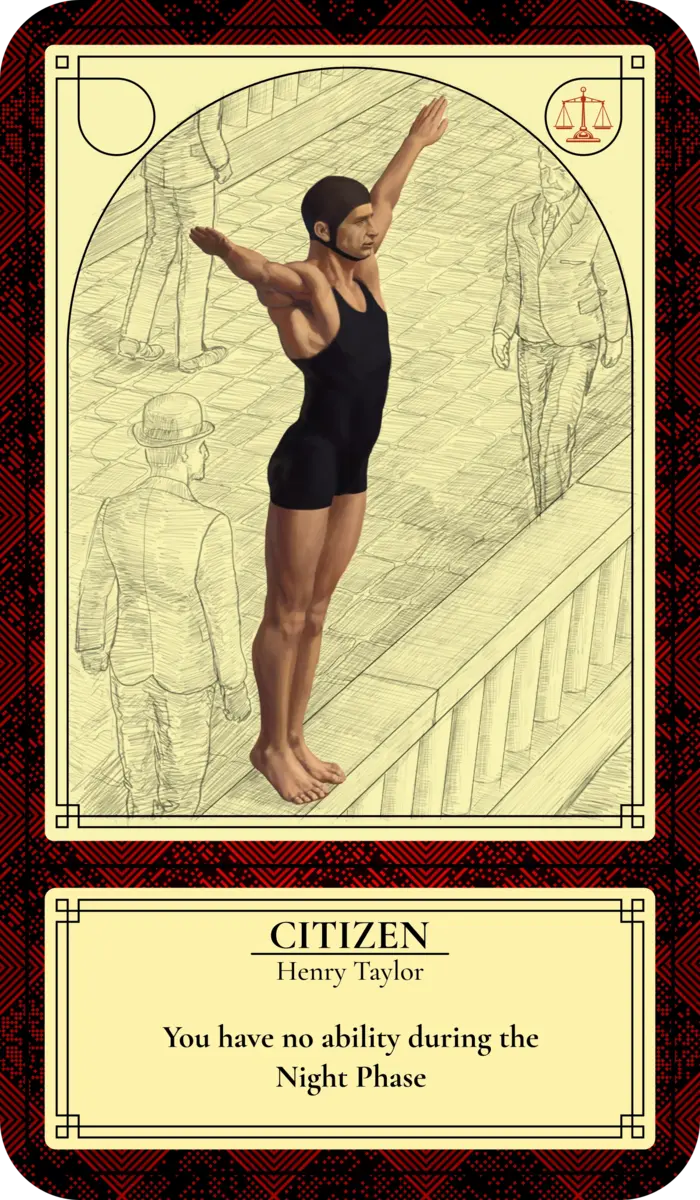
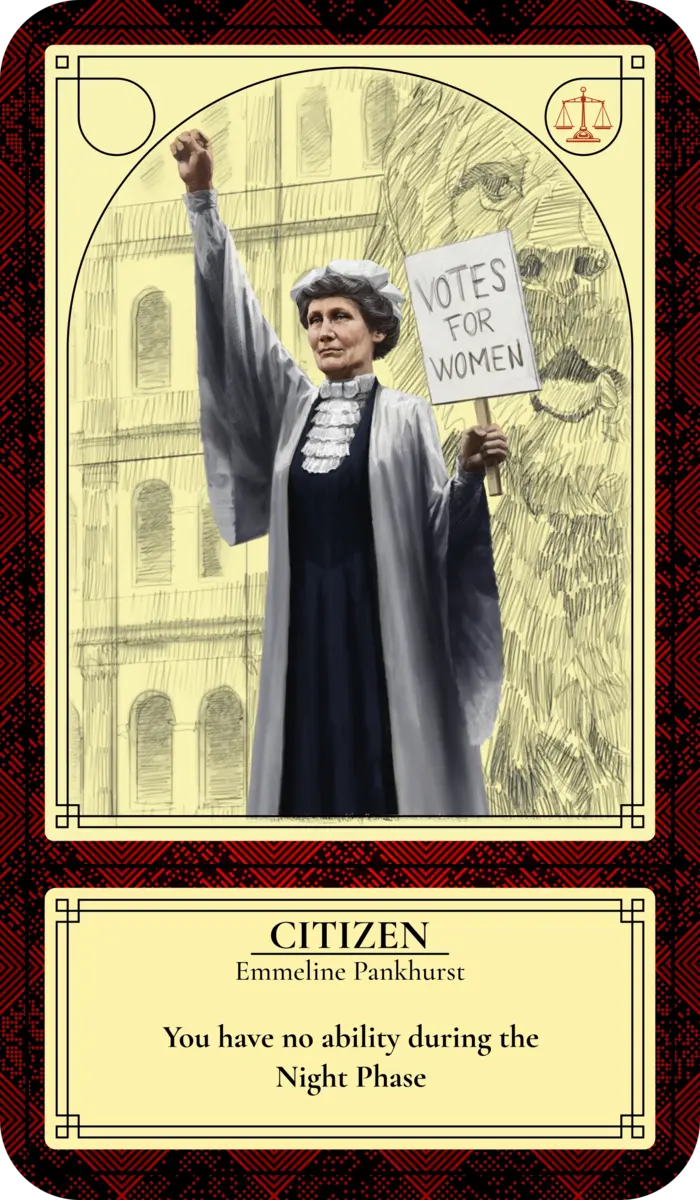
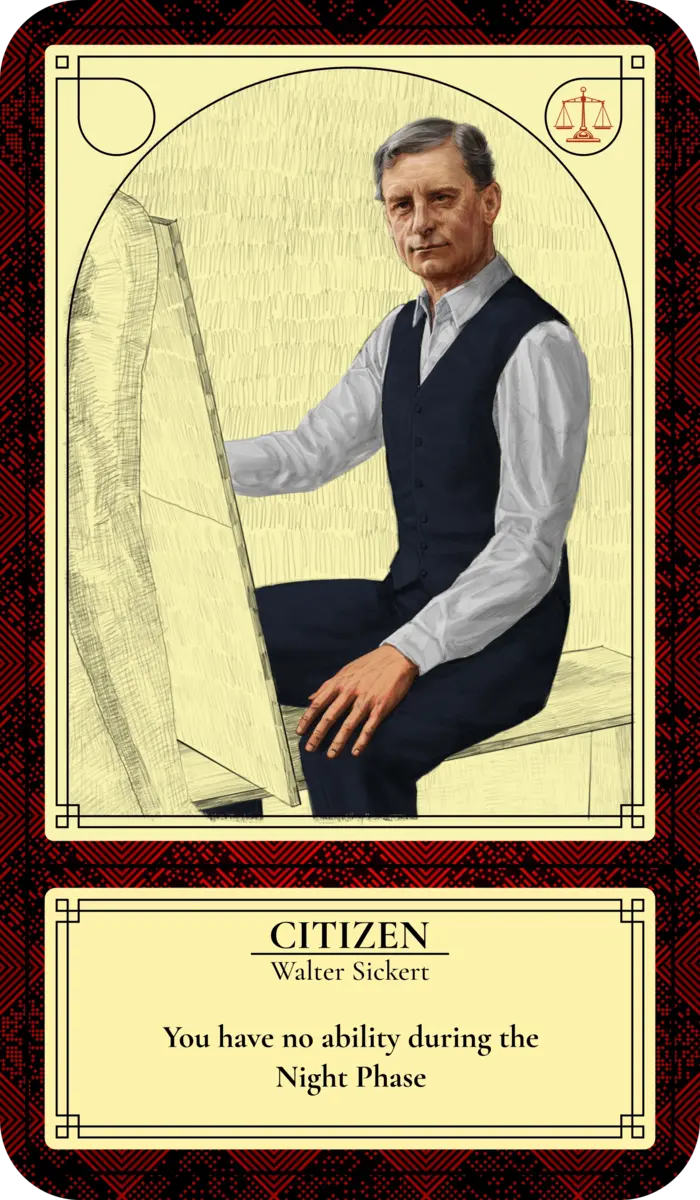
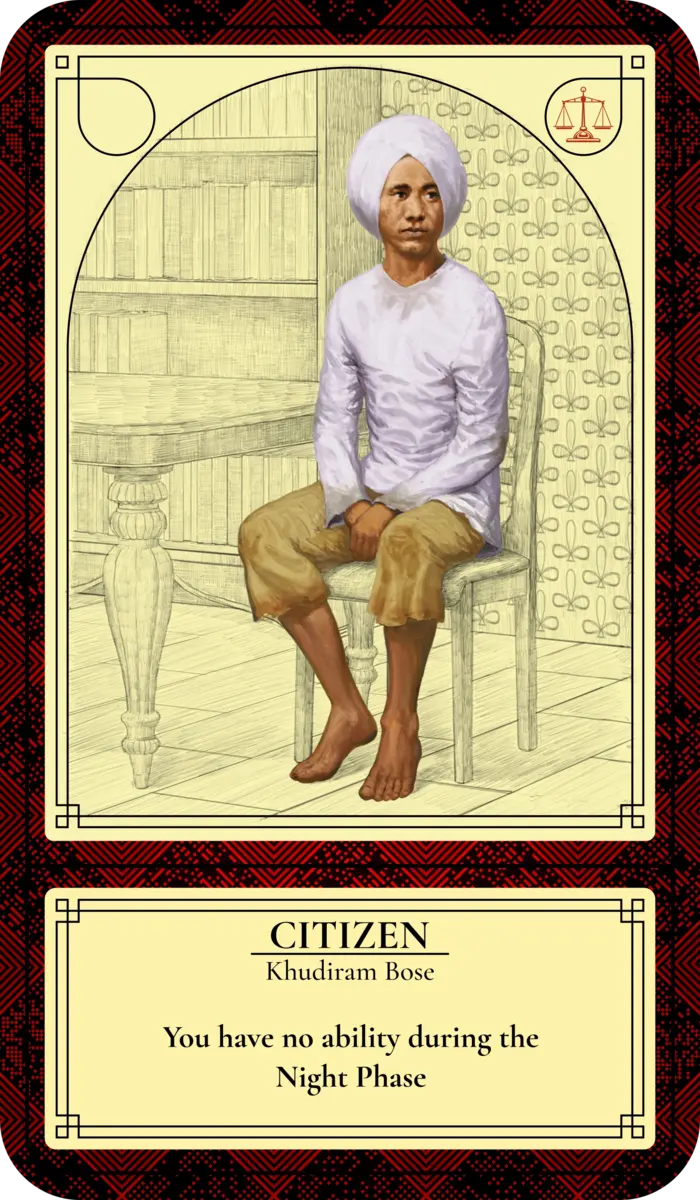
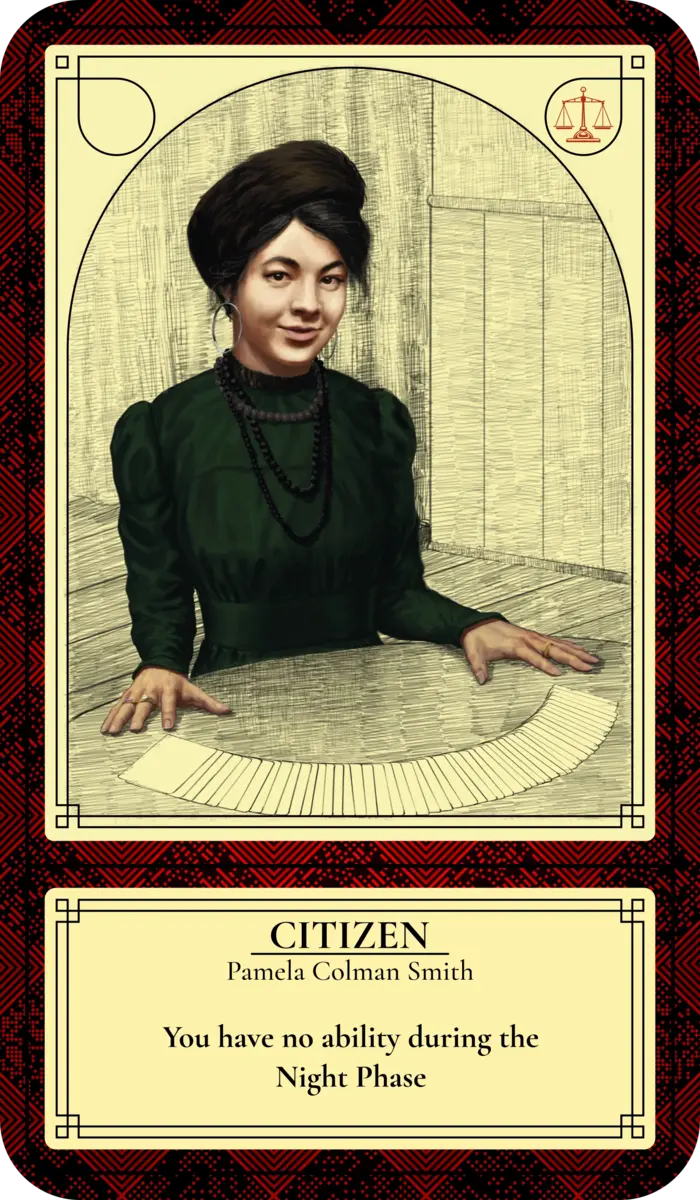
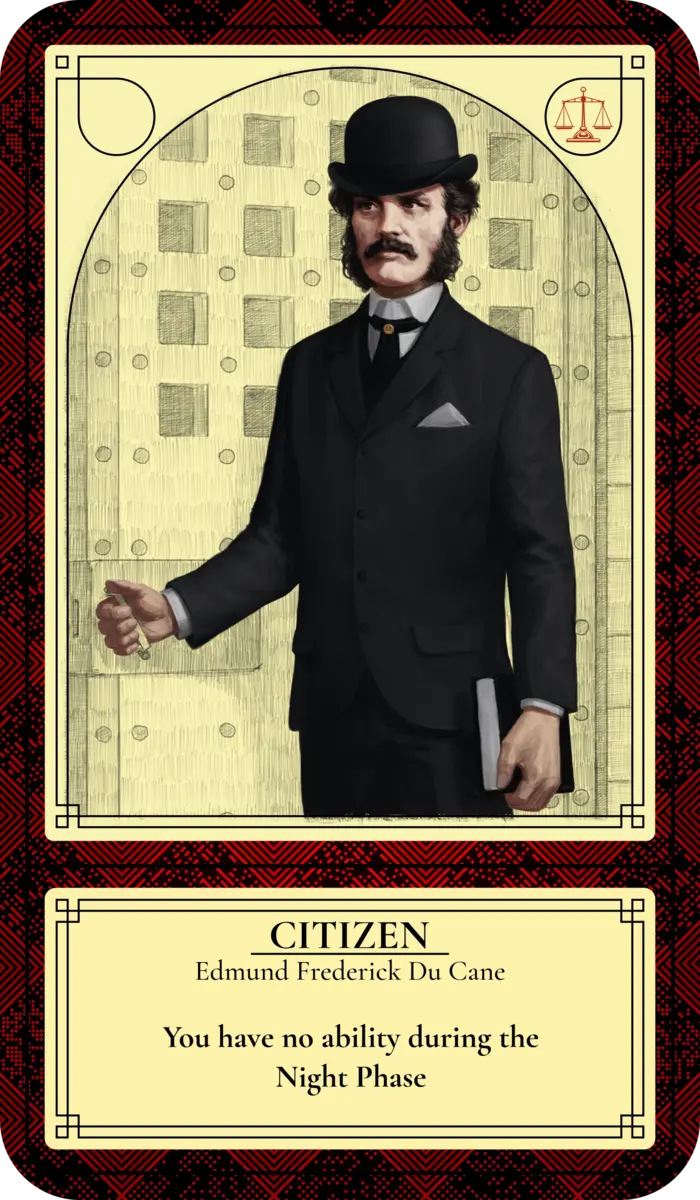
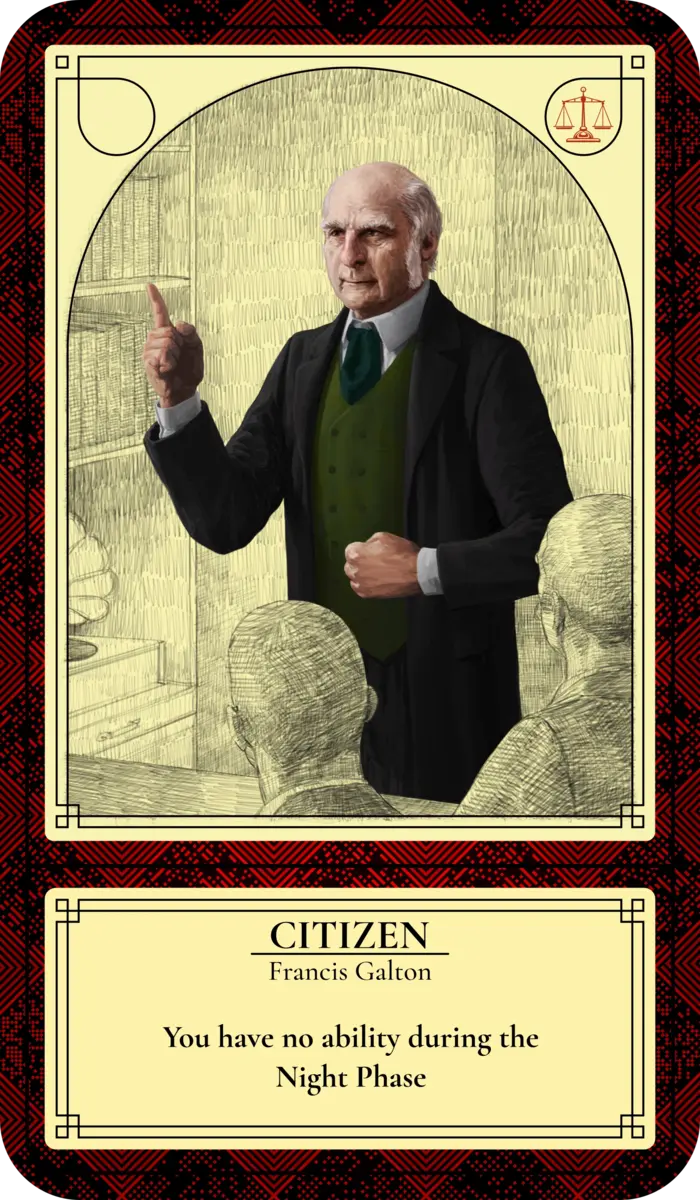
Citizen has 9 printed faces. The job is the same. Only the person on the card changes.
East End lore
A Citizen has no weapon at night, and Adam Worth never carried one in his life. For thirty years he ran a criminal enterprise across three continents on a single rule: no violence. Scotland Yard called him the Napoleon of crime. He once lifted the most expensive painting in the world out of a Bond Street window and then slept in the same room as it for twenty-five years, never selling it and never explaining why. Once, reported dead on a battlefield, he read his own casualty notice and understood how much freedom a dead man has. That is the Citizen in its most dangerous form: no ability to reveal, nothing on the table, and a face nobody thinks to look at twice.
In the lore, nobody recruited Adam Worth. He recruited everyone else. He came to London holding a paper he could not stop thinking about and a question his network could not answer. So he sat down with Darby Sabini and built the largest criminal alliance the East End had ever seen, all to find a single man. He kept his reasons to himself. On the morning the house came apart, while everyone else ran for the door, he went down the upstairs passage opening rooms, looking for the one man he had put there himself.
“I never lost a job I planned. I've only started wondering which ones I planned.”
Adam Worth
Street
Mill hands, clerks, and shopkeepers fill the East End. Most people in a mafia card game look like this — ordinary, and hard to prove.
Meeting
The City lives or dies on ordinary chairs. This seat is the crowd: talk, doubt, and a vote when the talk runs out.
The room
A silent Citizen worries people. A loud one worries them too. The table has to live with both.
Inspired by
1844–1902
Adam Worth commanded a criminal enterprise that spanned three continents, and in thirty years of leading it, he never carried a weapon. Scotland Yard called him the Napoleon of crime, and they meant it as a precise description. His absolute rule—binding on every man in his service—was zero violence. One contemporary remarked that Worth could relieve a man of a hundred thousand pounds without ever putting a hand near his throat.
He proved the rule on the most famous canvas in the world. Gainsborough’s Duchess of Devonshire—the most expensive painting ever sold at auction—was lifted from a Bond Street window in the dark while the country was busy adoring it. Scotland Yard hunted it; Pinkerton’s hunted it. It crossed the Atlantic rolled inside the false bottom of a trunk, and Worth slept in the same room with the canvas for twenty-five years. He never sold it, never ransomed it, and never explained it. He cut through a vault wall at the Boylston Bank in Boston, blew a Belgian post-office safe, and ran an international syndicate out of a Paris gaming house fitted with secret hydraulic floors—and never once drew a weapon.
He came out of Cambridge, Massachusetts, the son of a German-Jewish tailor, and joined the Union Army at seventeen under a false age. Reported killed at Bull Run, he read his own casualty notice, realized the absolute freedom granted to a dead man, and spent the rest of the war enlisting under new names, collecting bounties, and vanishing before regiments marched. He never returned to the identity listed on the casualty roll.
The streak ended in Belgium on a routine money-van heist—a job he went in on personally because he knew his crew was weak. He served five years in Louvain prison, emerging old, sick, and ruined. The final transaction of his life was not for his own freedom, but the return of the Duchess: handed back through William Pinkerton, the detective who had pursued him for two decades, in exchange for a settlement spent entirely on his children.
Forget the stolen fortune and the twenty-five years of silence. Remember only this: he was the most accomplished thief in Europe and never once broke his word to a man who worked for him—which is precisely why, when he finally chose to use someone, nobody thought to look twice.
The City
Same team. Different jobs.
Mafia is easier to play than it looks. Everyone gets a hidden card — most of the table is City, a hidden few are Mafia. At night the killers quietly pick a victim while a doctor tries to guess who needs saving and a cop digs for the truth. By day the survivors argue about what happened, put someone on trial, and vote. The City wins by finding every killer; the Mafia wins by surviving until they can win a vote. The walkthrough takes you through the whole game, from the deal to the last trial.
How to play mafiaYour first game should be The Lamp and the Lancet — eight players and only three night wakes, so nobody gets lost. With a ninth chair the same deal becomes, naturally, The Ninth Chair. All twenty published deals, up to twenty-seven players, are on the setups page.
The teaching deal. Eight chairs, one lamp, one lancet — and two knives that already know each other.
City: 1 Policeman, 1 Doctor, Citizens to fill Mafia: 2 Assassins
The classic table of nine. Two killers, a cop, a doctor — and the vote does the rest.
City: 1 Policeman, 1 Doctor, Citizens to fill Mafia: 2 Assassins