What this card does
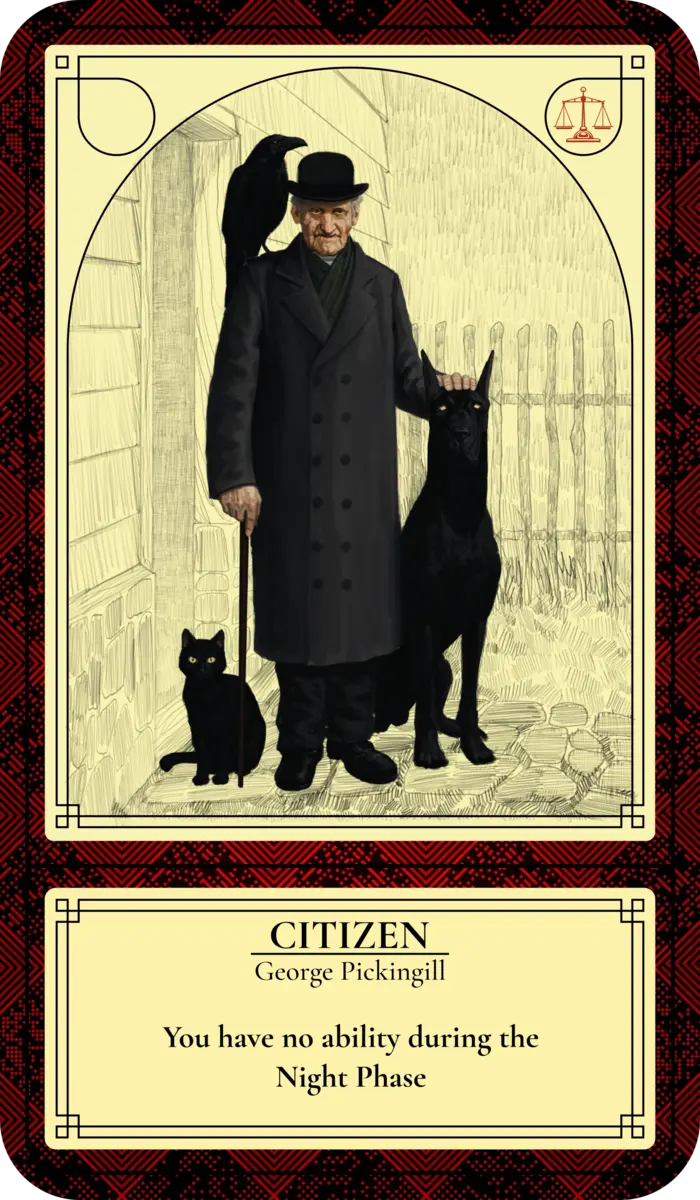
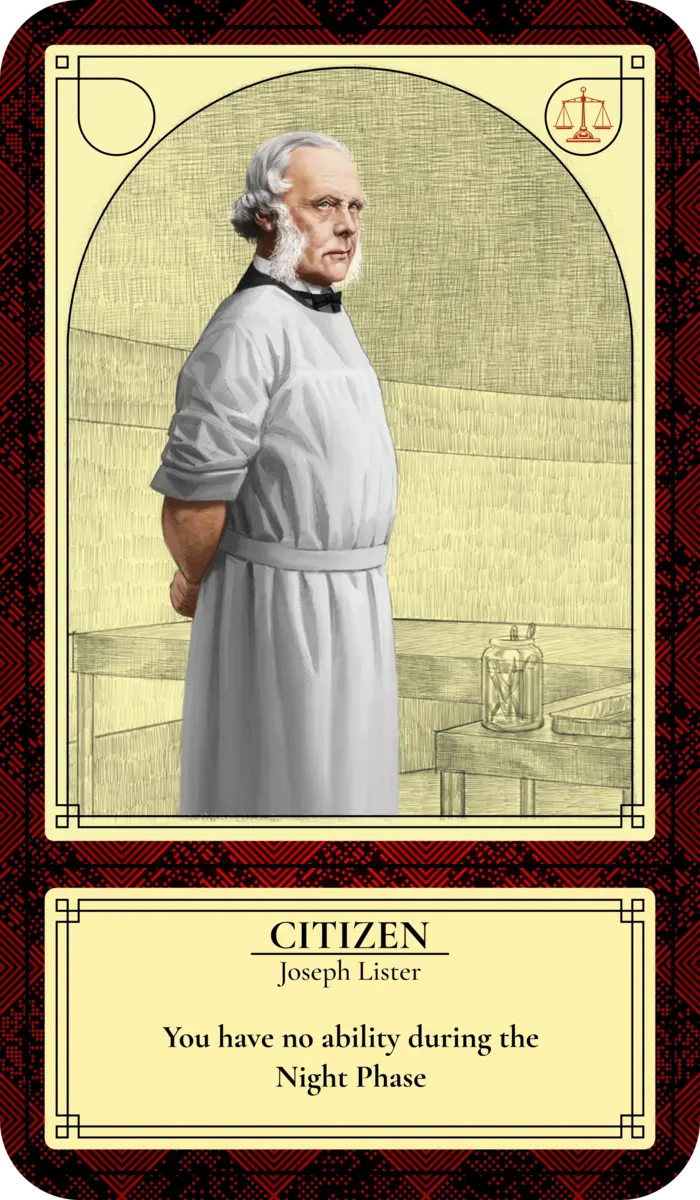
In a mafia card game most people are Citizens. You have a hidden card. You have no ability during the night phase. By day you talk, you accuse, and you vote.

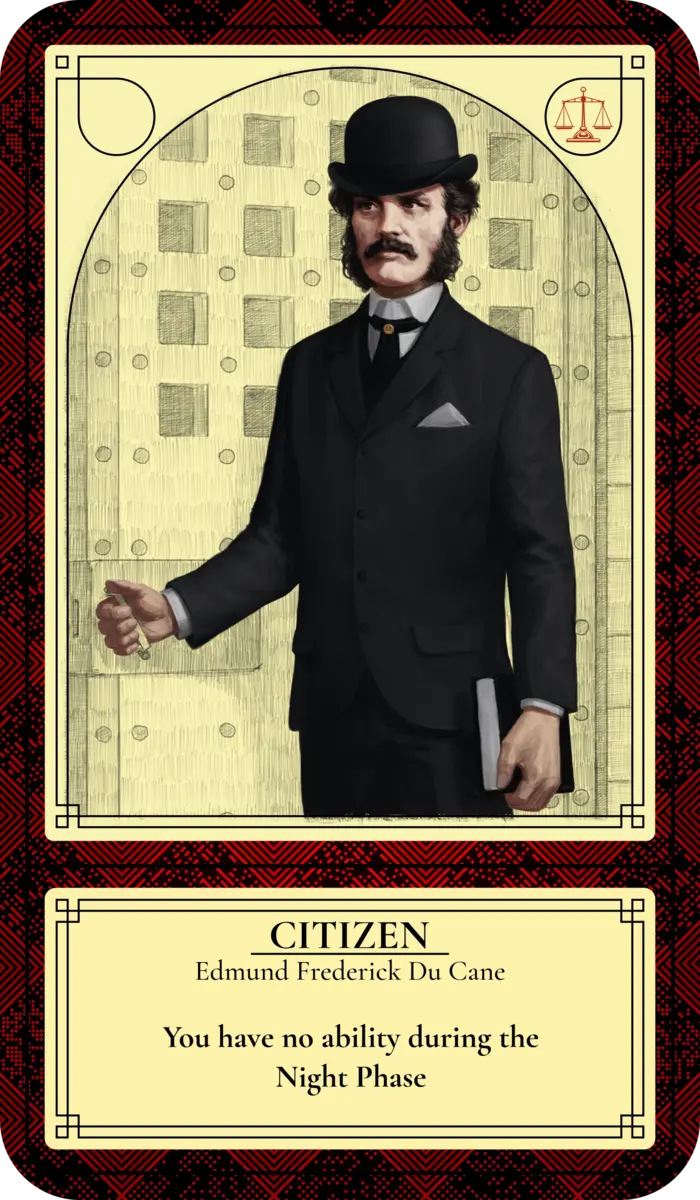
The City Day No night job 9 in the deck
What this card does
In a mafia card game most people are Citizens. You have a hidden card. You have no ability during the night phase. By day you talk, you accuse, and you vote.
How to play
You have no ability during the night phase. Close your eyes. Stay asleep.
Talk, accuse, and vote. That is the whole job.
Look once. Put it away. The card is the only proof.
Tips
The Citizen is one of the mafia roles in the mafia party game.
In the box
Published mixes that seat this card. Pick the list that fits the room, then deal.
When only six friends could make it, you still light the lamp and put the lancet on the table. One knife is plenty in a room this close.
Someone found a seventh chair in the hall and the evening grew a little kinder. Same one knife, one more neighbour to talk to.
The teaching deal. Eight chairs, one lamp, one lancet — and two knives that already know each other.
Still one lamp — but now one door hits back. Call on the wrong house at night and you will wish you had sent a note.
The classic table of nine. Two killers, a cop, a doctor — and the vote does the rest.
For tables that like clues. Read the dead, check a team, and mind the Duelist’s duel.
One lamp, and it can be lied to. The Yard filed him under City, and the Yard is never wrong.
She points first, and somebody’s night simply does not happen. And the man at the door duels his callers.
The Bishop taxes the Assassins’ knife. The Terrorist’s exit does not go through the parish.
One seat raises the recently dead. One seat burns them off the roll. And the lamp may be lying.
The City gets tools, the Mafia gets tricks. You win this one as a table, not as four solo stars.
Gunn and Henry both in chairs, and a slab for everyone else. Two checks a night — while they live.
The client cannot be summoned. The job never happened. And the house still hits back.
Built for rooms that love to argue. Words win this deal — and careless words lose it.
A soldier with two shots, and a room daring him to spend both. The Lawyer would rather nobody stood trial at all.
Minutes are read at the end of the evening — and some names have been made unavailable.
The Oracle dies pointing. The Vigilante has two arguments of his own. The Terrorist needs only one.
Two checks a night. One of them may still be a kindness from Sabini.
The veterans’ deal. Twenty players, three Assassins, and a day that has to keep moving.
Warzone-sized, different firm. Two Assassins, a man the Yard already cleared, and a Bishop taxing the wrong knife.
Write every wake. Call them in the same order. The quiet ones in the dark are not all done with the evening.
Every useful face in a chair. Two more chairs take the last Citizens. After that the box really is empty.
The deck
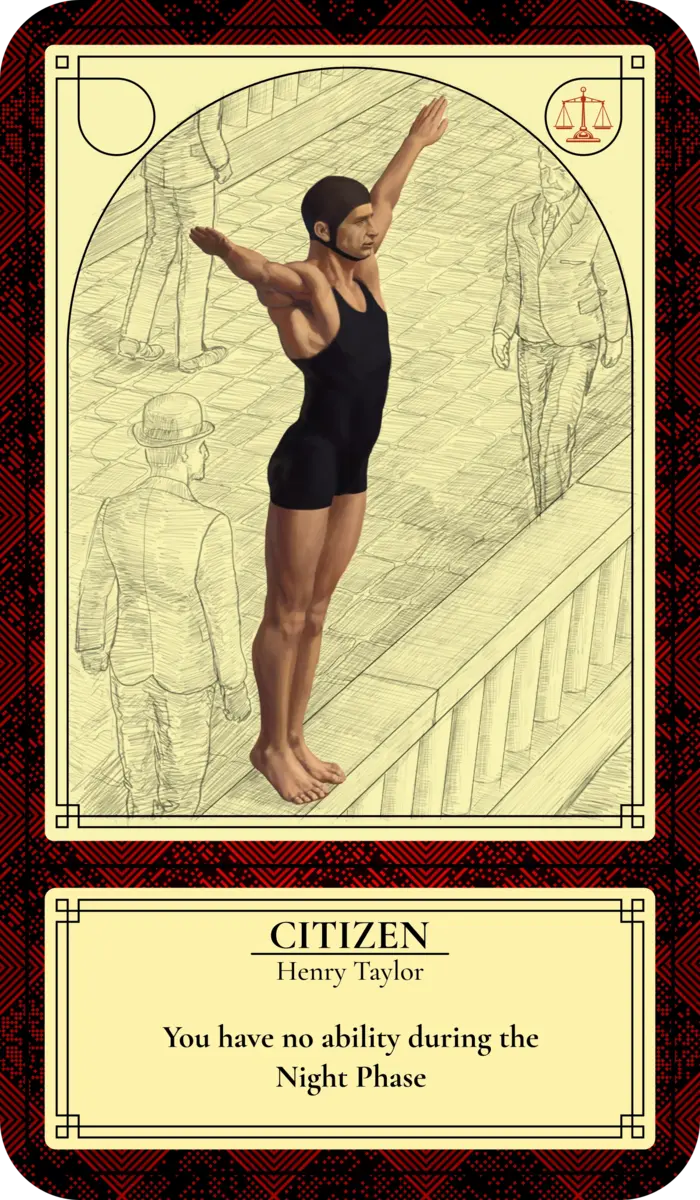
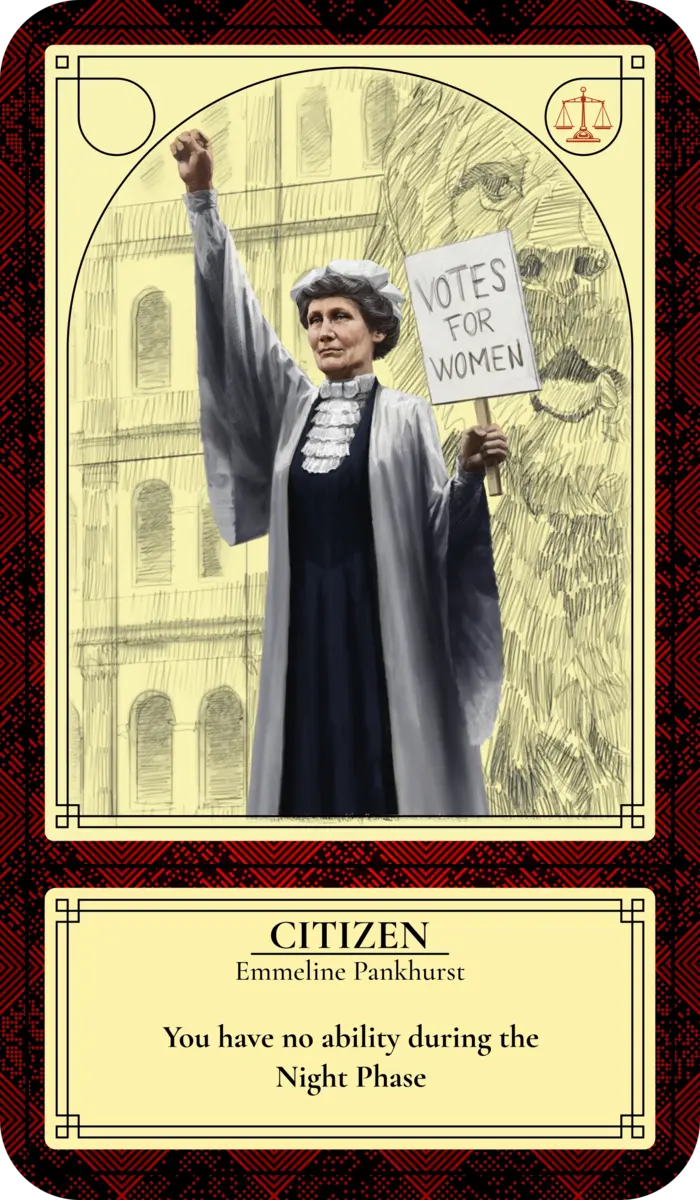
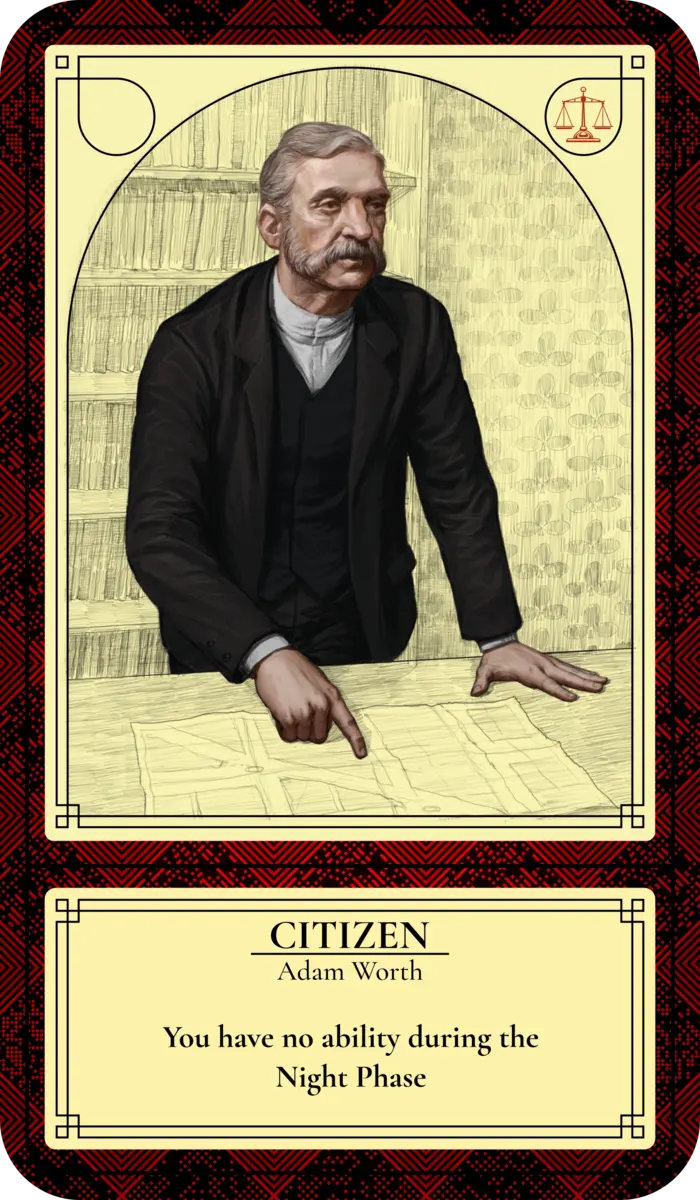
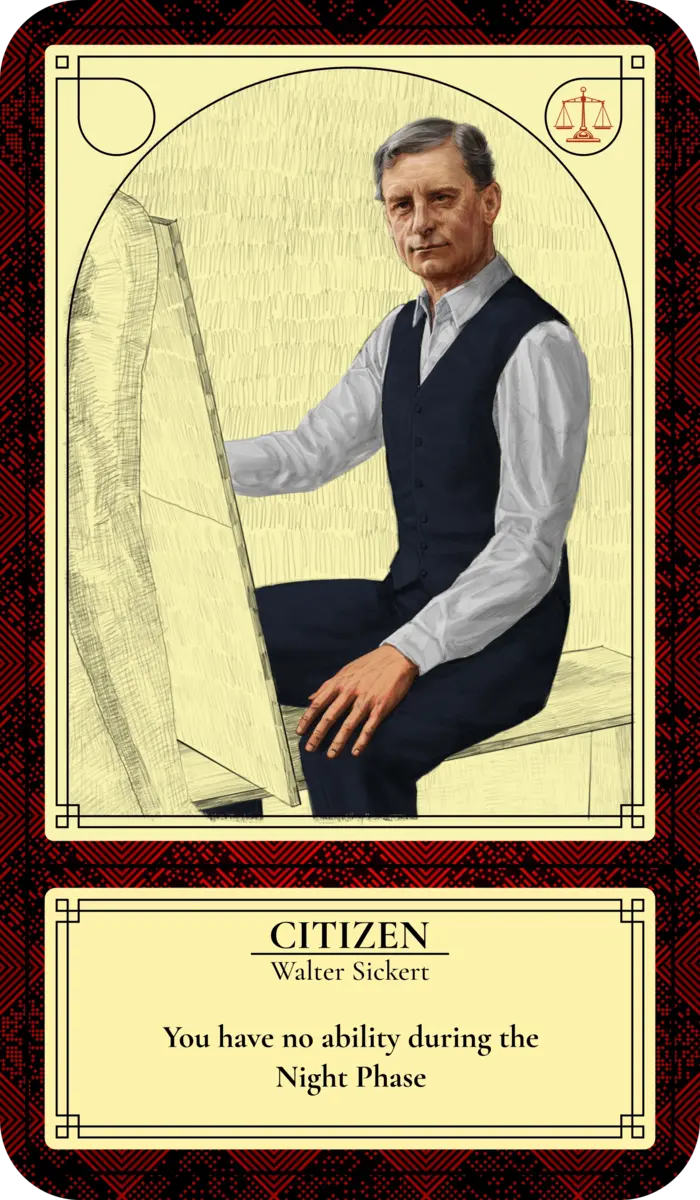
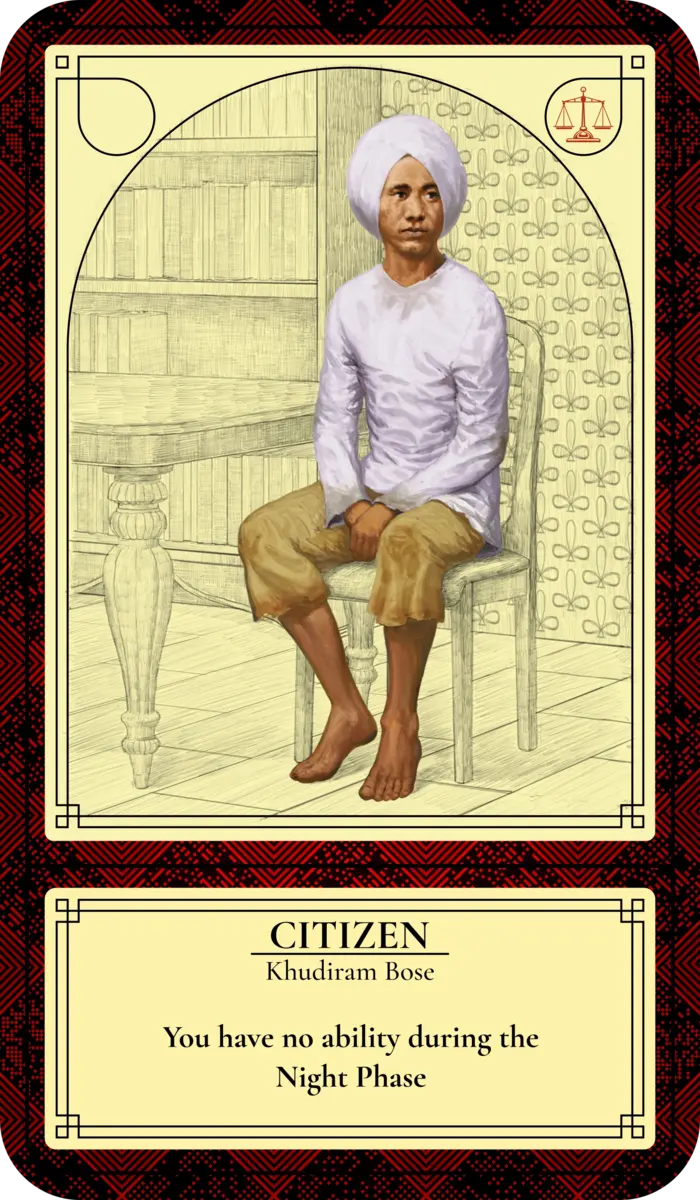
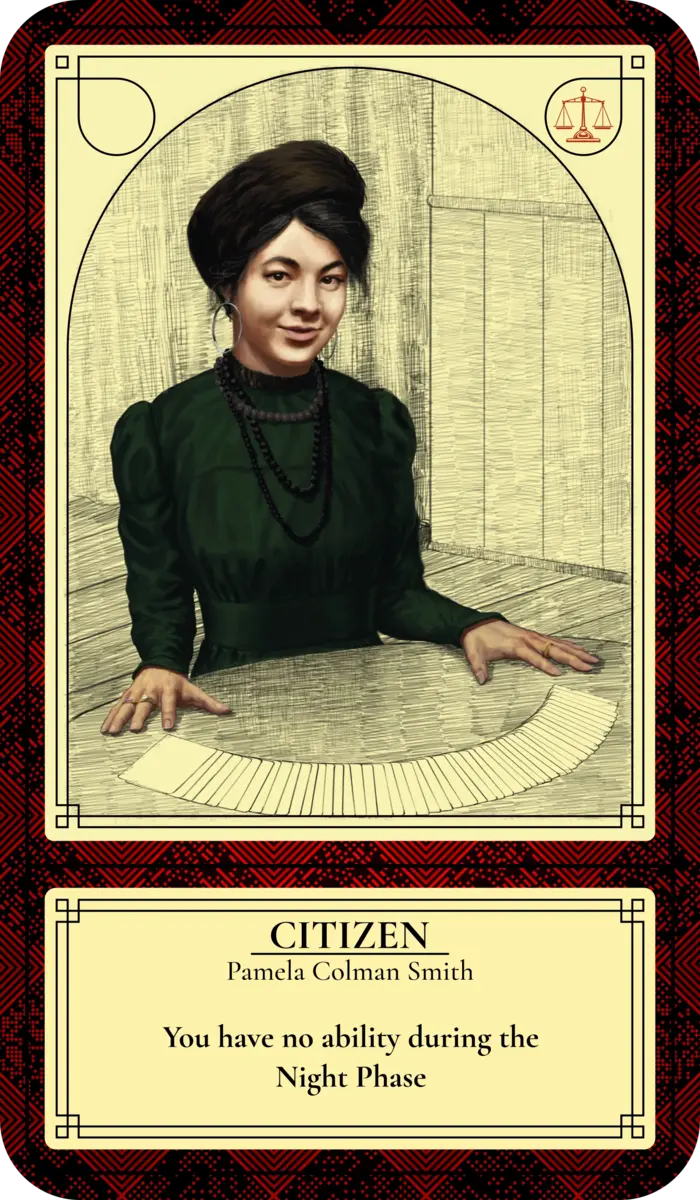
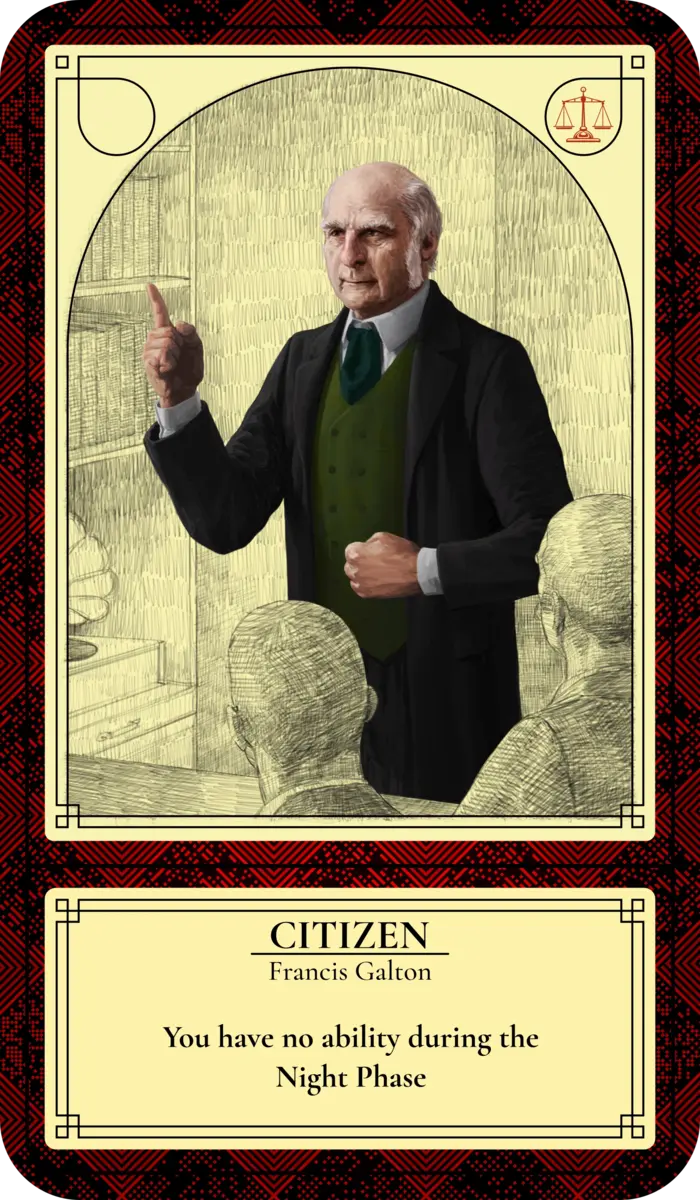
Citizen has 9 printed faces. The job is the same. Only the person on the card changes.
East End lore
A Citizen has no power except the vote, and the vote is the only justice the City has. Edmund Du Cane spent his life building justice out of rules. He was put in charge of every prison in England and made them all the same: the same cell, the same ration, the same silent hours, from one end of the country to the other. He closed thirty-eight gaols he judged unnecessary, and had one of his prisons built by the convicts who would live in it. He believed that a rule applied identically to every man was the same thing as justice, and he had the authority to find out. That is the Citizen: no special sight, just a judgment and the conviction to lay it on the table.
In the lore, his was the first letter Galton sent. No man living knew better how the criminal side of England was arranged, and Galton asked him a single question: is this credible? Du Cane answered by return, at length. The answer was yes, and he added four names they had not got. At the Three Harpies, when the nurse asked him who the old man by the fire was, he looked round the room for somebody worth asking and found no one.
“Every lock in England opens for the right signature. That is what keeps me up at night.”
Edmund Du Cane
Street
Mill hands, clerks, and shopkeepers fill the East End. Most people in a mafia card game look like this — ordinary, and hard to prove.
Meeting
The City lives or dies on ordinary chairs. This seat is the crowd: talk, doubt, and a vote when the talk runs out.
The room
A silent Citizen worries people. A loud one worries them too. The table has to live with both.
Inspired by
1830–1903
One man ran every prison in England. Not oversaw — ran. Before him, each gaol in the country was a local affair, managed by local magistrates to local standards, which meant a sentence meant one thing in Manchester and something else entirely in Devon. In 1877 Parliament handed the lot to a single national board, and Edmund Du Cane was put at the head of it. For nearly twenty years, every cell, every ration, every hour of every convict's day in England and Wales was set by his office. He closed thirty-eight prisons because he judged them unnecessary. He was a serving colonel of Royal Engineers.
He built the machine and then he standardised it down to the minute. Separate confinement: a man in a cell alone, in silence, seeing almost no one. Hard labour of a deliberately pointless kind — the treadwheel, which powered nothing, and the crank, a handle in a cell counted by a dial, which a warder could tighten to make it heavier. Rations calculated to the ounce. Uniform cell dimensions. The same regime in Portsmouth as in Pentonville. He had designed Wormwood Scrubs and had it built by the convicts who would live in it, and he ran the whole apparatus on the principle he stated openly: prison was to be hard, dull, and identical everywhere, so that the fear of it did the work. He also ordered every convict photographed and measured, which is why the British state's first serious criminal identification records exist, and why men of science interested in the shapes of criminal faces — Francis Galton among them — were quietly given access to them.
He came to it from the other end of the Empire. As a young engineer he was sent to Western Australia to manage convicts transported from Britain, and he ran work gangs building roads and public buildings in a colony that had asked for prisoners because it needed labour. He watched what happened when a system had no rules: local discretion, arbitrary cruelty, arbitrary leniency, and no way to say what a sentence actually was. He came home convinced the answer was uniformity, and he spent the rest of his career installing it.
It ended badly for his reputation. A committee reported in 1895 that the system he had built treated prisoners as parcels and produced worse men than it received; the phrase used against him was that it had made the prisoner a machine. He had already retired. He died in 1903 and is remembered, when he is remembered, as the man who made English prisons cruel by being systematic rather than by being cruel.
Forget the thirty-eight closures and the twenty years of command. Remember only this: he believed that a rule applied identically to every man was the same thing as justice, and he had the authority to find out.
The City
Same team. Different jobs.
Mafia is easier to play than it looks. Everyone gets a hidden card — most of the table is City, a hidden few are Mafia. At night the killers quietly pick a victim while a doctor tries to guess who needs saving and a cop digs for the truth. By day the survivors argue about what happened, put someone on trial, and vote. The City wins by finding every killer; the Mafia wins by surviving until they can win a vote. The walkthrough takes you through the whole game, from the deal to the last trial.
How to play mafiaYour first game should be The Lamp and the Lancet — eight players and only three night wakes, so nobody gets lost. With a ninth chair the same deal becomes, naturally, The Ninth Chair. All twenty published deals, up to twenty-seven players, are on the setups page.
The teaching deal. Eight chairs, one lamp, one lancet — and two knives that already know each other.
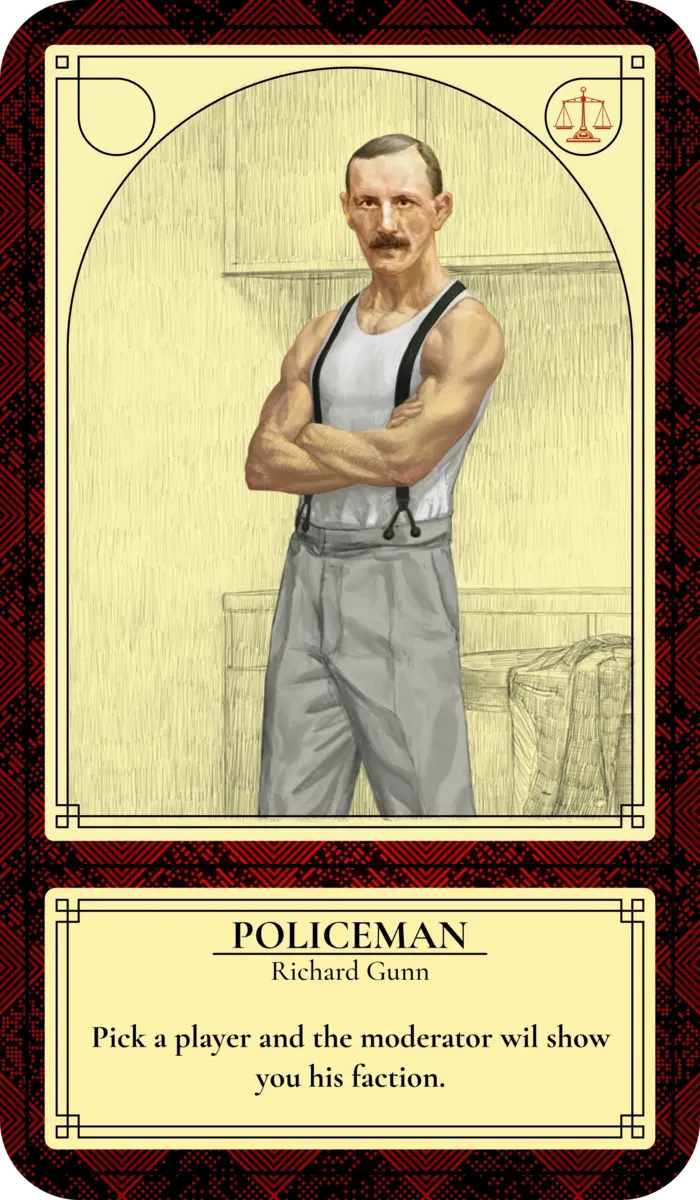
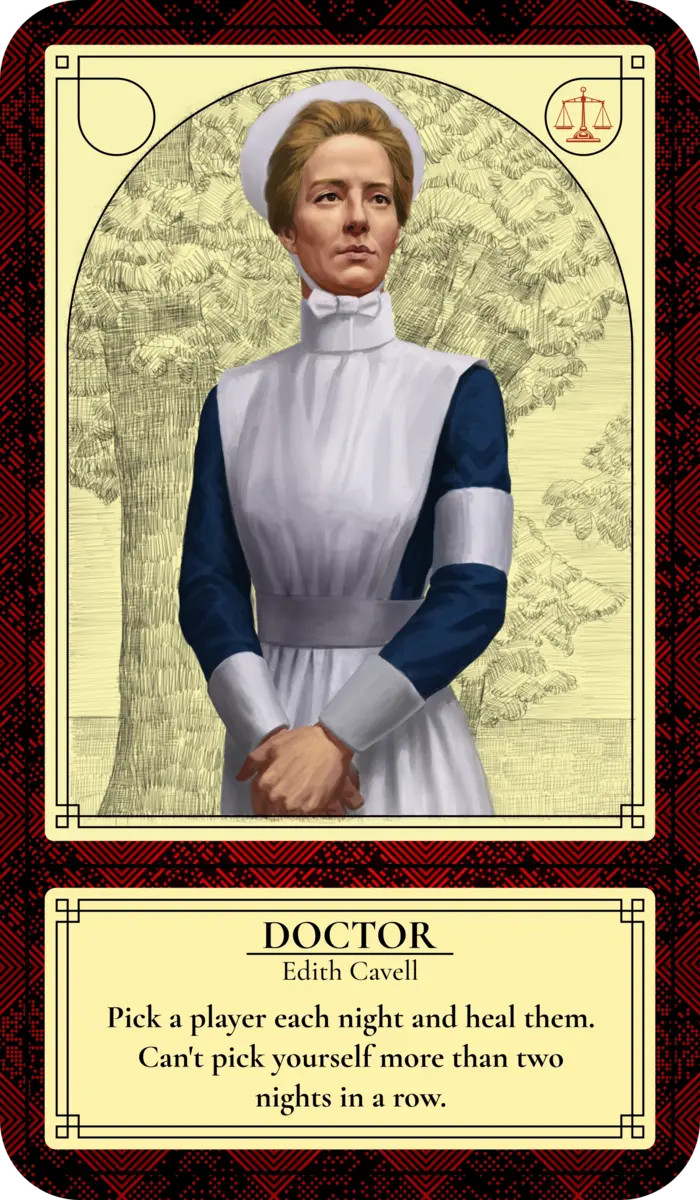
City: 1 Policeman, 1 Doctor, Citizens to fill Mafia: 2 Assassins
The classic table of nine. Two killers, a cop, a doctor — and the vote does the rest.
City: 1 Policeman, 1 Doctor, Citizens to fill Mafia: 2 Assassins