What this card does
In a mafia card game most people are Citizens. You have a hidden card. You have no ability during the night phase. By day you talk, you accuse, and you vote.

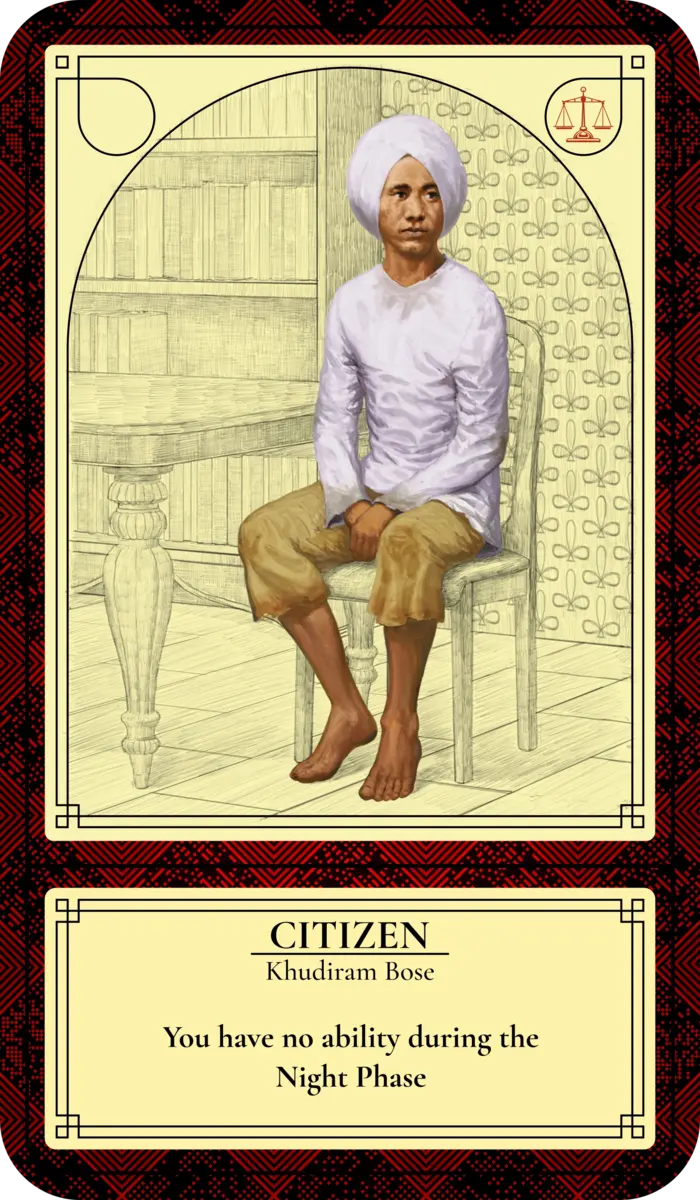
The City Day No night job 9 in the deck
What this card does
In a mafia card game most people are Citizens. You have a hidden card. You have no ability during the night phase. By day you talk, you accuse, and you vote.
How to play
You have no ability during the night phase. Close your eyes. Stay asleep.
Talk, accuse, and vote. That is the whole job.
Look once. Put it away. The card is the only proof.
Tips
The Citizen is one of the mafia roles in the mafia party game.
In the box
Published mixes that seat this card. Pick the list that fits the room, then deal.
When only six friends could make it, you still light the lamp and put the lancet on the table. One knife is plenty in a room this close.
Someone found a seventh chair in the hall and the evening grew a little kinder. Same one knife, one more neighbour to talk to.
The teaching deal. Eight chairs, one lamp, one lancet — and two knives that already know each other.
Still one lamp — but now one door hits back. Call on the wrong house at night and you will wish you had sent a note.
The classic table of nine. Two killers, a cop, a doctor — and the vote does the rest.
For tables that like clues. Read the dead, check a team, and mind the Duelist’s duel.
One lamp, and it can be lied to. The Yard filed him under City, and the Yard is never wrong.
She points first, and somebody’s night simply does not happen. And the man at the door duels his callers.
The Bishop taxes the Assassins’ knife. The Terrorist’s exit does not go through the parish.
One seat raises the recently dead. One seat burns them off the roll. And the lamp may be lying.
The City gets tools, the Mafia gets tricks. You win this one as a table, not as four solo stars.
Gunn and Henry both in chairs, and a slab for everyone else. Two checks a night — while they live.
The client cannot be summoned. The job never happened. And the house still hits back.
Built for rooms that love to argue. Words win this deal — and careless words lose it.
A soldier with two shots, and a room daring him to spend both. The Lawyer would rather nobody stood trial at all.
Minutes are read at the end of the evening — and some names have been made unavailable.
The Oracle dies pointing. The Vigilante has two arguments of his own. The Terrorist needs only one.
Two checks a night. One of them may still be a kindness from Sabini.
The veterans’ deal. Twenty players, three Assassins, and a day that has to keep moving.
Warzone-sized, different firm. Two Assassins, a man the Yard already cleared, and a Bishop taxing the wrong knife.
Write every wake. Call them in the same order. The quiet ones in the dark are not all done with the evening.
Every useful face in a chair. Two more chairs take the last Citizens. After that the box really is empty.
The deck
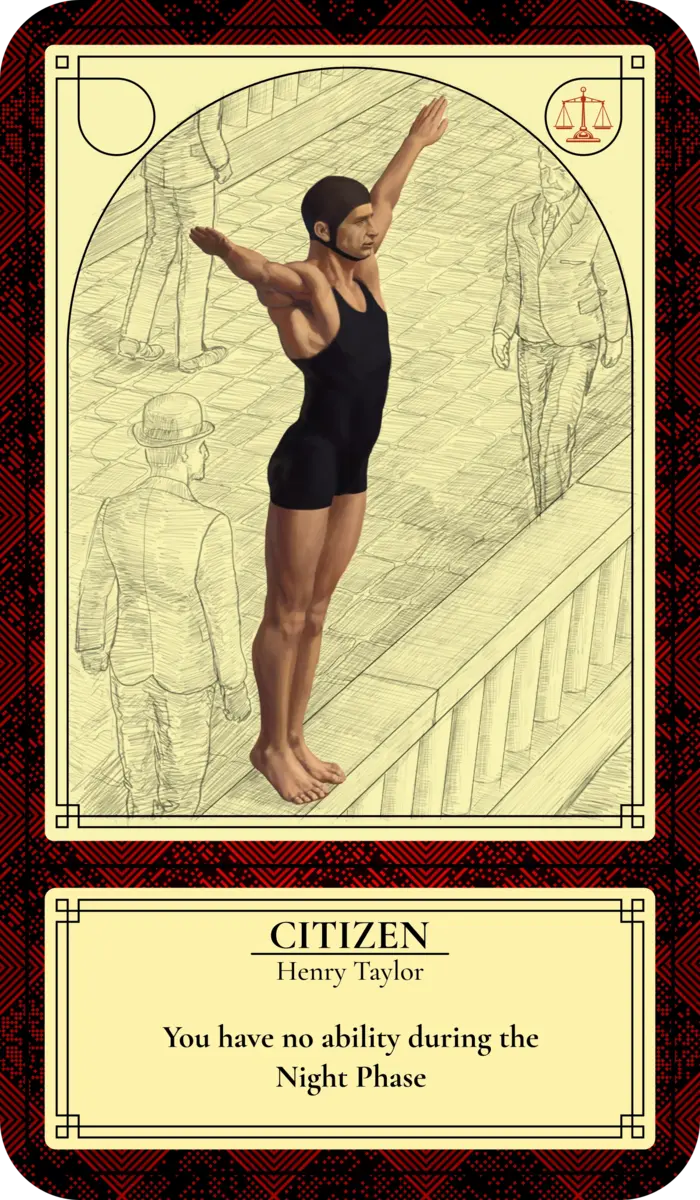
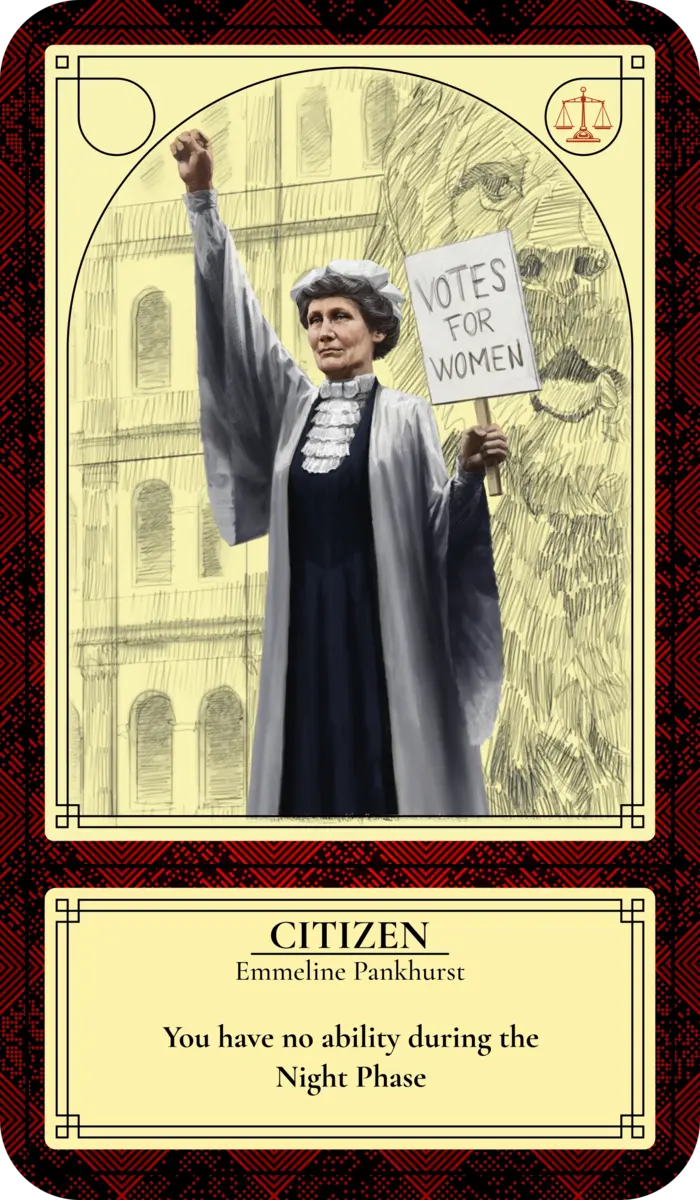
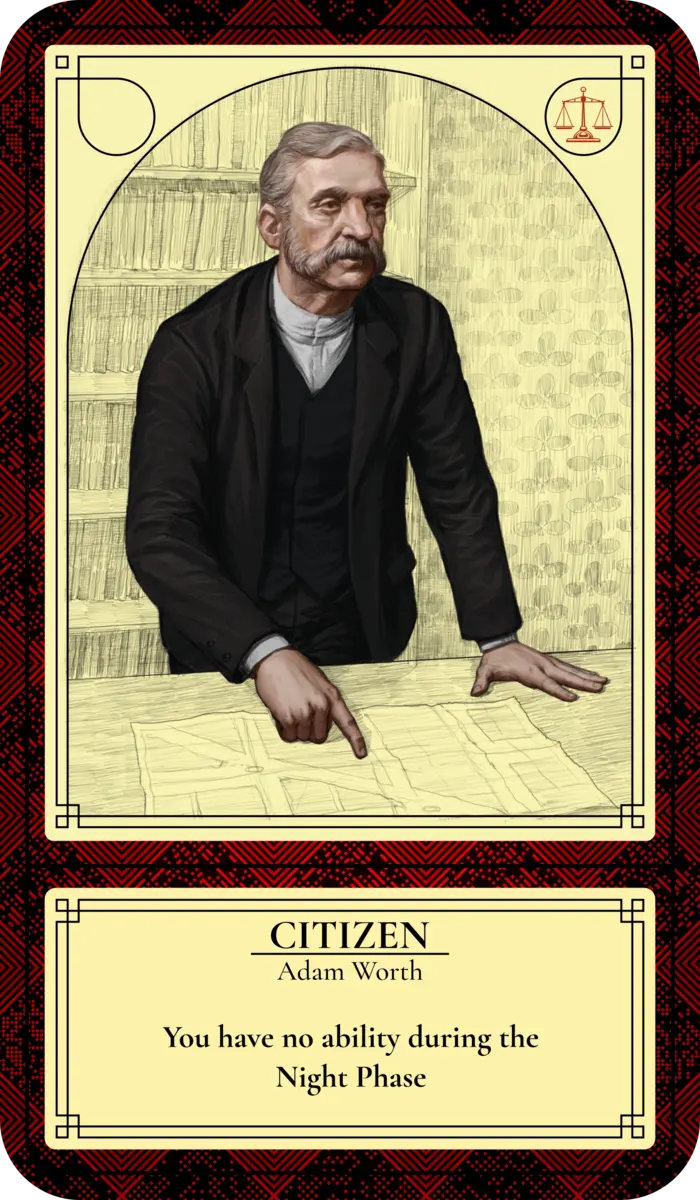
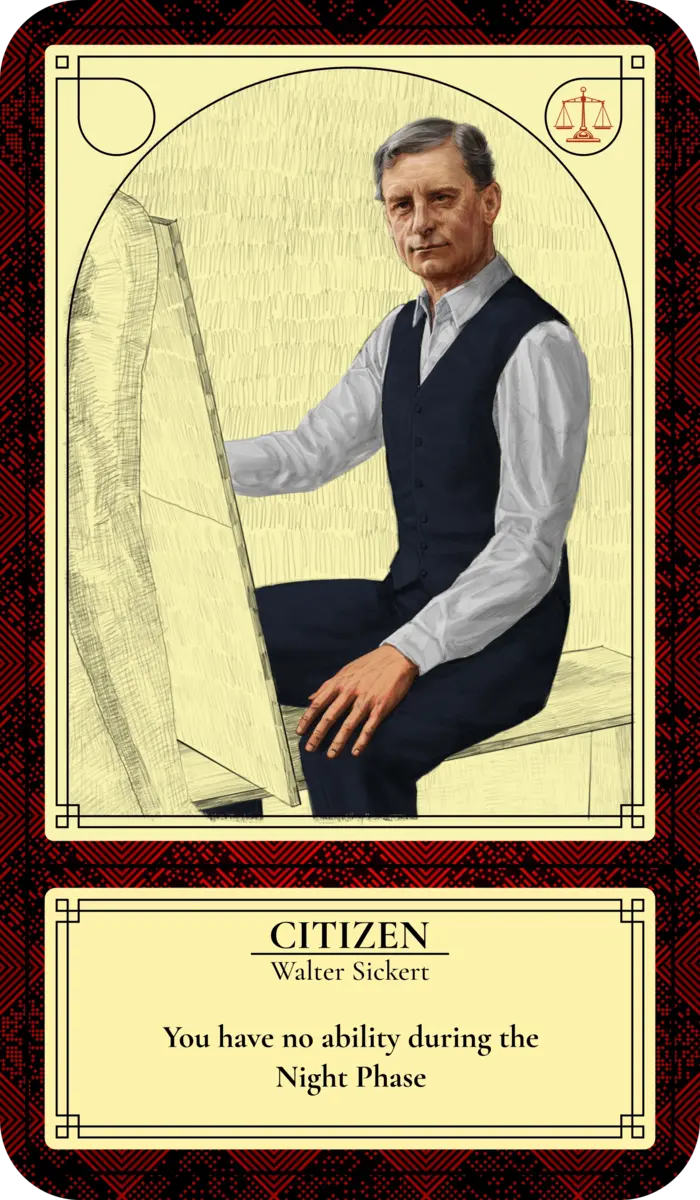
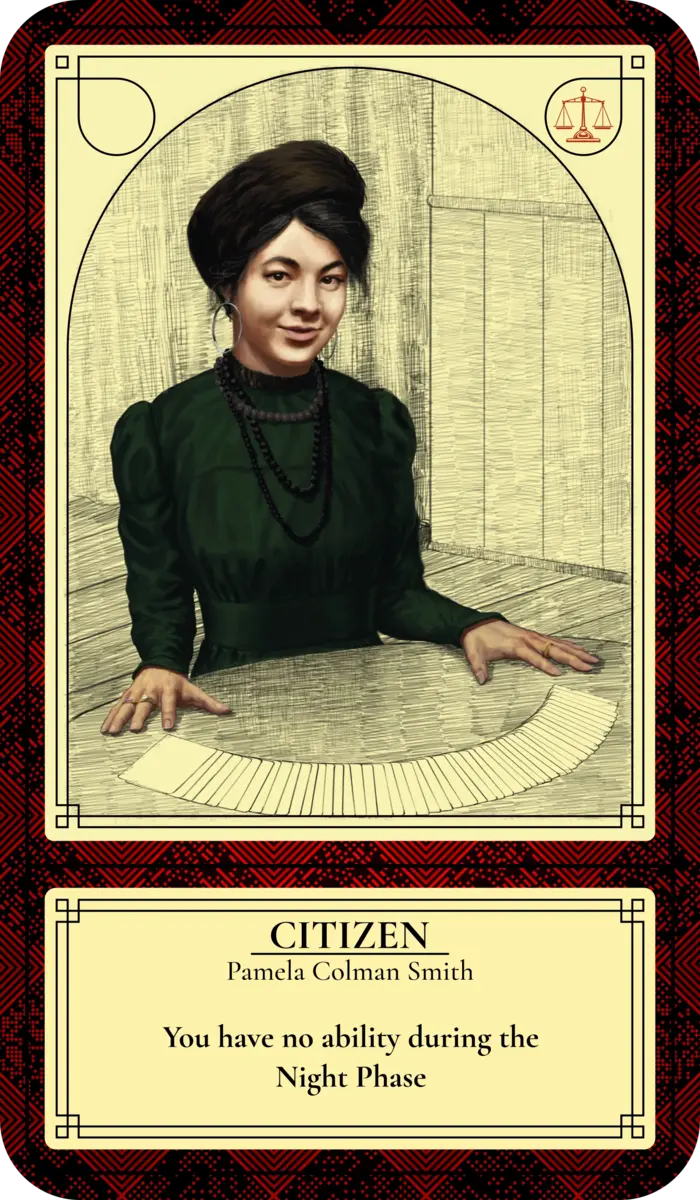
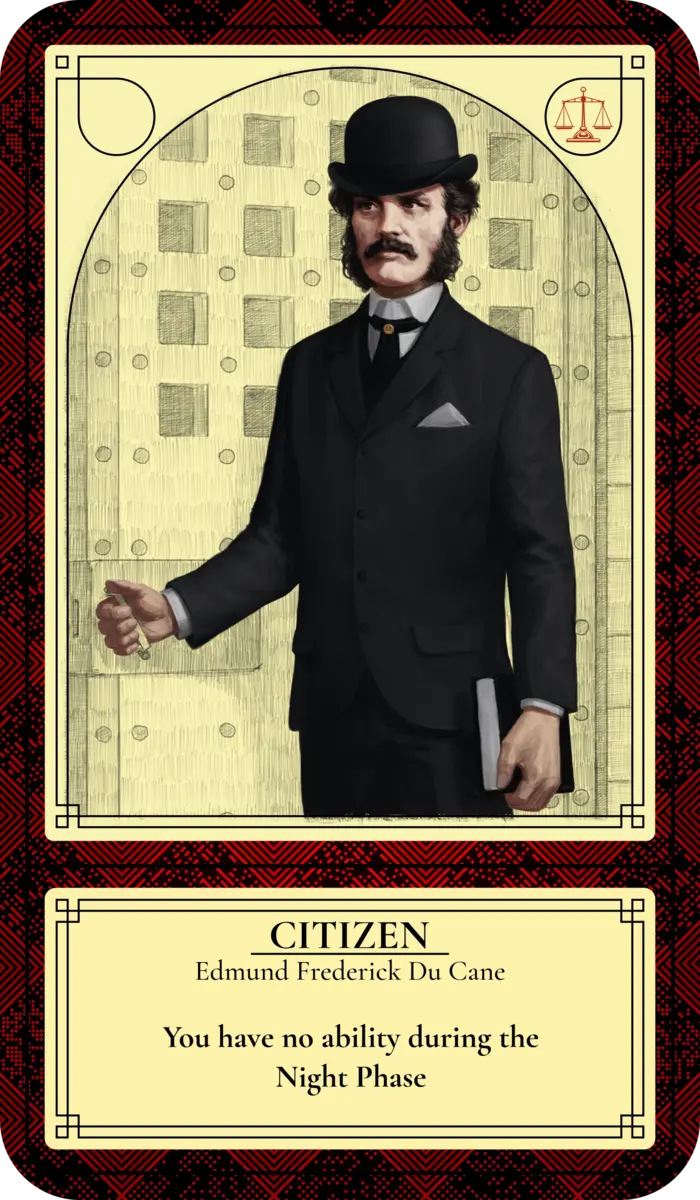
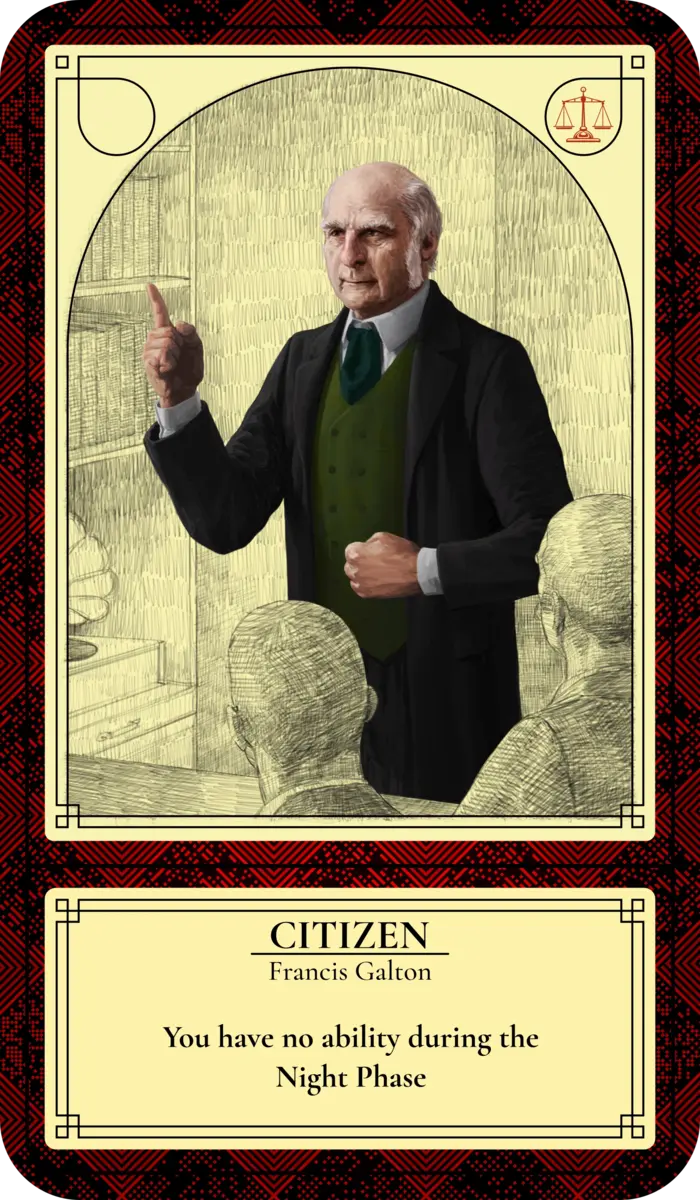
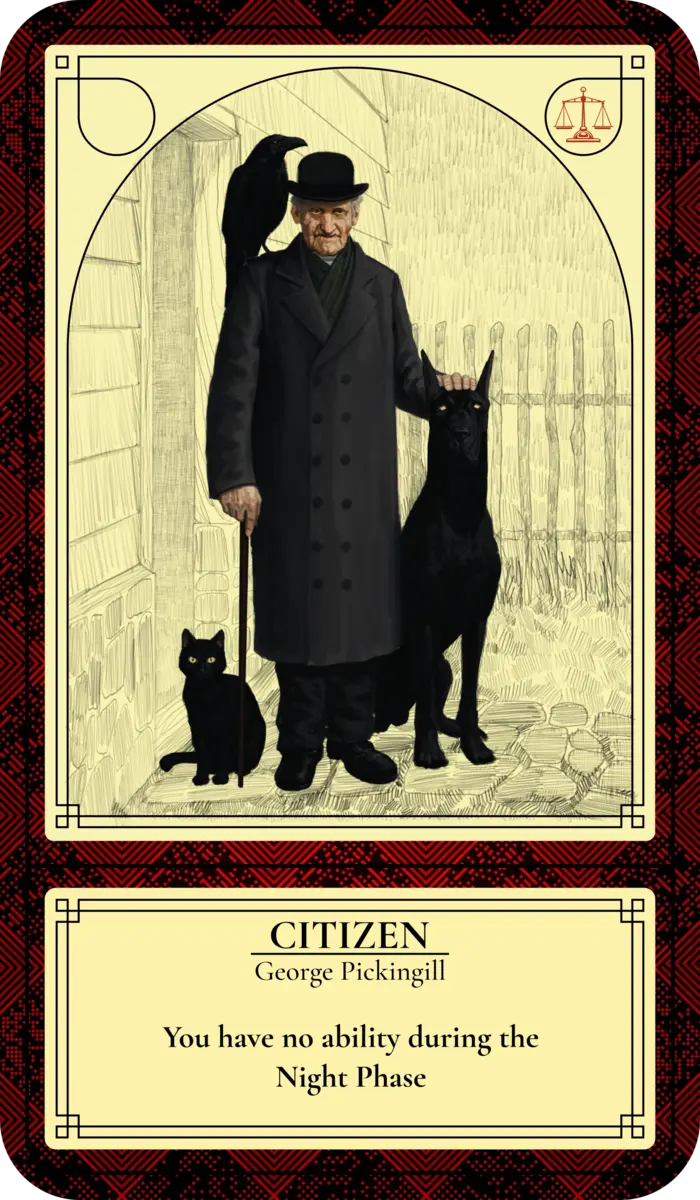
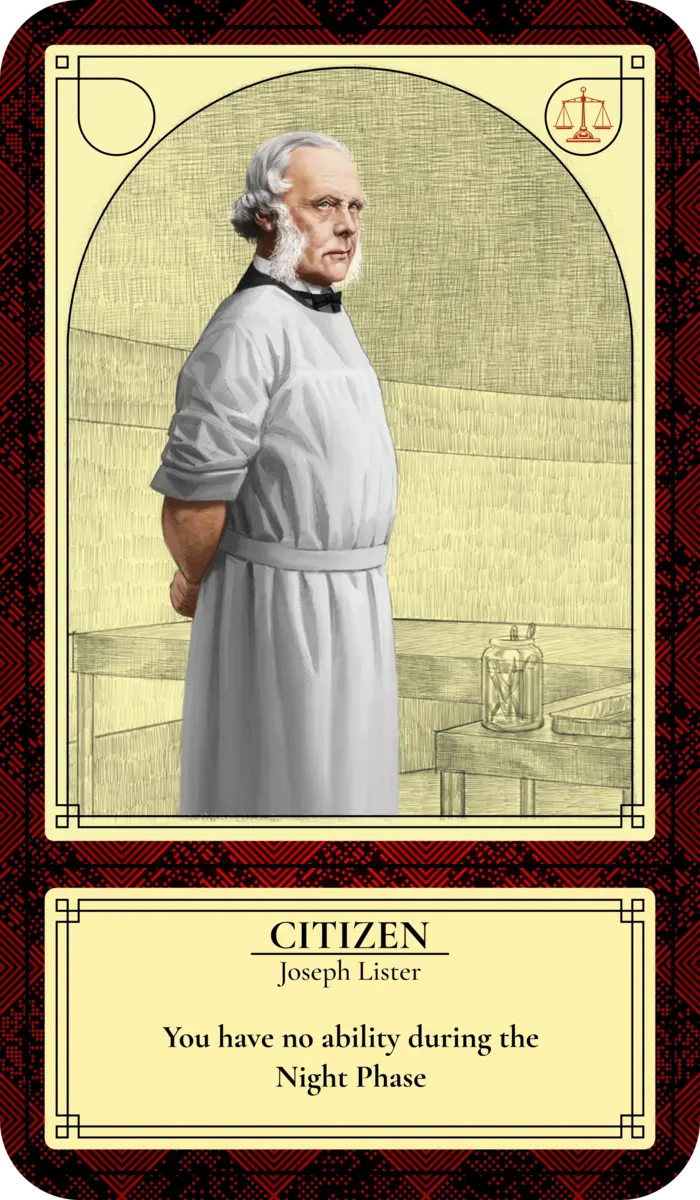
Citizen has 9 printed faces. The job is the same. Only the person on the card changes.
East End lore
A Citizen wins with nothing but their voice, and the only question is whether anyone will listen. Kudiram Bose was a boy who could not be talked out of anything. Orphaned young and raised by his sister in a Bengal village, he was arrested at fifteen for handing out pamphlets against the Empire and escaped by running. At eighteen he was hanged, and he walked to the scaffold calm enough that his own executioners wrote it down. The Empire meant his death as a warning. Instead it made him a song that Bengal sang for forty years. That is the Citizen: no hidden power, just a truth you keep saying until the room is forced to hear it.
In the lore, Adam Worth brought him onto the docks to handle the lascar crews, and he came to know every face in the firm. When he understood what it was for, he walked into a police station, gave a flat, signed statement, and offered to go back inside and inform for nothing. He asked nine times who was going to read it. He was taken into the yard and beaten for it. By May he had worked out that nobody was coming. At the Three Harpies he stood on the landing all night, waiting for Darby Sabini to go up to bed.
“I came to break the machine. I found men who only wanted to drive it.”
Kudiram Bose
Street
Mill hands, clerks, and shopkeepers fill the East End. Most people in a mafia card game look like this — ordinary, and hard to prove.
Meeting
The City lives or dies on ordinary chairs. This seat is the crowd: talk, doubt, and a vote when the talk runs out.
The room
A silent Citizen worries people. A loud one worries them too. The table has to live with both.
Inspired by
1889–1908
He was eighteen years old when the British Empire hanged him, and it needed a full court, a judge, and a written verdict to do it. India was then the largest colonial possession on earth — three hundred million people governed by a few thousand British administrators — and one of the things that arrangement required was that nobody local ever raise a hand to a magistrate. He raised a hand. He walked to the scaffold at Muzaffarpur jail without help, calm and apparently cheerful, and the British officials in attendance wrote that down themselves, because they could not think what else to put in the report.
The plan was simple and it went wrong. A British magistrate named Kingsford had been ordering student protesters flogged in Calcutta, so a Bengali revolutionary society sent two boys to the town where he had been transferred and told them to kill him. They watched his club for weeks. On the night, a carriage came out of the gates in the dark and they threw the bomb into it. It was the right carriage. It was the wrong passengers — the wife and daughter of an English barrister, both of whom died. Kingsford was somewhere else entirely. The other boy shot himself when the police closed in. Khudiram ran twenty-five miles overnight, on foot, and was taken at a railway station while buying food.
He was born in a village in Midnapore, Bengal, and orphaned before he was ten; an elder sister raised him. He left school at fifteen. What moved him was not theory. It was the plague administration and the famine relief as they actually operated in his own district, and then the partition of Bengal — a province split in half by administrative order, against the objection of nearly everyone living in it, because it was easier to govern in pieces. He began handing out pamphlets against it. He was arrested for that at fifteen and escaped by running.
At his trial he did not deny the bomb. His lawyers argued his age. The court was unmoved, and he was hanged on 11 August 1908. Then the Empire found out what it had purchased: a dead teenager is not a deterrent, he is a recruiting poster. Bengal sang songs about him for forty years. Weavers sold cloth printed with his name. Men still fighting the British in the 1930s dated their politics to the morning of that hanging.
Forget the bomb and the two women who should never have been in that carriage. Remember only this: he was a boy who could not be talked out of anything, and the machine that killed him spent the next forty years explaining why it had been necessary.
The City
Same team. Different jobs.
Mafia is easier to play than it looks. Everyone gets a hidden card — most of the table is City, a hidden few are Mafia. At night the killers quietly pick a victim while a doctor tries to guess who needs saving and a cop digs for the truth. By day the survivors argue about what happened, put someone on trial, and vote. The City wins by finding every killer; the Mafia wins by surviving until they can win a vote. The walkthrough takes you through the whole game, from the deal to the last trial.
How to play mafiaYour first game should be The Lamp and the Lancet — eight players and only three night wakes, so nobody gets lost. With a ninth chair the same deal becomes, naturally, The Ninth Chair. All twenty published deals, up to twenty-seven players, are on the setups page.
The teaching deal. Eight chairs, one lamp, one lancet — and two knives that already know each other.
City: 1 Policeman, 1 Doctor, Citizens to fill Mafia: 2 Assassins
The classic table of nine. Two killers, a cop, a doctor — and the vote does the rest.
City: 1 Policeman, 1 Doctor, Citizens to fill Mafia: 2 Assassins